By using this site, you agree to the Privacy Policy and Terms of Use.
Accept
GMJ NewsGMJ NewsGMJ News
  • Latest News
    • GMJ Briefs
  • Podcast & Media
    • Podcast Episodes
    • GMJ Audio
    • GMJ Videos
  • Research Digest
    • New Studies
    • Georgian Research
    • Data & Numbers
  • Policy & Systems
    • Health Policy
    • Quality & Safety
    • Migration & Health
    • Global Health
  • Practice
    • Clinical Updates
    • Case Discussions
    • Pharmacy & Prescribing
    • Ingredients A-Z
  • Perspectives
    • Editorial
    • Explainers
    • Voices
    • Letters
  • GMJ Articles
    • Vol. 1 Issue 2 (2026)
    • Vol. 1 Issue 1 (2026)
    • Pre-Launch Articles (2025)
  • Read the Journal →
  • About GMJ News
Notification Show More
Font ResizerAa
GMJ NewsGMJ News
Font ResizerAa
  • Latest News
    • GMJ Briefs
  • Podcast & Media
    • Podcast Episodes
    • GMJ Audio
    • GMJ Videos
  • Research Digest
    • New Studies
    • Georgian Research
    • Data & Numbers
  • Policy & Systems
    • Health Policy
    • Quality & Safety
    • Migration & Health
    • Global Health
  • Practice
    • Clinical Updates
    • Case Discussions
    • Pharmacy & Prescribing
    • Ingredients A-Z
  • Perspectives
    • Editorial
    • Explainers
    • Voices
    • Letters
  • GMJ Articles
    • Vol. 1 Issue 2 (2026)
    • Vol. 1 Issue 1 (2026)
    • Pre-Launch Articles (2025)
  • Read the Journal →
  • About GMJ News
Follow US
GMJ News > GMJ Briefs > Data Disparity: Severely Ill Infants Receive Care Half as Often as Mildly Sick Peers

Data Disparity: Severely Ill Infants Receive Care Half as Often as Mildly Sick Peers

GMJ
Last updated: 07/06/2026 17:47
By
GMJ News Desk
Share
1 Min Read
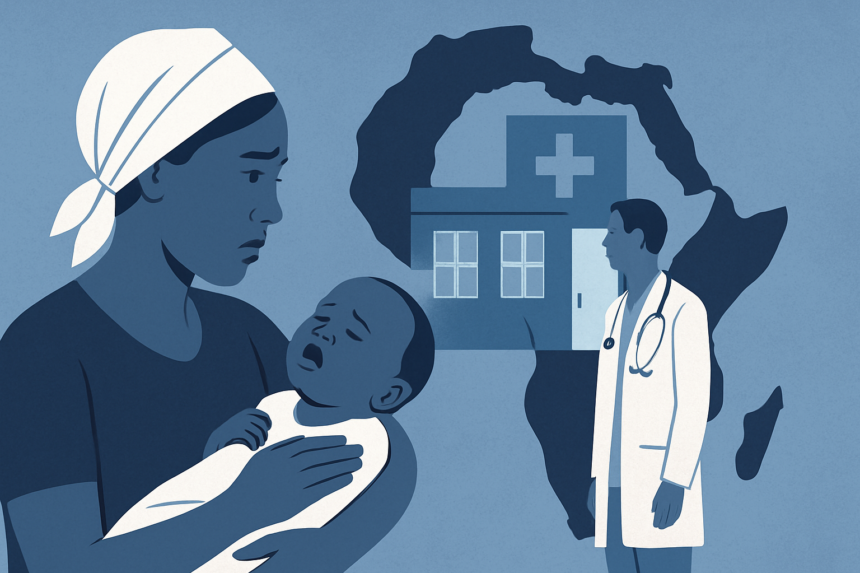
Healthcare worker examining infant in African clinic setting
New research reveals parents seek medical care for severely ill infants only 8.4%-41.8% of the time, compared to 66.7% for mild illness. Johns Hopkins study develops simple two-sign assessment tool for identifying illness severity.
SHARE
1 min read|122 words

A comprehensive analysis of healthcare-seeking patterns across seven countries reveals a striking statistical reality: only 8.4% to 41.8% of severely ill neonates received formal medical care compared to 15.0% to 66.7% of those with mild symptoms. This inverse relationship between illness severity and healthcare access represents a critical gap in infant mortality reduction efforts. The study, published in PLOS Global Public Health, examined verbal and social autopsy data from 2,847 neonatal deaths and 2,156 infant deaths across six sub-Saharan African countries and Pakistan. Researchers observed consistent patterns where illness severity decreased the likelihood of formal care-seeking in all studied populations. The data underscores an urgent need to understand the barriers preventing families from accessing emergency care when their children face the greatest medical risk, particularly in resource-limited settings.

Was this article helpful?

GMJ Brief · Key Finding

📰 Read the full article: Severe Infant Symptoms Paradoxically Reduce Healthcare Seeking in Sub-Saharan Africa →

Share This Article
Facebook LinkedIn Bluesky Copy Link Print

Submit Your Paper →

Georgia's peer-reviewed open-access medical journal. No APC until January 2027.
Submit Manuscript →
DNA Test Could Spare 6,600 Breast Cancer Patients From Unnecessary Chemotherapy

New genetic testing could spare 6,600 UK breast cancer patients annually from…

New Blood Tests and Stool Screens Join Colonoscopy as Primary Options for Colorectal Cancer Detection

The American Cancer Society updated colorectal cancer screening guidelines to include blood-based…

PCOS Name Change Campaign Gains Momentum as Women Seek Better Understanding

More than 170 million women worldwide live with PCOS, yet growing advocacy…

Submit Your Paper to GMJ

No APC until January 2027.
Submit Manuscript →

You Might Also Like

CAR-T cell attacking autoimmune B cells under microscope

CAR-T Cell Therapy Emerges as Game-Changer for Autoimmune Disease Treatment

By
GMJ News Desk
03/06/2026
Jakarta hospital survey showing antibiotic resistance patterns in bacterial infections

Jakarta’s Hospital Network Maps Antibiotic Resistance Crisis Across Multiple Facilities

By
GMJ News Desk
07/06/2026
Microscopic view of pancreatic cancer organoids in engineered biomaterial scaffold showing cellular transitions

Engineered Biomaterials Offer New Window Into Pancreatic Cancer Cell Behavior

By
GMJ News Desk
03/06/2026

🚨 🧠 SITUATION BRIEF: Cross-Border Ebola Outbreak – DRC/Uganda Border Region

By
GMJ News Desk
31/05/2026
Facebook Twitter Youtube Instagram
Company
  • Privacy Policy
  • Contact US
  • GMJ Journal
  • Submit Manuscript
  • Editorial Team
  • Register at GMJ
  • Terms of Use

Subscribe to GMJ News — Click here

Join Community
© 2026 Georgian Medical Journal (GMJ). Published by the Public Health Institute of Georgia (PHIG). All rights reserved.
Welcome Back!

Sign in to your account

Username or Email Address
Password

Lost your password?

Not a member? Sign Up