


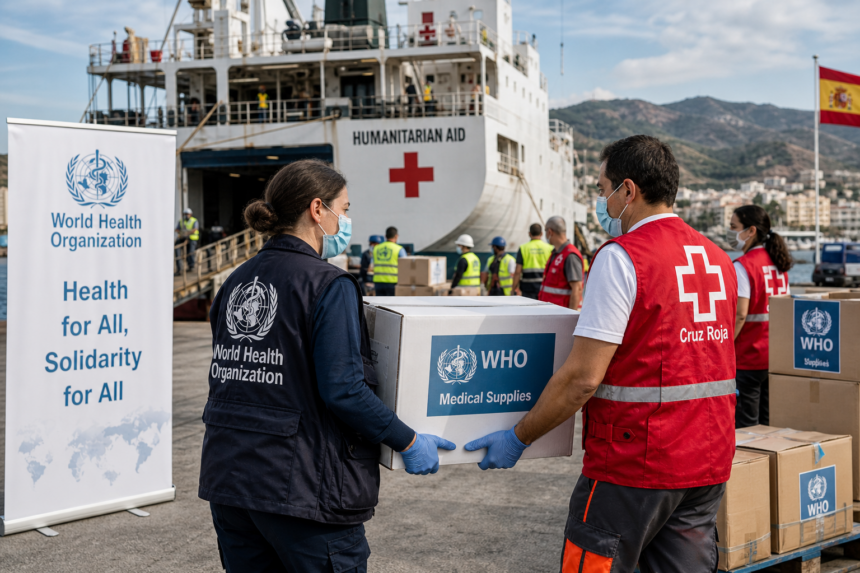
The World Health Organization’s Director-General has issued a heartfelt message of gratitude to the people of Tenerife following their exemplary response to a complex international health emergency. The Spanish island successfully managed the safe disembarkation and care of passengers affected by a hantavirus outbreak, demonstrating the power of international cooperation in health crisis management.
International Solidarity in Action
The outbreak aboard what appears to be a cruise ship or similar vessel presented unique challenges for health authorities. Hantavirus infections are typically transmitted through contact with infected rodents or their droppings, making containment on a vessel particularly complex.
Tenerife’s response showcased the island’s preparedness for handling international health emergencies. The coordination required to safely manage over 120 individuals from 23 different countries demonstrates the effectiveness of established emergency protocols and international health regulations.
Hantavirus: A Global Health Concern
Hantaviruses represent a significant public health challenge worldwide, with different strains found across continents. The Centers for Disease Control and Prevention emphasizes that these viruses can cause severe respiratory illness in humans, making rapid response crucial for outbreak containment.
The international nature of this outbreak, involving passengers from 23 countries, highlights the interconnected nature of modern travel and disease transmission. Such scenarios require coordinated responses that go beyond national borders, as demonstrated in this infectious disease emergency.
Lessons in Emergency Preparedness
The successful management of this outbreak provides valuable insights into effective emergency response protocols. Tenerife’s ability to handle the complex logistics of caring for international passengers while maintaining infection control measures serves as a model for other destinations.
The WHO Director-General’s public acknowledgment underscores the importance of community cooperation in health emergencies. Research published in the BMJ consistently shows that community engagement is crucial for successful outbreak responses.
The successful cooperation between international health authorities and local communities in Tenerife demonstrates how effective coordination can manage complex multi-national health emergencies involving over 120 individuals from 23 different countries.
— Based on WHO Director-General statement, May 2026
Looking Forward: Strengthening Global Health Security
This incident reinforces the critical importance of maintaining robust health security systems capable of responding to emerging infectious disease threats. The complexity of managing international passengers during an outbreak highlights the need for continued investment in preparedness infrastructure.
The positive outcome achieved in Tenerife demonstrates that with proper coordination, training, and community support, even complex international health emergencies can be managed effectively. Studies in The Lancet have consistently emphasized the importance of such coordinated responses in preventing larger-scale health crises.
Key takeaways
- International cooperation and community solidarity are essential for managing complex health emergencies
- Proper emergency preparedness protocols enable effective responses to multi-national outbreak scenarios
- Hantavirus outbreaks require immediate containment measures and coordinated international response
Frequently asked questions
What is hantavirus and how dangerous is it?
Hantavirus is a group of viruses transmitted primarily through contact with infected rodents or their droppings. The viruses can cause severe respiratory illness in humans, with some strains having high mortality rates if not treated promptly.
How do authorities manage disease outbreaks on ships?
Ship-based outbreaks require immediate isolation of affected individuals, thorough sanitization of common areas, and coordination with port authorities for safe disembarkation. International health regulations provide frameworks for managing such scenarios across borders.
Why was Tenerife’s response considered exemplary?
Tenerife successfully coordinated the safe care of over 120 passengers from 23 different countries while maintaining proper infection control measures. The response demonstrated effective international cooperation and community solidarity during a complex health emergency.
The WHO Director-General’s message serves as a reminder that effective pandemic preparedness requires not just technical expertise, but also the human elements of solidarity and cooperation that made Tenerife’s response so successful.
Reviewed by Prof. Giorgi Pkhakadze, MD, MPH, PhD
This article is for informational purposes only and does not constitute medical advice. Consult a healthcare professional for personal health concerns.