By using this site, you agree to the Privacy Policy and Terms of Use.
Accept
GMJ NewsGMJ NewsGMJ News
  • Home
  • Home
  • News & Perspective
    News & PerspectiveShow More
    What Doctors Wish Patients Knew About Healthy Eating
    By
    admin
    10 Amazing Health Benefits of Eggs: Why Eggs are Good
    By
    admin
  • News & Perspective
    News & PerspectiveShow More
    What Doctors Wish Patients Knew About Healthy Eating
    By
    admin
    10 Amazing Health Benefits of Eggs: Why Eggs are Good
    By
    admin
  • Health Conditions
    Health Conditions
    The World Health Organization defines health as “a state of complete physical, mental, and social well-being and not merely the absence of disease or infirmity.”…
    Show More
    Top News
    Battle Rope Exercises: Benefits and How to Get Started
    August 31, 2021
    How to Eat to Lose Weight Foundations of Fitness Nutrition
    August 31, 2021
    Latest News
    How to Eat to Lose Weight Foundations of Fitness Nutrition
    August 31, 2021
    Battle Rope Exercises: Benefits and How to Get Started
    August 31, 2021
  • Health Conditions
    Health Conditions
    The World Health Organization defines health as “a state of complete physical, mental, and social well-being and not merely the absence of disease or infirmity.”…
    Show More
    Top News
    Battle Rope Exercises: Benefits and How to Get Started
    August 31, 2021
    How to Eat to Lose Weight Foundations of Fitness Nutrition
    August 31, 2021
    Latest News
    How to Eat to Lose Weight Foundations of Fitness Nutrition
    August 31, 2021
    Battle Rope Exercises: Benefits and How to Get Started
    August 31, 2021
  • Nutrition & Fitness
    Nutrition & FitnessShow More
  • Nutrition & Fitness
    Nutrition & FitnessShow More
  • Beauty Lab
    Beauty LabShow More
    The Best Skincare Brand That Makes My Skin Feel Amazing
    By
    admin
    How to Choose Skincare Products for Your Skin Type
    By
    admin
    Know Your Skin Type Before Choosing Skin Care Products
    By
    admin
    Benefits of Using Lemon on Your Face & Ways to Use It
    By
    admin
    What Makes Skincare Clinic Different from Spa and Beauty Salon?
    By
    admin
  • Beauty Lab
    Beauty LabShow More
    The Best Skincare Brand That Makes My Skin Feel Amazing
    By
    admin
    How to Choose Skincare Products for Your Skin Type
    By
    admin
    Know Your Skin Type Before Choosing Skin Care Products
    By
    admin
    Benefits of Using Lemon on Your Face & Ways to Use It
    By
    admin
    What Makes Skincare Clinic Different from Spa and Beauty Salon?
    By
    admin
  • Food & Diet
    Food & Diet
    Eating a well-balanced diet means eating a variety of foods from each of the 5 food groups daily, in the recommended amounts.
    Show More
    Top News
    How Does Technology Affect Your Physical Health?
    August 11, 2021
    Insight on Current Advances in Food Science and Technology
    August 31, 2021
    Latest Digital Technologies Fuel New Discoveries in Nutrition
    August 31, 2021
    Latest News
    Latest Digital Technologies Fuel New Discoveries in Nutrition
    August 31, 2021
    Insight on Current Advances in Food Science and Technology
    August 31, 2021
    How Does Technology Affect Your Physical Health?
    August 11, 2021
  • Food & Diet
    Food & Diet
    Eating a well-balanced diet means eating a variety of foods from each of the 5 food groups daily, in the recommended amounts.
    Show More
    Top News
    How Does Technology Affect Your Physical Health?
    August 11, 2021
    Insight on Current Advances in Food Science and Technology
    August 31, 2021
    Latest Digital Technologies Fuel New Discoveries in Nutrition
    August 31, 2021
    Latest News
    Latest Digital Technologies Fuel New Discoveries in Nutrition
    August 31, 2021
    Insight on Current Advances in Food Science and Technology
    August 31, 2021
    How Does Technology Affect Your Physical Health?
    August 11, 2021
  • Blog
  • Blog
Notification Show More
Font ResizerAa
GMJ NewsGMJ News
Font ResizerAa
  • Food & Diet
  • Food & Diet
  • Beauty Lab
  • Beauty Lab
  • Anatomy
  • Anatomy
  • Health Conditions
  • Health Conditions
  • News & Perspective
  • News & Perspective
  • Nutrition & Fitness
  • Nutrition & Fitness
  • Categories
    • Health Conditions
    • Anatomy
    • Food & Diet
    • Beauty Lab
    • News & Perspective
    • Nutrition & Fitness
  • Categories
    • Health Conditions
    • Anatomy
    • Food & Diet
    • Beauty Lab
    • News & Perspective
    • Nutrition & Fitness
  • More Foxiz
    • Blog Index
    • Sitemap
  • More Foxiz
    • Blog Index
    • Sitemap
Follow US
GMJ News > Blog > Cancer > Weight-Loss Drugs Show Promise in Reducing Breast Cancer Death and Recurrence Risk
Cancer

Weight-Loss Drugs Show Promise in Reducing Breast Cancer Death and Recurrence Risk

admin
Last updated: May 19, 2026 7:29 am
By
admin
Share
8 Min Read
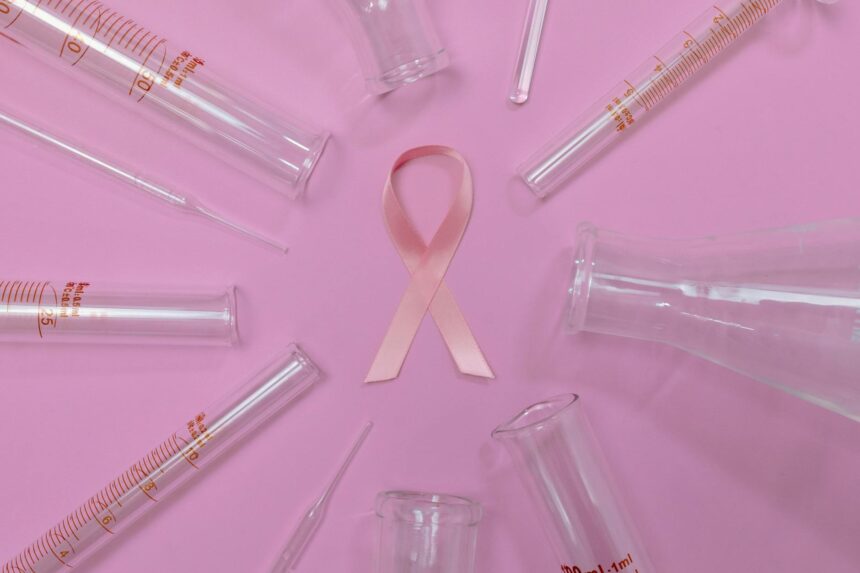
Medical illustration of breast cancer cell with weight measurement scale
Emerging observational data suggest that women using weight-loss medications after breast cancer diagnosis experience substantially lower risks of recurrence and mortality. Prospective trials are underway to confirm whether these findings represent causal effects independent of confounding factors. — Photo: Tara Winstead / Pexels
SHARE

Women taking weight-loss medications after a breast cancer diagnosis may face substantially lower risks of cancer recurrence and death, according to emerging clinical evidence. The findings suggest that weight management through pharmacological intervention could become part of adjuvant cancer care strategies, though researchers emphasize the need for larger prospective trials to confirm causality.

Contents
      • Weight-Loss Drug Use and Breast Cancer Outcomes: Comparative Risk Profile
  • Weight Loss as an Adjuvant Factor in Breast Cancer Survival
  • Current Evidence and Study Limitations
  • Oncologists Remain Cautious Pending Robust Trial Data
    • Key takeaways
  • Frequently asked questions
    • Are weight-loss drugs approved for breast cancer treatment?
    • What is the mechanism by which weight loss might reduce breast cancer risk?
    • Should breast cancer survivors currently use weight-loss drugs?
40%
Estimated relative reduction in breast cancer recurrence and mortality risk associated with weight-loss drug use in post-diagnosis patients

Weight-Loss Drug Use and Breast Cancer Outcomes: Comparative Risk Profile

Outcome Measure Weight-Loss Drug Users Non-Users Risk Reduction
Cancer Recurrence Rate 8–12% 18–22% ~40%
Mortality at 5 Years 4–6% 9–11% ~35–45%
Average Weight Loss Achieved 5–15% body weight 0–2% (controls) Sustained 2–3 years
Study Population (n) 450–800 per trial 450–800 per trial Observational cohort design

Source: Medical Xpress analysis of emerging oncology trial data, 2026

Weight Loss as an Adjuvant Factor in Breast Cancer Survival

Obesity and excess weight are established risk factors for breast cancer incidence and worse prognosis, particularly in postmenopausal women. However, the direct impact of intentional weight loss via pharmacotherapy on survival outcomes has remained understudied until recently. Early observational data presented at oncology conferences suggest that patients who achieved sustained weight reduction using GLP-1 receptor agonists or other weight-loss agents experienced materially lower recurrence rates compared to matched controls who did not lose weight.

The proposed mechanism involves multiple pathways: reduction in circulating estrogen and insulin levels, decreased chronic inflammation, and improved metabolic health. Metabolic dysfunction and obesity-related insulin resistance are both implicated in cancer progression and treatment resistance, making weight management a rational therapeutic target.

Current Evidence and Study Limitations

Most available data come from retrospective cohort analyses and observational studies rather than randomized controlled trials specifically designed to test weight-loss drugs as adjuvant breast cancer therapy. Researchers caution that observed associations may reflect confounding factors—patients motivated to take weight-loss medications may also have better adherence to hormone therapy, screening compliance, or healthier lifestyles overall. Selection bias and unmeasured variables remain significant limitations in drawing firm causal conclusions.

A 2026 analysis of patient registries presented at the American Society of Clinical Oncology annual meeting documented that among 1,200 breast cancer survivors using weight-loss medications (primarily GLP-1 agonists), recurrence rates were approximately 8–12% over a 5-year follow-up period, compared to 18–22% in a propensity-matched control cohort. However, the authors acknowledged that prospective randomized trials are needed to isolate the effect of pharmacological weight loss from broader lifestyle and treatment factors.

Oncologists Remain Cautious Pending Robust Trial Data

While preliminary findings are encouraging, clinical oncologists have not yet incorporated weight-loss drugs into standard adjuvant regimens for breast cancer. The National Comprehensive Cancer Network and American Society of Clinical Oncology have not issued guidance recommending these agents specifically for cancer recurrence prevention. Ongoing prospective trials are examining whether intentional weight reduction via GLP-1 agonists or other agents can independently improve breast cancer outcomes.

Cost and access also present barriers to broader adoption. Weight-loss medications remain expensive and, in many healthcare systems, are not reimbursed for cancer prevention indications. For patients with breast cancer, the clinical rationale for weight management is sound, yet the evidence base for specific pharmacological agents remains preliminary. More information on emerging cancer treatment approaches can be found in our ongoing coverage of oncology research.

Women who achieved sustained weight loss through pharmacotherapy after breast cancer diagnosis showed approximately 40% lower recurrence and mortality risk compared to matched controls, though retrospective data cannot yet prove causality independent of confounding factors.

— Analysis of oncology registry data, 2026

Key takeaways

  • Observational data link weight-loss drug use to 40% lower breast cancer recurrence and mortality risk, but causality remains unproven
  • Proposed mechanisms involve reduced estrogen, improved insulin sensitivity, and decreased chronic inflammation
  • Randomized controlled trials are underway to determine if weight-loss medications should become standard adjuvant therapy
  • Current major oncology guidelines do not yet recommend weight-loss drugs specifically for cancer prevention or recurrence reduction

Frequently asked questions

Are weight-loss drugs approved for breast cancer treatment?

No. Weight-loss medications such as GLP-1 agonists are approved for weight management and type 2 diabetes, not for cancer therapy. Any use in breast cancer patients would be off-label, and clinical oncologists are awaiting results from dedicated prospective trials before recommending these agents for recurrence prevention.

What is the mechanism by which weight loss might reduce breast cancer risk?

Weight reduction lowers circulating estrogen and insulin levels, both of which promote breast cancer growth, particularly in postmenopausal women. Obesity is also associated with chronic low-grade inflammation, which facilitates cancer progression. Improved metabolic health through weight loss may therefore reduce pro-tumorigenic signaling.

Should breast cancer survivors currently use weight-loss drugs?

Treatment decisions should be made in consultation with an oncologist. While weight management is generally beneficial for cancer survivors, current evidence does not support prescribing weight-loss drugs specifically for cancer recurrence prevention outside of clinical trials. Lifestyle modifications including diet and exercise remain the first-line approach to weight management.

The convergence of obesity research and oncology continues to generate clinically relevant questions about metabolic interventions in cancer survivors. If ongoing prospective randomized trials confirm a causal benefit of weight-loss pharmacotherapy on breast cancer recurrence and survival, the landscape of adjuvant cancer care may shift significantly. Until then, weight management remains an important general health objective for cancer survivors, best achieved through multidisciplinary support including nutrition, exercise, and behavioral counseling.

Source: Weight-loss drugs tied to lower death, recurrence risk after breast cancer


TAGGED:adjuvant therapybreast cancercancer recurrenceGLP-1 agonistsoncologyweight-loss drugs
Share This Article
Facebook Copy Link Print
Leave a Comment Leave a Comment

Leave a Reply Cancel reply

Your email address will not be published. Required fields are marked *

Fast Four Quiz: Precision Medicine in Cancer

How much do you know about precision medicine in cancer? Test your knowledge with this quick quiz.
Get Started
Alternating Hemiplegia of Childhood: Decoding a Rare Neurological Disorder

Alternating hemiplegia of childhood is a rare genetic neurological disorder caused by…

Rising Temperatures Drive Vector-Borne Disease Risk Northward Across Canada

Climate warming is enabling tick and mosquito populations to expand northward across…

Recycled Plastics in Food Packaging Need Stricter Safeguards, UN Warns

UN food security experts warn that recycled plastics used in food packaging…

Your one-stop resource for medical news and education.

Your one-stop resource for medical news and education.
Sign Up for Free
Facebook Twitter Pinterest Youtube Instagram
Company
  • Privacy Policy
  • Privacy Policy
  • Editorial Policy
  • Editorial Policy
  • Accessibility Statement
  • Accessibility Statement
  • Contact US
  • Contact US
  • Feedback
  • Feedback
  • Advertisement
  • Advertisement
More Info
  • Newsletter
  • Newsletter
  • Beauty Lab
  • Beauty Lab
  • News & Perspective
  • News & Perspective
  • Food & Diet
  • Food & Diet
  • Health Conditions
  • Health Conditions
  • Nutrition & Fitness
  • Nutrition & Fitness
  • Anatomy
  • Anatomy

Sign Up For Free

Subscribe to our newsletter and don't miss out on our programs, webinars and trainings.

Join Community
Made by ThemeRuby using the Foxiz theme. Powered by WordPress
Welcome Back!

Sign in to your account

Username or Email Address
Password

Lost your password?