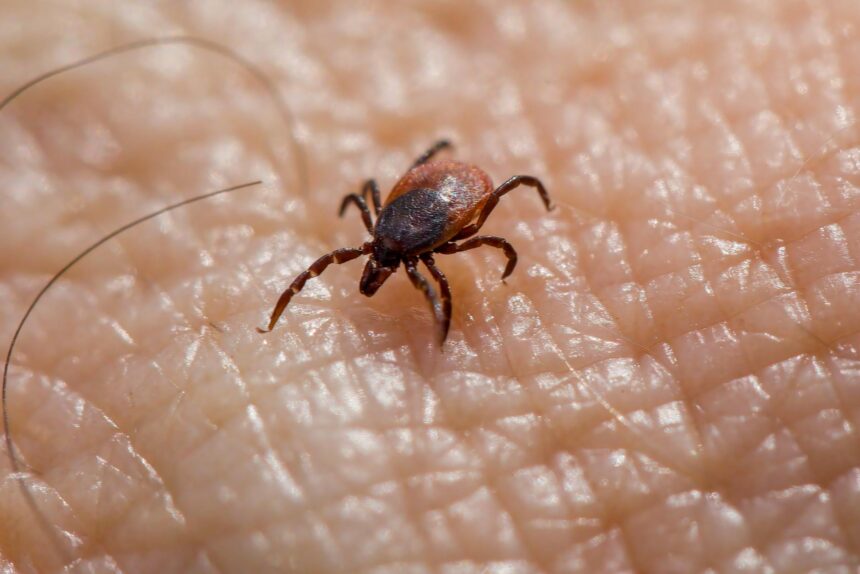
Climate change is shifting the geographic range of disease-carrying insects across Canada, with warming temperatures enabling ticks and mosquitoes to establish populations in regions previously too cold for transmission, warns a commentary published in CMAJ (Canadian Medical Association Journal). The commentary’s authors argue that Canada’s healthcare systems must prepare for an epidemiological shift that could increase human infections from tick- and mosquito-borne pathogens including Lyme disease, West Nile virus, and emerging zoonotic diseases.
Tick populations expanding into previously unaffected regions
The warming climate has already altered tick distribution patterns across Canada, with species such as Ixodes scapularis (the primary vector of Lyme disease) now establishing year-round populations in provinces where they were historically absent or transient. Temperature thresholds required for tick survival and reproduction have been crossed in southern Ontario, Quebec, and parts of Atlantic Canada, creating suitable conditions for disease transmission.
Epidemiological surveillance data indicate that Lyme disease case notifications in Canada have increased, though the full extent of northward vector range expansion remains incompletely mapped. Public health agencies are responding by enhancing tick surveillance programmes, but coverage remains uneven across provincial borders, the CMAJ authors note.
Mosquito-borne illnesses following similar trajectories
The Centers for Disease Control and Prevention (CDC) and Canadian public health authorities have documented the northward spread of Culex species and Aedes albopictus (Asian tiger mosquito), vectors implicated in West Nile virus and dengue fever transmission. Rising spring and summer temperatures extend the seasonal transmission window, allowing mosquitoes to complete reproductive cycles in regions where such transmission was previously rare.
West Nile virus, first detected in Canada in 2002, has established seasonal circulation in multiple provinces. The combination of longer warm seasons and expanding mosquito habitat could increase the frequency and geographic breadth of outbreaks, particularly in urban and periurban areas where Culex species breed in stagnant water.
Healthcare preparedness remains inconsistent
The CMAJ commentary emphasizes that while vector-borne disease emergence is a recognized public health threat, Canada’s provincial healthcare systems lack standardized protocols for surveillance, diagnosis, and treatment of tick- and mosquito-borne illnesses. Clinical awareness among primary care physicians and emergency department staff varies significantly across provinces, potentially delaying diagnosis and treatment of Lyme disease and other emerging infections.
The authors call for coordinated national surveillance systems, enhanced laboratory diagnostic capacity, and clinician education programmes to prepare for ongoing shifts in disease geography. Links to infectious disease preparedness and climate-driven health emergencies underscore the urgency of integrated planning. Without proactive investment, Canada risks experiencing preventable outbreaks as vector populations expand beyond current historical ranges.
Climate warming in Canada has created ecological conditions that now permit year-round survival and reproduction of tick and mosquito vectors in regions previously unsuitable for disease transmission, necessitating urgent revisions to surveillance and clinical protocols.
— Authors, CMAJ Commentary, 2026
Northward expansion of key disease vectors in Canada under warming conditions
Source: CMAJ Commentary analysis, 2026 | Georgian Medical Journal News
Key takeaways
- Canadian average temperatures have risen 1.5°C–2°C over 70 years, enabling tick and mosquito vectors to establish populations in previously unsuitable regions.
- Lyme disease tick populations are now active year-round in southern Ontario, Quebec, and Atlantic Canada; West Nile virus transmission has expanded across multiple provinces since 2002.
- Provincial healthcare systems lack standardized surveillance, diagnostic, and clinical protocols for emerging vector-borne diseases, increasing the risk of delayed diagnosis and outbreak management failures.
- Coordinated national surveillance systems and enhanced clinician education are urgently needed to prepare for ongoing northward shifts in disease vector geography.
Frequently asked questions
Which disease vectors are most likely to expand northward in Canada?
Ixodes scapularis ticks (Lyme disease vectors), Culex mosquitoes (West Nile virus), and Aedes albopictus (dengue and chikungunya) are already shifting northward as spring and summer temperatures rise. These species require minimum temperature thresholds for survival and reproduction, thresholds that climate warming is progressively meeting across previously cooler Canadian regions.
What are the early signs of Lyme disease and West Nile virus?
Lyme disease typically presents with a characteristic expanding rash (erythema migrans) at the tick bite site, followed by fever, fatigue, and joint pain if untreated. West Nile virus causes fever, headache, body aches, and sometimes a rash; severe cases result in neuroinvasive disease. Early recognition and antibiotic treatment of Lyme disease (within 7–10 days of symptom onset) is highly effective at preventing progression.
How can Canadians reduce their personal risk of tick and mosquito-borne infections?
Use tick and mosquito repellents containing DEET or picaridin on exposed skin and clothing when outdoors in wooded or grassy areas, particularly in warmer months. Inspect skin for ticks daily after outdoor activities, remove attached ticks promptly with tweezers, and wear long sleeves and trousers in high-risk areas. Avoiding outdoor activity at dawn and dusk when mosquitoes are most active also reduces transmission risk.
As Canadian temperatures continue to warm, the geographic range of disease-carrying insects will almost certainly expand further northward, potentially reaching previously unaffected populations. Public health authorities, clinicians, and policymakers must act now to establish the surveillance, diagnostic, and treatment infrastructure needed to detect, diagnose, and manage vector-borne diseases before outbreaks occur in unprepared regions.
Source: Rising temperatures could bring more vector-borne diseases to Canada, commentary warns