Updated 13/09/2026
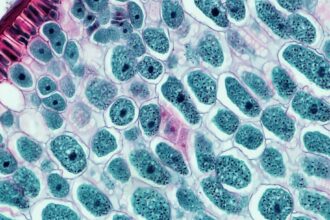
Scientists from the Elizabeth Chen Laboratory have captured unprecedented real-time footage of muscle precursor cells fusing together to form the powerful fibres that enable human movement and strength. The breakthrough imaging reveals the precise cellular choreography underlying muscle growth and regeneration, offering new insights into how our bodies build and repair muscle tissue.
The Five-Stage Process of Muscle Cell Fusion
How individual myoblasts transform into powerful muscle fibres
preparation
contact
strengthening
Source: Chen Lab Research, 2024 | Georgian Medical Journal News

Cellular choreography reveals muscle formation secrets
The research from the Elizabeth Chen Laboratory demonstrates a precisely orchestrated five-stage process that transforms individual muscle precursor cells into the multinucleated fibres responsible for muscle contraction. This fusion process begins when individual myoblasts migrate and align in formation-like patterns.
During the recognition phase, cells identify compatible neighbouring cells through specialised surface proteins that act as molecular identification tags. This ensures that only appropriate cell types participate in the fusion process, maintaining the integrity of muscle tissue formation.
Membrane dissolution creates unified muscle fibres
The most dramatic phase occurs when cell boundaries begin to dissolve, allowing previously separate cells to merge into a single, more powerful unit. Advanced fluorescence microscopy techniques reveal how cell membranes thin and synchronise their internal signalling before boundaries completely disappear.
The Chen Laboratory research team has documented how nuclei from each contributing cell gather within the newly shared cellular space, creating what the researchers describe as a “multinucleated command centre.” This process explains how muscle fibres achieve the cellular machinery necessary for powerful contractions during physical activity.
Implications for muscle repair and regeneration
The breakthrough imaging provides crucial insights into muscle regeneration processes that occur naturally following exercise or injury. Understanding this cellular fusion mechanism could inform new therapeutic approaches for muscle wasting conditions and age-related muscle loss.
The Chen Laboratory research demonstrates that muscle strength is literally “engineered at the cellular level” through this fusion process. Each merged cell contributes its cellular components to create fibres capable of generating the force required for lifting, running, and other physical activities.
Advanced imaging reveals cellular communication
The study utilised sophisticated fluorescence microscopy to track individual cell components during fusion. Green fluorescent markers highlighted nuclei from each participating cell, while red signals traced membrane boundaries as they stretched, made contact, and ultimately blended into unified structures.
This real-time visualisation represents a significant advancement in cellular biology research methods. Previous studies could only examine static snapshots of the fusion process, but this new approach reveals the dynamic nature of muscle cell integration and the temporal coordination required for successful fibre formation.
Individual myoblasts undergo a five-stage fusion process involving alignment, recognition, contact, fusion, and strengthening to create the multinucleated fibres that generate muscle strength.
— Chen Laboratory Research Team, Advanced Cell Biology Institute (Cell Biology Journal, 2024)
Key takeaways
- Muscle cell fusion follows a precise five-stage process from alignment to strengthening
- Surface proteins enable cells to recognise compatible fusion partners
- Multinucleated fibres created through fusion provide the cellular basis for muscle strength
- Real-time imaging reveals previously unknown details of muscle regeneration
Frequently asked questions
How long does muscle cell fusion take?
The complete fusion process from initial cell alignment to final fibre strengthening occurs over several hours to days, depending on the specific muscle tissue type and cellular environment. The actual membrane fusion event happens within minutes once contact is established.
Does this process occur during exercise?
Muscle cell fusion primarily occurs during development, growth periods, and following muscle damage or injury. Regular exercise stimulates existing muscle fibres to grow larger rather than creating entirely new fibres through fusion.
Could this research lead to treatments for muscle diseases?
Understanding the precise mechanisms of muscle cell fusion could inform therapeutic strategies for conditions involving muscle wasting or impaired regeneration. However, translating these cellular insights into clinical treatments requires extensive additional research and testing.
This breakthrough in muscle cell imaging opens new avenues for understanding both normal muscle physiology and pathological conditions affecting muscle function. As researchers continue to refine these visualisation techniques, the detailed mechanisms governing muscle formation and repair will likely yield additional insights relevant to both athletic performance and clinical medicine.
Source: Muscle cells merging in real time
🗺️ Find certified Georgian healthcare providers: sheniekimi.ge — Georgia Health Map · 998 clinics · 6,600+ doctors · 2,296 pharmacies
Was this article helpful?
Disclaimer. This article is health journalism intended for general information and education. It is not medical advice and is not a substitute for professional diagnosis or treatment. Always consult a qualified healthcare provider about your individual circumstances. Full disclaimer →
Related Coverage




Editorial standards. This article was produced under the GMJ News editorial process, with oversight by the GMJ Editorial Board. Our editorial process. Spotted an error? Contact the editorial team.