


The World Health Organization has raised concerns over targeted marketing of nicotine pouches to young people, warning that brands are employing tactics historically associated with tobacco promotion despite the products’ growing popularity among adolescents. WHO officials flagged the disconnect between regulatory scrutiny of traditional cigarettes and the relative absence of restrictions on nicotine pouch advertising in many jurisdictions.
Nicotine Pouch Market Growth and Youth Adoption Patterns
| Region/Market Factor | Status | Key Concern |
|---|---|---|
| Global sales trajectory | Accelerating | Youth-focused branding emerging |
| Advertising restrictions | Minimal in most countries | Contrast with cigarette regulations |
| Product appeal to adolescents | Increasing adoption documented | Flavours and packaging design |
| Regulatory framework maturity | Underdeveloped | Lag behind nicotine assessment |
Source: World Health Organization, May 2026
Marketing mirrors tobacco playbook despite reduced-risk positioning
Nicotine pouch manufacturers have adopted branding, flavour innovation, and distribution strategies that echo those employed by cigarette companies before stringent advertising bans were introduced, according to WHO analysis. The pouches—small sachets containing nicotine salts placed between the gum and lip—require no combustion and produce no smoke, but their marketing claims about reduced harm have not been substantiated by long-term clinical evidence.
Unlike combustible tobacco products, nicotine pouches remain largely unregulated in advertising channels across Europe and other regions, creating what health authorities describe as a regulatory gap. WHO guidance emphasises that the absence of smoke does not equate to absence of risk, particularly given limited data on adolescent nicotine exposure during critical developmental periods.
The following figure provides a visual summary of the key findings discussed above.
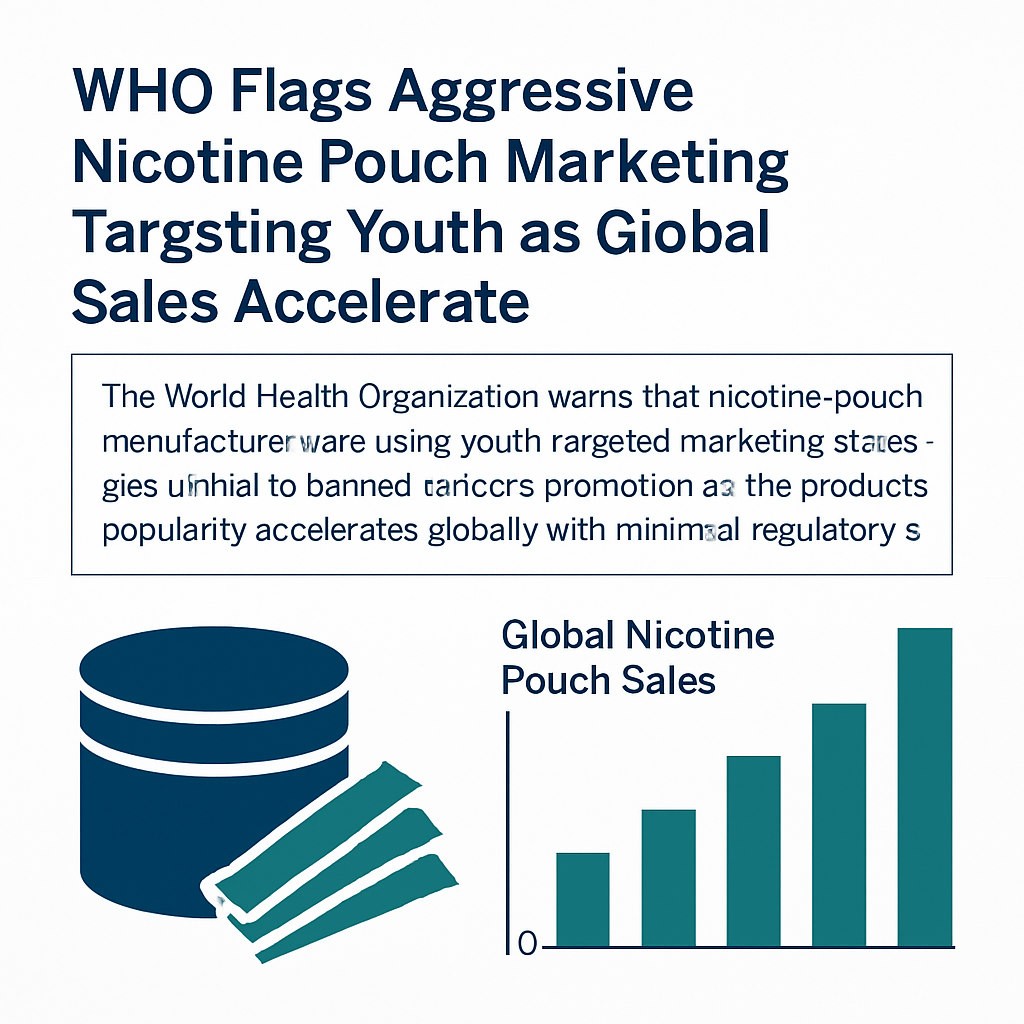
AI-generated infographic
Youth exposure to nicotine during brain development raises developmental concerns
Adolescents represent a demographic of particular concern because the prefrontal cortex—the brain region governing impulse control, decision-making, and addiction vulnerability—continues developing into the mid-twenties. Published neuroscience research has established that nicotine exposure during this window may impair cognitive development and increase the risk of sustained dependence.
The WHO has not yet published comprehensive epidemiological data quantifying adolescent nicotine pouch use, but public health officials in several countries have begun documenting uptake through school-based surveys and poison control centre reports. The lack of formal surveillance mechanisms means the true scale of youth adoption remains unmeasured in most jurisdictions.
Nicotine pouch brands are employing marketing tactics historically associated with tobacco products, targeting youth through social media, flavour variety, and product design, despite minimal long-term safety data in adolescent populations.
— World Health Organization, Statement on Nicotine Pouches (May 2026)
Regulatory fragmentation creates enforcement vacuum
Unlike pharmaceuticals or traditional tobacco products, nicotine pouches occupy an ambiguous regulatory space in many countries. Some jurisdictions classify them as tobacco products and apply existing restrictions; others treat them as consumer goods or dietary supplements, permitting far broader marketing latitude. European Medicines Agency guidance on nicotine-containing products remains non-binding on pouch manufacturers where products are not marketed as medicines.
This regulatory fragmentation has allowed companies to optimise their marketing approach for each market. A brand banned from television advertising in one country may operate freely via social media influencers in another, creating a compliance patchwork that hampers coordinated public health response. WHO recommends that governments harmonise nicotine pouch classification and apply the same advertising restrictions applied to cigarettes, including bans on flavoured variants appealing to youth, social media promotion, and point-of-sale merchandising in retail environments frequented by adolescents.
See also: Drug Safety Coverage and Global Health Policy Updates for ongoing regulatory developments.
Key takeaways
- Nicotine pouch sales are accelerating globally, with marketing tactics mirroring those banned for cigarettes, raising alarm among public health authorities.
- Youth adoption of nicotine pouches is documented but not systematically monitored, creating a surveillance gap in countries without dedicated epidemiological tracking.
- Regulatory frameworks for nicotine pouches remain fragmented across jurisdictions, allowing manufacturers to exploit inconsistencies in advertising restrictions and product classification.
- Nicotine exposure during adolescence carries documented risks to brain development and addiction vulnerability, yet pouches lack the long-term safety data available for approved nicotine medications.
Frequently asked questions
Are nicotine pouches safer than cigarettes?
Nicotine pouches eliminate combustion and therefore avoid tobacco smoke’s thousands of toxic chemicals. However, WHO emphasises that absence of smoke does not mean absence of risk. Long-term cardiovascular and developmental effects remain understudied, particularly in adolescents whose brains are still developing.
Why are nicotine pouches less regulated than cigarettes?
Many jurisdictions developed their tobacco regulations before nicotine pouches entered the market, creating a regulatory lag. Some countries classify pouches as consumer goods rather than tobacco products, exempting them from advertising restrictions. The WHO recommends harmonised classification to close this gap.
What specific risks do nicotine pouches pose to young people?
Nicotine is highly addictive and can impair prefrontal cortex development through the mid-twenties, affecting decision-making and impulse control. The flavoured variants and discrete design of pouches appeal to adolescents and may serve as a gateway to other nicotine products, though longitudinal studies quantifying this risk are still emerging.
Health authorities globally face a critical window to establish evidence-based regulation before nicotine pouch use becomes entrenched among youth. The WHO has called for urgent harmonisation of regulatory frameworks, mandatory health warnings, advertising restrictions, and age-of-sale enforcement. Without coordinated action, the investment in tobacco control over recent decades risks being undermined by a product category that exploits the current regulatory vacuum.
Source: WHO warns nicotine pouch brands targeting youth as sales surge