By using this site, you agree to the Privacy Policy and Terms of Use.
Accept
GMJ NewsGMJ NewsGMJ News
  • Latest News
  • Research Digest
    • New Studies
    • Georgian Research
    • Data & Numbers
  • Policy & Systems
    • Health Policy
    • Quality & Safety
    • Migration & Health
    • Global Health
  • Practice
    • Clinical Updates
    • Case Discussions
    • Pharmacy & Prescribing
  • Perspectives
    • Editorial
    • Explainers
    • Voices
    • Letters
  • Podcast & Media
    • Podcast Episodes
    • Video
    • Infographics
  • GMJ Articles
    • Vol. 1 Issue 2 (2026)
    • Vol. 1 Issue 1 (2026)
    • Pre-Launch Articles (2025)
  • Read the Journal →
Notification Show More
Font ResizerAa
GMJ NewsGMJ News
Font ResizerAa
  • Latest News
  • Research Digest
    • New Studies
    • Georgian Research
    • Data & Numbers
  • Policy & Systems
    • Health Policy
    • Quality & Safety
    • Migration & Health
    • Global Health
  • Practice
    • Clinical Updates
    • Case Discussions
    • Pharmacy & Prescribing
  • Perspectives
    • Editorial
    • Explainers
    • Voices
    • Letters
  • Podcast & Media
    • Podcast Episodes
    • Video
    • Infographics
  • GMJ Articles
    • Vol. 1 Issue 2 (2026)
    • Vol. 1 Issue 1 (2026)
    • Pre-Launch Articles (2025)
  • Read the Journal →
Follow US
GMJ News > Policy & Systems > Global Health > Wood Burning Stoves: Hidden Climate and Health Threats Beyond Air Pollution
Global HealthPolicy & Systems

Wood Burning Stoves: Hidden Climate and Health Threats Beyond Air Pollution

GMJ
Last updated: 05/22/2026 21:04
By
GMJ News Desk
Share
7 Min Read
Infographic showing wood burning emissions sources from logging to black carbon warming effects
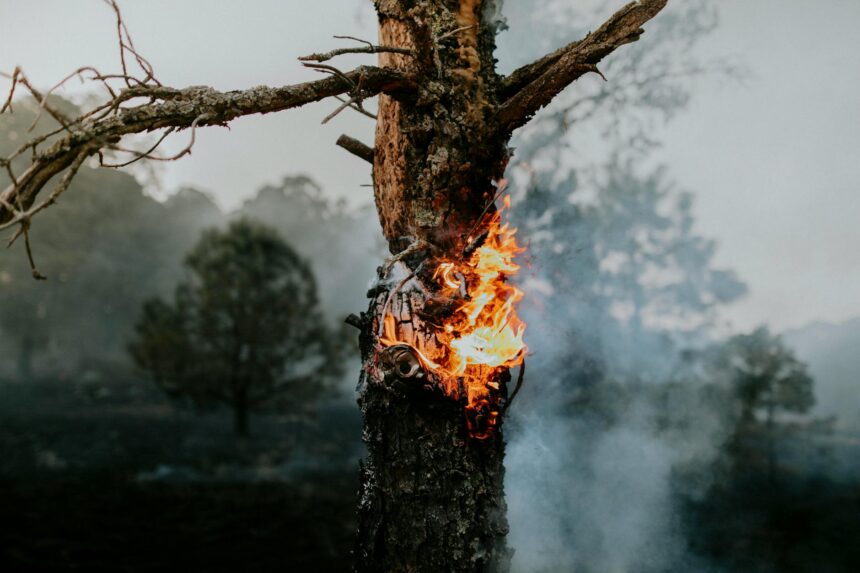
Wood burning stoves contribute significantly to climate change through supply chain emissions and black carbon release, challenging assumptions about biomass as clean energy. Renewable electricity emerges as the clear alternative for sustainable home heating. — Photo: José Luis Photographer / Pexels
SHARE

Wood burning stoves, increasingly popular as a supposedly “green” heating alternative, carry significant hidden environmental and health costs beyond local air pollution. According to a new analysis published in The BMJ, wood combustion contributes substantially to climate change through multiple pathways, challenging common assumptions about biomass as a carbon-neutral energy source.

Contents
      • Wood Burning’s Climate Impact Sources
  • Black Carbon: The Powerful Climate Accelerator
  • Hidden Emissions Throughout the Supply Chain
  • Health Impacts Compound Climate Concerns
  • Renewable Electricity as the Clear Alternative
    • Key takeaways
  • Frequently asked questions
    • Is wood burning really worse for climate than gas heating?
    • What makes black carbon so much worse than regular carbon emissions?
    • How realistic is switching to 100% renewable electricity for heating?
100% renewable
electricity target needed to replace wood and gas burning for home heating

Wood Burning’s Climate Impact Sources

Multiple emission sources contribute to global heating beyond direct combustion

Logging operations
High
Transport emissions
Moderate
Sawmill processing
Moderate
Kiln drying
Moderate
Black carbon warming

Very High

Source: BMJ Analysis, 2026 | Georgian Medical Journal News

Black Carbon: The Powerful Climate Accelerator

Black carbon emissions from wood burning represent one of the most potent short-lived climate forcers. Research published in Nature Climate Change demonstrates that black carbon particles absorb sunlight and contribute to atmospheric warming with an impact several hundred times greater than carbon dioxide per unit mass.

Submit Your Paper
GMJ_Submit_Banner

These particles don’t just warm the atmosphere locally. Studies documented in the Journal of Geophysical Research show that black carbon travels vast distances, settling on Arctic ice and accelerating melting processes. This creates a dangerous feedback loop where reduced ice cover leads to further warming.

The climate threat has reached critical urgency, according to recent assessments by the Intergovernmental Panel on Climate Change. Every fraction of a degree matters in preventing catastrophic tipping points.

Hidden Emissions Throughout the Supply Chain

The climate impact of wood burning extends far beyond the combustion itself. Analysis in Environmental Research Letters reveals substantial emissions from logging operations, including heavy machinery fuel consumption and forest ecosystem disruption.

Sawmill processing and kiln drying operations add significant energy requirements, often powered by fossil fuels. Transportation networks moving wood from forests to urban markets generate additional carbon emissions, particularly when wood is sourced from distant locations.

For more analysis on global health and environmental impacts, recent studies have quantified these supply chain emissions at levels that challenge wood’s classification as a low-carbon fuel.

Health Impacts Compound Climate Concerns

Beyond climate effects, wood burning creates immediate health hazards through particulate and gaseous pollution. Research published in Thorax links residential wood combustion to increased respiratory disease rates, particularly in urban environments where pollution concentrates.

The combination of climate and health impacts makes wood burning a poor choice for sustainable heating. Gas boilers, while cleaner than wood for air quality, still contribute to both local pollution and global warming through methane emissions and combustion byproducts.

Our clinical updates section regularly covers the growing body of evidence connecting air quality to cardiovascular and respiratory health outcomes.

Renewable Electricity as the Clear Alternative

The path forward requires transitioning to 100% renewable electricity for home heating systems. Heat pumps powered by clean electricity eliminate both local air pollution and the complex carbon emissions associated with biomass burning.

Countries like Norway and Iceland demonstrate this transition’s feasibility, achieving near-complete renewable electricity systems that power efficient heating technologies. Economic analysis suggests that renewable electricity costs continue declining while wood fuel prices remain volatile.

Wood burning contributes to climate change through substantial emissions from logging, sawmill activity, transport, and kiln drying, while black carbon acts as a very powerful short-lived contributor to global heating

— BMJ Editorial Team, The BMJ (2026)

Key takeaways

  • Wood burning generates climate-warming emissions throughout its supply chain, not just during combustion
  • Black carbon from wood fires accelerates Arctic ice melting and global heating
  • Renewable electricity-powered heating eliminates both health and climate impacts of combustion

Frequently asked questions

Is wood burning really worse for climate than gas heating?

Wood burning produces black carbon emissions that are extremely potent climate warmers, plus substantial supply chain emissions. Gas heating avoids black carbon but still produces greenhouse gases directly.

What makes black carbon so much worse than regular carbon emissions?

Black carbon absorbs sunlight and heats the atmosphere hundreds of times more effectively than carbon dioxide per unit mass. It also travels long distances and accelerates ice melting when deposited on snow and ice.

How realistic is switching to 100% renewable electricity for heating?

Multiple countries have demonstrated successful transitions to renewable electricity systems. Heat pump technology powered by clean electricity provides efficient heating without combustion emissions.

The evidence clearly shows that addressing climate change requires abandoning all combustion-based heating systems, including wood burning despite its “renewable” label. The transition to renewable electricity-powered heating represents both an environmental imperative and a public health opportunity that can no longer be delayed.

Source: Wood burning also contributes to climate change


TAGGED:air pollutionblack carbonclimate changerenewable energywood burning
Share This Article
Facebook Copy Link Print
Leave a Comment Leave a Comment

Leave a Reply Cancel reply

Your email address will not be published. Required fields are marked *

Submit Your Paper →

Georgia's peer-reviewed open-access medical journal. No APC until January 2027.
Submit Manuscript →
Study shows liver recovers from exercise in 6 hours, muscles need 24 hours

New research reveals liver glycogen recovers within 6 hours after intense exercise,…

Severe Iodine Deficiency in Early Pregnancy Linked to Lower Verbal Intelligence at Age 15

15-year UK study of 1,200+ mother-child pairs shows severe first-trimester iodine deficiency…

England Issues First Amber Heat Health Alerts as Death Risk Rises

UK Health Security Agency issues amber heat alerts across five English regions,…

Submit Your Paper to GMJ

No APC until January 2027.
Submit Manuscript →

You Might Also Like

Map showing Ebola transmission zones in DRC and Uganda with outbreak alert indicators
Health Policy

Ebola outbreak in DRC and Uganda: what we know in May 2026

By
GMJ News Desk
World map showing zoonotic disease outbreak patterns and travel restriction zones
Global Health

Travel Bans Show Limited Effectiveness Against Ebola and Hantavirus Outbreaks, WHO Analysis Reveals

By
GMJ News Desk
Empty children's home room with single bed, representing unregulated care facilities in UK
Health Policy

Unregulated Children’s Homes: Why UK Councils Are Spending Millions on Illegal Placements

By
GMJ News Desk
WHO warning graphic showing nicotine pouch adoption rates across global regions, with red alert indicator
Global Health

WHO warns of nicotine pouch epidemic targeting youth as sales surge globally

By
GMJ News Desk
Facebook Twitter Youtube Instagram
Company
  • Privacy Policy
  • Contact US
  • GMJ Journal
  • Submit Manuscript
  • Editorial Team
  • Register at GMJ
  • Terms of Use

Sign Up For Free

Subscribe to our newsletter and don't miss out on our programs, webinars and trainings.

[mc4wp_form]

Join Community
Made by ThemeRuby using the Foxiz theme. Powered by WordPress
© 2026 Georgian Medical Journal (GMJ). Published by the Public Health Institute of Georgia (PHIG). All rights reserved.
Welcome Back!

Sign in to your account

Username or Email Address
Password

Lost your password?

Not a member? Sign Up