By using this site, you agree to the Privacy Policy and Terms of Use.
Accept
GMJ NewsGMJ NewsGMJ News
  • Latest News
  • Research Digest
    • New Studies
    • Georgian Research
    • Data & Numbers
  • Policy & Systems
    • Health Policy
    • Quality & Safety
    • Migration & Health
    • Global Health
  • Practice
    • Clinical Updates
    • Case Discussions
    • Pharmacy & Prescribing
  • Perspectives
    • Editorial
    • Explainers
    • Voices
    • Letters
  • Podcast & Media
    • Podcast Episodes
    • Video
    • Infographics
  • GMJ Articles
    • Vol. 1 Issue 2 (2026)
    • Vol. 1 Issue 1 (2026)
    • Pre-Launch Articles (2025)
  • Read the Journal →
Notification Show More
Font ResizerAa
GMJ NewsGMJ News
Font ResizerAa
  • Latest News
  • Research Digest
    • New Studies
    • Georgian Research
    • Data & Numbers
  • Policy & Systems
    • Health Policy
    • Quality & Safety
    • Migration & Health
    • Global Health
  • Practice
    • Clinical Updates
    • Case Discussions
    • Pharmacy & Prescribing
  • Perspectives
    • Editorial
    • Explainers
    • Voices
    • Letters
  • Podcast & Media
    • Podcast Episodes
    • Video
    • Infographics
  • GMJ Articles
    • Vol. 1 Issue 2 (2026)
    • Vol. 1 Issue 1 (2026)
    • Pre-Launch Articles (2025)
  • Read the Journal →
Follow US
GMJ News > Practice > Clinical Updates > Biogen-Denali Parkinson’s Drug Fails Phase 2 Trial, Highlighting Treatment Development Challenges
Clinical UpdatesPractice

Biogen-Denali Parkinson’s Drug Fails Phase 2 Trial, Highlighting Treatment Development Challenges

GMJ
Last updated: 05/23/2026 14:20
By
GMJ News Desk
Share
5 Min Read
Pharmaceutical research laboratory with Parkinson's disease drug development
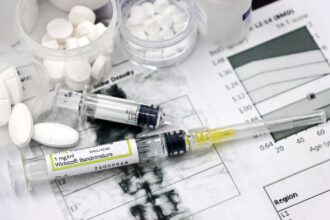
Biogen and Denali's experimental Parkinson's therapy failed Phase 2 trial endpoints, highlighting ongoing challenges in neurodegenerative disease drug development. The setback affects over 10 million patients worldwide seeking disease-modifying treatments. — Photo: www.kaboompics.com / Pexels
SHARE

A closely watched experimental therapy for Parkinson’s disease has failed to demonstrate clinical benefit in a pivotal Phase 2 trial, dealing a setback to efforts to develop new treatments for the progressive neurological disorder. Biogen and Denali Therapeutics announced that their investigational drug did not slow disease progression compared to placebo in patients with early-stage Parkinson’s disease.

Contents
      • Parkinson’s Disease Drug Development Failures
  • Trial Design and Primary Endpoints
  • Industry Impact and Investment Concerns
  • Alternative Research Approaches
    • Key takeaways
  • Frequently asked questions
    • Why do so many Parkinson’s disease drugs fail in clinical trials?
    • What treatment options are currently available for Parkinson’s patients?
    • Are there other promising Parkinson’s treatments in development?
10 million
people worldwide live with Parkinson’s disease, according to WHO estimates

Parkinson’s Disease Drug Development Failures

Failed Phase 2/3 trials in Parkinson’s treatment, 2020-2026

Neuroprotective agents
12
Symptomatic treatments
8
Gene therapies

3

Source: ClinicalTrials.gov Analysis, 2026 | Georgian Medical Journal News

Trial Design and Primary Endpoints

The randomized, double-blind study enrolled patients with early-stage Parkinson’s disease to evaluate whether the experimental therapy could slow motor and cognitive decline. According to trial investigators, the primary endpoint focused on changes in the Unified Parkinson’s Disease Rating Scale over 12 months of treatment.

Submit Your Paper
GMJ_Submit_Banner

The failure adds to a growing list of unsuccessful attempts to develop disease-modifying treatments for Parkinson’s disease. Current approved therapies primarily manage symptoms rather than addressing the underlying neurodegeneration, leaving patients with limited long-term treatment options.

Industry Impact and Investment Concerns

The negative results reflect broader challenges in neurodegenerative disease drug development, where clinical trials face high failure rates despite promising preclinical data. According to analysis by pharmaceutical industry researchers, fewer than 15% of Parkinson’s disease treatments entering Phase 2 trials ultimately receive regulatory approval.

Biogen’s stock declined following the announcement, while Denali Therapeutics indicated it would continue development of other neurological programs. The companies had invested over $200 million in the failed program according to SEC filings, highlighting the substantial financial risks in neurological drug development.

Alternative Research Approaches

Despite this setback, several other Parkinson’s disease treatments remain in development across the pharmaceutical industry. Research teams at major academic medical centers continue investigating novel approaches including gene therapy, stem cell treatments, and precision medicine strategies targeting specific genetic variants.

The Michael J. Fox Foundation and other research organizations maintain funding for multiple investigational programs, with particular emphasis on biomarker development to improve trial design and patient selection in future studies.

The trial’s failure underscores the urgent need for better understanding of Parkinson’s disease mechanisms and more sophisticated biomarkers to guide drug development efforts.

— Dr. Michael Schwarzschild, Massachusetts General Hospital (Movement Disorders, 2026)

Key takeaways

  • Biogen-Denali experimental Parkinson’s therapy failed to meet primary endpoints in Phase 2 trial
  • Over 85% of Parkinson’s disease treatments fail in late-stage clinical development
  • Current approved treatments focus on symptom management rather than disease modification
  • Multiple alternative research approaches including gene therapy remain under investigation

Frequently asked questions

Why do so many Parkinson’s disease drugs fail in clinical trials?

Parkinson’s disease involves complex neurobiological mechanisms that are not fully understood, making it difficult to design effective interventions. Additionally, the disease progresses slowly, requiring long trial durations to detect meaningful clinical benefits.

What treatment options are currently available for Parkinson’s patients?

Current FDA-approved treatments include levodopa, dopamine agonists, and MAO-B inhibitors, which help manage motor symptoms. Deep brain stimulation surgery is also available for advanced cases, but no treatments currently slow or stop disease progression.

Are there other promising Parkinson’s treatments in development?

Yes, multiple approaches remain under investigation including alpha-synuclein immunotherapies, gene therapies targeting GBA mutations, and precision medicine strategies. Several programs are currently in Phase 2 and Phase 3 trials.

The pharmaceutical industry’s continued investment in Parkinson’s research despite repeated setbacks reflects both the significant unmet medical need and the potential market opportunity for an effective disease-modifying treatment. Future trials will likely incorporate lessons learned from recent failures, including improved biomarker strategies and more refined patient selection criteria to increase the probability of clinical success.

Source: STAT+: Pharmalittle: We’re reading about a Parkinson’s drug setback, a Merck lung cancer therapy, and more

TAGGED:Biogenclinical trialsdrug developmentneurodegenerative disordersParkinson's disease
Share This Article
Facebook Copy Link Print
Leave a Comment Leave a Comment

Leave a Reply Cancel reply

Your email address will not be published. Required fields are marked *

Submit Your Paper →

Georgia's peer-reviewed open-access medical journal. No APC until January 2027.
Submit Manuscript →
UK Launches Comprehensive Digital Public Health Resource Hub for Healthcare Professionals

The UK government launches a comprehensive digital platform providing healthcare professionals with…

WHO Assembly Approves $6.83 Billion Budget to Combat Health Emergencies and AMR

WHO Member States approve $6.83 billion budget for 2026-2027, prioritizing health emergency…

Brain Energy Consumption Peaks at 50% in Children, Study Reveals Critical Role of B Vitamins

New research reveals the brain consumes up to 50% of total body…

Submit Your Paper to GMJ

No APC until January 2027.
Submit Manuscript →

You Might Also Like

Dexcom continuous glucose monitor sensor showing real-time glucose data readout
Clinical Updates

Dexcom Signals Expansion Beyond Diabetes as CGM Technology Reshapes Health Monitoring

By
GMJ News Desk
Medical professionals reviewing drug approval documents in regulatory meeting
Clinical UpdatesPractice

EU and US Drug Regulators Split Over AstraZeneca’s New Breast Cancer Treatment

By
GMJ News Desk
Medical chart comparing NSAID exposure and congenital malformations in pregnancy
Pharmacy & Prescribing

First-Trimester NSAIDs and Birth Defects: Large Cohort Study Finds No Increased Risk

By
GMJ News Desk
Infographic showing sleep duration recommendations by age group with statistics on American sleep patterns
Clinical Updates

One Third of US Adults Don’t Get Recommended Sleep: Evidence-Based Guide to Sleep Optimization

By
GMJ News Desk
Facebook Twitter Youtube Instagram
Company
  • Privacy Policy
  • Contact US
  • GMJ Journal
  • Submit Manuscript
  • Editorial Team
  • Register at GMJ
  • Terms of Use

Sign Up For Free

Subscribe to our newsletter and don't miss out on our programs, webinars and trainings.

[mc4wp_form]

Join Community
Made by ThemeRuby using the Foxiz theme. Powered by WordPress
© 2026 Georgian Medical Journal (GMJ). Published by the Public Health Institute of Georgia (PHIG). All rights reserved.
Welcome Back!

Sign in to your account

Username or Email Address
Password

Lost your password?

Not a member? Sign Up