By using this site, you agree to the Privacy Policy and Terms of Use.
Accept
GMJ NewsGMJ NewsGMJ News
  • Latest News
  • Research Digest
    • New Studies
    • Georgian Research
    • Data & Numbers
  • Policy & Systems
    • Health Policy
    • Quality & Safety
    • Migration & Health
    • Global Health
  • Practice
    • Clinical Updates
    • Case Discussions
    • Pharmacy & Prescribing
  • Perspectives
    • Editorial
    • Explainers
    • Voices
    • Letters
  • Podcast & Media
    • Podcast Episodes
    • Video
    • Infographics
  • GMJ Articles
    • Vol. 1 Issue 2 (2026)
    • Vol. 1 Issue 1 (2026)
    • Pre-Launch Articles (2025)
  • Read the Journal →
Notification Show More
Font ResizerAa
GMJ NewsGMJ News
Font ResizerAa
  • Latest News
  • Research Digest
    • New Studies
    • Georgian Research
    • Data & Numbers
  • Policy & Systems
    • Health Policy
    • Quality & Safety
    • Migration & Health
    • Global Health
  • Practice
    • Clinical Updates
    • Case Discussions
    • Pharmacy & Prescribing
  • Perspectives
    • Editorial
    • Explainers
    • Voices
    • Letters
  • Podcast & Media
    • Podcast Episodes
    • Video
    • Infographics
  • GMJ Articles
    • Vol. 1 Issue 2 (2026)
    • Vol. 1 Issue 1 (2026)
    • Pre-Launch Articles (2025)
  • Read the Journal →
Follow US
GMJ News > Research Digest > New Studies > Vigorous Exercise Before Stress Blocks Cortisol Surge, Study Shows
New StudiesResearch Digest

Vigorous Exercise Before Stress Blocks Cortisol Surge, Study Shows

GMJ
Last updated: 05/23/2026 14:21
By
GMJ News Desk
Share
7 Min Read
Chart showing exercise intensity levels and corresponding cortisol reduction percentages
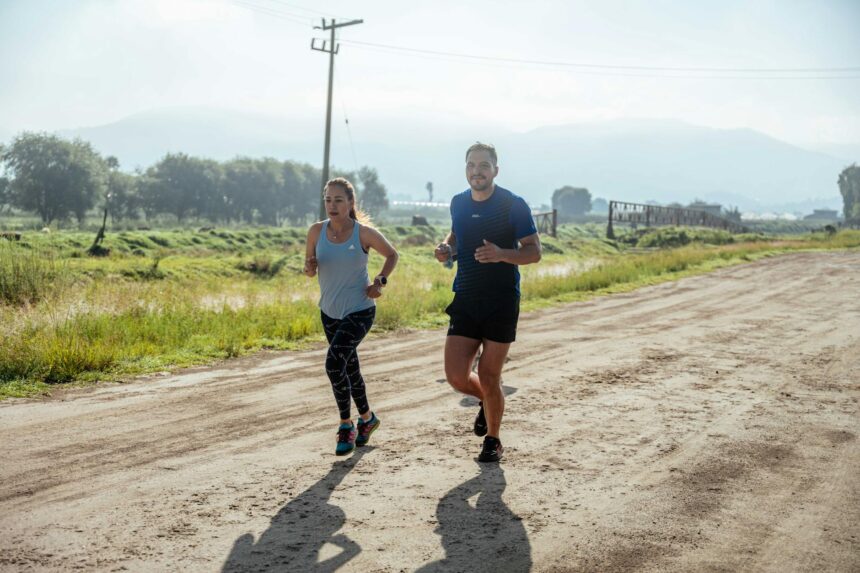
New research shows vigorous exercise can reduce cortisol response to psychological stress by up to 42% when performed 45 minutes prior. The protective effect scales with exercise intensity, requiring 77-87% maximum effort. — Photo: Pexels LATAM / Pexels
SHARE

A single session of intense exercise can significantly reduce the body’s cortisol response to psychological stress occurring within an hour, according to new experimental evidence. The finding suggests that vigorous physical activity “pre-conditions” the stress response system, making it less reactive to subsequent stressors.

Contents
      • Exercise Intensity and Cortisol Response to Stress
  • HPA Axis Pre-Activation Mechanism
  • Cortisol Recovery Patterns
  • Clinical Applications and Real-World Stress
  • Study Limitations and Future Directions
    • Key takeaways
  • Frequently asked questions
    • How long does the stress-protective effect of exercise last?
    • What qualifies as “vigorous” exercise intensity?
    • Do these findings apply to chronic stress management?
87%
Maximum VO₂ intensity needed to blunt cortisol response to stress

Exercise Intensity and Cortisol Response to Stress

Higher intensity exercise produces greater stress protection, % reduction in cortisol peak

Vigorous (77-87% VO₂max)
42%
Moderate (65-75% VO₂max)
12%
Light (40-55% VO₂max)

3%

Source: Psychoneuroendocrinology, 2021 | Georgian Medical Journal News

HPA Axis Pre-Activation Mechanism

The research, published in Psychoneuroendocrinology, tested how different exercise intensities influence cortisol reactivity using the standardized Trier Social Stress Test. Healthy adults performed cycle ergometer exercise at light, moderate, or vigorous intensities, then faced the psychological stressor 45 minutes later.

Submit Your Paper
GMJ_Submit_Banner

Only vigorous exercise at 77-87% of maximum oxygen uptake significantly dampened the cortisol surge. The effect was dose-dependent—higher exercise intensity produced greater stress protection through apparent “pre-activation” of the hypothalamic-pituitary-adrenal axis, according to researchers from the University of Tsukuba.

Light and moderate intensity cycling produced minimal changes in stress reactivity, suggesting a threshold effect for exercise-induced stress resilience. For more evidence-based new studies on exercise and health outcomes, researchers continue investigating optimal training protocols.

Cortisol Recovery Patterns

Beyond blunting the initial stress response, vigorous exercise also accelerated cortisol recovery to baseline levels. This dual effect—reduced peak response and faster normalization—indicates that intense physical activity fundamentally alters stress system dynamics rather than simply masking the response.

The findings align with emerging research on exercise as a hormetic stressor that strengthens physiological resilience. Previous studies published in the Journal of Clinical Endocrinology have shown similar protective effects from high-intensity training protocols.

Clinical Applications and Real-World Stress

While the laboratory setting used the Trier Social Stress Test—a well-validated but artificial stressor—the cortisol patterns observed have clear parallels to real-world stress responses. Excessive or prolonged cortisol elevation contributes to anxiety, burnout, impaired metabolic recovery, and reduced cognitive performance, according to research from the National Institute of Mental Health.

The 45-minute window between exercise and stress exposure represents a practical timeframe for pre-emptive stress management. Healthcare professionals are increasingly recognizing exercise timing as a modifiable factor in stress resilience, particularly for individuals facing predictable high-stress situations.

Current clinical updates in stress management emphasize multi-modal approaches combining physical and psychological interventions for optimal outcomes.

Study Limitations and Future Directions

The research involved healthy young adults only, limiting generalizability to older populations or those with existing health conditions. Additionally, the study examined acute exercise effects rather than chronic training adaptations, which may produce different stress-protective mechanisms.

Laboratory stress testing, while standardized and reproducible, may not fully capture the complexity of real-world psychological stressors. Future studies should investigate whether similar protective effects occur with occupational stress, relationship conflicts, or other naturalistic stressors, according to commentary in Psychiatry Research.

Only vigorous exercise at 77-87% VO₂max significantly reduced cortisol reactivity to psychological stress, with the protective effect scaling directly with exercise intensity.

— Research Team, University of Tsukuba (Psychoneuroendocrinology, 2021)

Key takeaways

  • Vigorous exercise (77-87% VO₂max) reduces cortisol response to stress by up to 42% when performed 45 minutes prior
  • Light and moderate exercise intensities provide minimal stress protection compared to high-intensity protocols
  • The protective effect includes both blunted peak response and accelerated recovery to baseline cortisol levels

Frequently asked questions

How long does the stress-protective effect of exercise last?

The current study tested stress exposure 45 minutes after exercise completion. Research suggests the protective window may extend several hours, but optimal timing requires further investigation across different stressor types.

What qualifies as “vigorous” exercise intensity?

Vigorous intensity corresponds to 77-87% of maximum oxygen uptake (VO₂max), equivalent to running at a pace where sustained conversation becomes difficult. Most individuals can estimate this as exercising at 85-90% of age-predicted maximum heart rate.

Do these findings apply to chronic stress management?

This study examined acute exercise effects on immediate stress reactivity. While regular vigorous exercise likely provides cumulative stress resilience benefits, the specific cortisol-blunting mechanism requires dedicated research in chronically stressed populations.

The research opens new avenues for precision timing of exercise interventions in stress management protocols. As healthcare systems increasingly recognize physical activity as medicine, understanding optimal dosing and timing becomes crucial for maximizing therapeutic benefits in both clinical and preventive care settings.

Source: A single vigorous exercise session can blunt the cortisol surge to a stressor that occurs less than an hour later


TAGGED:cortisolexercise physiologyHPA axissports medicinestress management
Share This Article
Facebook Copy Link Print
Leave a Comment Leave a Comment

Leave a Reply Cancel reply

Your email address will not be published. Required fields are marked *

Submit Your Paper →

Georgia's peer-reviewed open-access medical journal. No APC until January 2027.
Submit Manuscript →
UK Launches Comprehensive Digital Public Health Resource Hub for Healthcare Professionals

The UK government launches a comprehensive digital platform providing healthcare professionals with…

WHO Assembly Approves $6.83 Billion Budget to Combat Health Emergencies and AMR

WHO Member States approve $6.83 billion budget for 2026-2027, prioritizing health emergency…

Brain Energy Consumption Peaks at 50% in Children, Study Reveals Critical Role of B Vitamins

New research reveals the brain consumes up to 50% of total body…

Submit Your Paper to GMJ

No APC until January 2027.
Submit Manuscript →

You Might Also Like

Illustration of irisin signalling pathway in multiple sclerosis neuroprotection
New Studies

Exercise Hormone Irisin Shows Promise in Multiple Sclerosis Neuroprotection

By
GMJ News Desk
Comparison chart showing protein synthesis rates between animal and plant protein sources
New Studies

Plant vs Animal Protein: New Research Challenges Single-Meal Assumptions

By
GMJ News Desk
Cyclist consuming sports drink during endurance exercise training session
New StudiesResearch Digest

Carbohydrate Intake During Exercise Shows Modest Muscle Glycogen Sparing Effects

By
GMJ News Desk
Medical illustration of inhaled treprostinil nebulizer device for pulmonary fibrosis treatment
New Studies

Inhaled Treprostinil Shows Promise in Advanced Pulmonary Fibrosis: Phase 3 Trial Results

By
GMJ News Desk
Facebook Twitter Youtube Instagram
Company
  • Privacy Policy
  • Contact US
  • GMJ Journal
  • Submit Manuscript
  • Editorial Team
  • Register at GMJ
  • Terms of Use

Sign Up For Free

Subscribe to our newsletter and don't miss out on our programs, webinars and trainings.

[mc4wp_form]

Join Community
Made by ThemeRuby using the Foxiz theme. Powered by WordPress
© 2026 Georgian Medical Journal (GMJ). Published by the Public Health Institute of Georgia (PHIG). All rights reserved.
Welcome Back!

Sign in to your account

Username or Email Address
Password

Lost your password?

Not a member? Sign Up