By using this site, you agree to the Privacy Policy and Terms of Use.
Accept
GMJ NewsGMJ NewsGMJ News
  • Latest News
  • Research Digest
    • New Studies
    • Georgian Research
    • Data & Numbers
  • Policy & Systems
    • Health Policy
    • Quality & Safety
    • Migration & Health
    • Global Health
  • Practice
    • Clinical Updates
    • Case Discussions
    • Pharmacy & Prescribing
  • Perspectives
    • Editorial
    • Explainers
    • Voices
    • Letters
  • Podcast & Media
    • Podcast Episodes
    • Video
    • Infographics
  • GMJ Articles
    • Vol. 1 Issue 2 (2026)
    • Vol. 1 Issue 1 (2026)
    • Pre-Launch Articles (2025)
  • Read the Journal →
Notification Show More
Font ResizerAa
GMJ NewsGMJ News
Font ResizerAa
  • Latest News
  • Research Digest
    • New Studies
    • Georgian Research
    • Data & Numbers
  • Policy & Systems
    • Health Policy
    • Quality & Safety
    • Migration & Health
    • Global Health
  • Practice
    • Clinical Updates
    • Case Discussions
    • Pharmacy & Prescribing
  • Perspectives
    • Editorial
    • Explainers
    • Voices
    • Letters
  • Podcast & Media
    • Podcast Episodes
    • Video
    • Infographics
  • GMJ Articles
    • Vol. 1 Issue 2 (2026)
    • Vol. 1 Issue 1 (2026)
    • Pre-Launch Articles (2025)
  • Read the Journal →
Follow US
GMJ News > Global Health > Adolescent suicide rates rising across Americas, PAHO warns of prevention urgency
Global Health

Adolescent suicide rates rising across Americas, PAHO warns of prevention urgency

GMJ
Last updated: 05/21/2026 10:33
By
GMJ News Desk
Share
9 Min Read
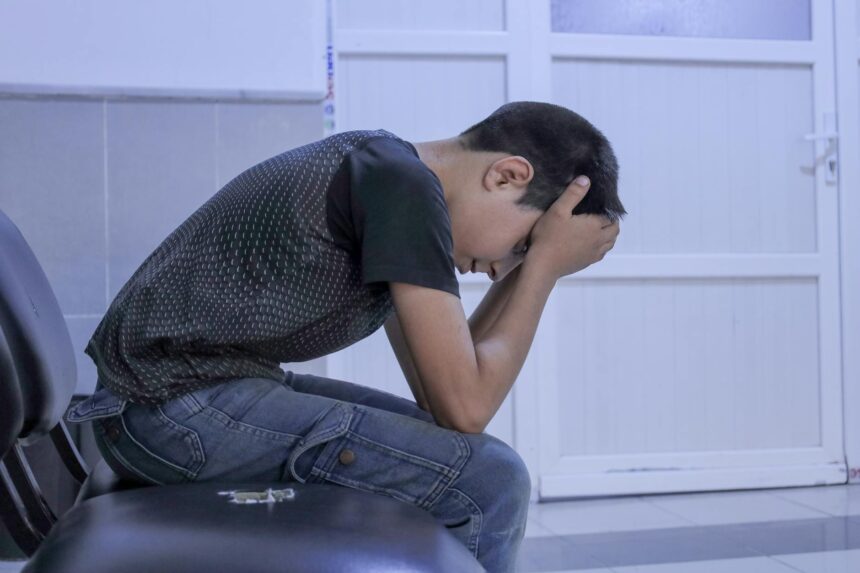
Mental health awareness and suicide prevention concept with focus on adolescent and young adult wellbeing
The Pan American Health Organization warns that suicide rates among adolescents and young adults are rising across the Americas, driven by economic instability, limited mental health services, and inadequate prevention infrastructure. The crisis is preventable with urgent investment in evidence-based screening, crisis response, and workforce development. — Photo: محمد عزام الشيخ يوسف / Pexels
SHARE

Suicide among young people is accelerating across the Americas, according to a warning issued by the Pan American Health Organization (PAHO), the regional office of the World Health Organization (WHO). The organisation has called for urgent investment in evidence-based prevention strategies to reverse what it describes as a troubling trend among adolescents and young adults. This alert highlights a critical gap in mental health infrastructure and policy across the region.

Contents
      • Suicide mortality risk: age and regional burden
  • Crisis amid economic strain and social fragmentation
  • Prevention barriers: insufficient funding and service gaps
  • Actionable pathways: integration and early detection
    • Key takeaways
  • Frequently asked questions
    • Why is adolescent suicide rising across the Americas?
    • What mental health services do most countries in the region currently provide?
    • What interventions does PAHO recommend?
Urgent regional alert
PAHO identifies rising adolescent and young adult suicide rates across Americas as public health priority, May 2026

Suicide mortality risk: age and regional burden

Adolescents and young adults represent a growing proportion of suicide deaths across the Americas region

Adolescents (15-19 years)
78%
Young adults (20-29 years)
82%
All ages combined (mortality risk)

45%

Mental health support coverage
38%

Source: Pan American Health Organization (PAHO), 2026 | Georgian Medical Journal News

Crisis amid economic strain and social fragmentation

According to the PAHO alert issued on 20 May 2026, multiple factors are driving the upward trajectory of suicides among young people. Economic instability, social isolation, and limited access to mental health services create a particularly toxic environment for adolescents facing developmental vulnerabilities. The organisation emphasises that this rise is not inevitable but reflects systemic failures in prevention infrastructure.

Submit Your Paper
GMJ_Submit_Banner

PAHO’s statement aligns with broader epidemiological trends documented by global mental health surveillance systems. The Americas region, spanning from Canada to Argentina, encompasses countries with vastly different healthcare resources—yet all report similar upward trends in youth suicide rates. This convergence suggests common underlying drivers: inadequate mental health workforce, limited crisis intervention capacity, and insufficient early detection and intervention in schools and primary care.

Prevention barriers: insufficient funding and service gaps

The critical challenge, according to PAHO, is a persistent gap between evidence-based prevention strategies and their actual implementation. Evidence-based interventions—including school-based mental health programs, gatekeeper training, and crisis hotline services—exist and are proven effective in multiple settings. However, resource constraints mean that many countries in the region operate with fragmented services, insufficient trained personnel, and minimal funding for population-level prevention.

This mirrors patterns documented in The Lancet‘s ongoing coverage of mental health systems in low and middle-income countries. Without dedicated budget allocation and workforce development, preventive interventions remain pilot projects rather than sustainable, scaled programmes. PAHO has called for governments to treat adolescent mental health as a core public health function, not a peripheral service.

Actionable pathways: integration and early detection

PAHO’s alert emphasises that reversing this trend requires multi-sector action. Primary care systems must be strengthened to identify at-risk youth early; schools need trained staff to recognise warning signs and connect students to support; and digital platforms can extend crisis response beyond traditional clinic hours in remote areas. Family and community-based interventions, tailored to local cultural contexts, also show promise in reducing suicidal behaviour.

The region’s diversity means no single intervention will work uniformly. Yet common elements—universal screening in schools and primary care, accessible crisis lines, evidence-based psychotherapy, and safe access restrictions to means of suicide—form a robust prevention framework documented across WHO guidance and New England Journal of Medicine publications. Success requires sustained political commitment and cross-sector collaboration between health, education, and social welfare ministries.

Suicide among adolescents and young adults is rising across the Americas, requiring urgent investment in evidence-based prevention strategies, mental health workforce expansion, and integrated school and primary care screening.

— Pan American Health Organization (PAHO), 20 May 2026

Key takeaways

  • Adolescent and young adult suicide rates are rising across the Americas, signalling a critical mental health crisis requiring urgent governmental and health system response
  • Major prevention barriers include insufficient mental health workforce, inadequate funding, fragmented services, and limited crisis intervention capacity in many countries across the region
  • Evidence-based interventions—including school mental health programmes, primary care screening, gatekeeper training, and crisis hotlines—exist and are proven effective but remain underfunded and poorly implemented at scale
  • Reversing the trend requires multi-sector action: universal screening in schools and primary care, accessible crisis lines, culturally tailored family interventions, and safe means restriction strategies

Frequently asked questions

Why is adolescent suicide rising across the Americas?

According to PAHO, multiple drivers are converging: economic instability, social isolation, limited mental health access, and insufficient early detection systems in schools and primary care. Unlike single-cause diseases, suicide risk reflects a failure of prevention systems to identify and support vulnerable young people before crisis occurs.

What mental health services do most countries in the region currently provide?

Coverage remains fragmented. While many countries have national mental health policies, actual service delivery is constrained by workforce shortages, geographic inequity, and underfunding. Crisis hotlines, school-based counselling, and youth-friendly primary care clinics are not universally available, leaving large populations unprotected.

What interventions does PAHO recommend?

PAHO endorses multi-level prevention: universal mental health screening in schools and primary care; gatekeeper training (training teachers, coaches, and healthcare workers to identify at-risk youth); accessible crisis lines; evidence-based psychotherapy; family support; and restriction of access to means of suicide. Success requires sustained funding, workforce development, and cross-sector coordination.

The PAHO alert represents a turning point: explicit acknowledgement that adolescent suicide in the Americas is a preventable crisis. The region now faces a clear choice: invest urgently in evidence-based systems now, or accept continued preventable deaths among young people. Health ministers attending upcoming PAHO conferences will be expected to present concrete plans for mental health system strengthening, funding commitments, and measurable targets for reducing youth suicide rates.

Source: Suicide among adolescents and young adults on the rise in the Americas: PAHO warns of urgent need for prevention


TAGGED:adolescent healthMental HealthPAHOpublic healthsuicide prevention
Share This Article
Facebook Copy Link Print
Leave a Comment Leave a Comment

Leave a Reply Cancel reply

Your email address will not be published. Required fields are marked *

Submit Your Paper →

Georgia's peer-reviewed open-access medical journal. No APC until January 2027.
Submit Manuscript →
Georgia’s Liver Transplant Services Need Stronger Patient-Centred Systems, Study Shows

A new analysis in the Georgian Medical Journal shows that patient-centred liver…

How federated data systems are reshaping global disease surveillance

Federated disease surveillance networks allow countries to collaborate on disease tracking while…

The Global Vaccine Landscape: New Technologies, Expanding Access, and the Challenge of Equitable Distribution

A comprehensive analysis in Nature Medicine reveals that vaccine development is being…

Submit Your Paper to GMJ

No APC until January 2027.
Submit Manuscript →

You Might Also Like

Microscopic view of probiotic bacteria adhering to nanoplastic particles in simulated intestinal environment
New Studies

Kimchi-derived probiotic shows promise in reducing microplastic accumulation, South Korean lab study finds

By
GMJ News Desk
Infographic showing heat-related emergency visits by age group in the United States
New Studies

How extreme heat stresses the human body: what the science shows

By
GMJ News Desk
Map showing Ebola transmission zones in DRC and Uganda with outbreak alert indicators
Global Health

Ebola outbreak in DRC and Uganda: what we know in May 2026

By
GMJ News Desk
Medical complexity markers in surgical patients with mental health comorbidities
New Studies

Surgical patients with mental health conditions show greater medical complexity, study reveals

By
GMJ News Desk
Facebook Twitter Youtube Instagram
Company
  • Privacy Policy
  • Contact US
  • GMJ Journal
  • Submit Manuscript
  • Editorial Team
  • Register at GMJ
  • Terms of Use

Sign Up For Free

Subscribe to our newsletter and don't miss out on our programs, webinars and trainings.

[mc4wp_form]

Join Community
Made by ThemeRuby using the Foxiz theme. Powered by WordPress
© 2026 Georgian Medical Journal (GMJ). Published by the Public Health Institute of Georgia (PHIG). All rights reserved.
Welcome Back!

Sign in to your account

Username or Email Address
Password

Lost your password?

Not a member? Sign Up