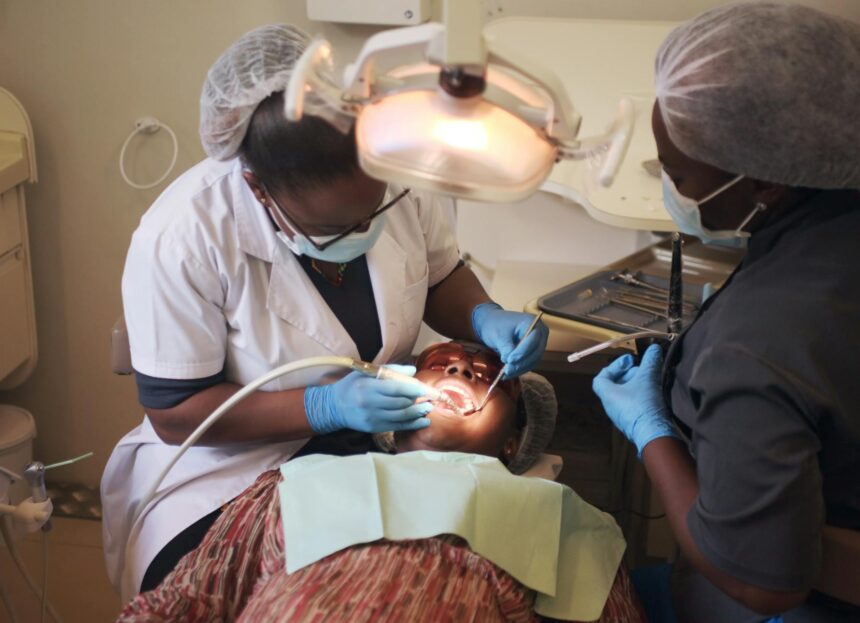
Updated 13/09/2026
Tanzania has unveiled its National Oral Health Strategic Plan V (2026–2031), a government-backed framework designed to expand equitable access to oral healthcare and address a significant disease burden across the country. Developed by the Ministry of Health in alignment with the WHO Global Strategy on Oral Health 2023–2030, the plan responds to evidence of high prevalence of dental caries, periodontal disease, fluorosis, and malocclusion documented in Tanzania’s 2020 National Oral Health Survey.
Tanzania’s Oral Health Strategic Priorities 2026–2031
Six core pillars of the national plan to improve oral health access and quality
Source: Tanzania Ministry of Health, National Oral Health Strategic Plan V 2026–2031 | Georgian Medical Journal News

Bridging the Coverage Gap in Public Facilities
The Tanzania National Oral Health Strategic Plan V (2026–2031) explicitly targets expansion of oral healthcare service availability across Tanzania’s public health facilities and acknowledges existing gaps in service coverage that have left many Tanzanians without access to preventive and curative oral care. According to the plan, the Ministry of Health aims to implement integrated, equitable, and affordable oral health services through strengthened national and sub-national health structures.
By prioritizing infrastructure upgrades and service expansion, Tanzania seeks to move toward universal health coverage principles that ensure all residents can access essential oral healthcare without financial hardship.
Workforce and Resource Constraints Require Bold Investment
The Tanzania National Oral Health Strategic Plan V (2026–2031) identifies significant workforce shortages and financing gaps as revealed by Tanzania’s 2020 National Oral Health Survey. The strategic plan identifies enhancement of human resources for oral health as a core priority, recognizing that insufficient numbers of trained dentists, dental therapists, and hygienists represent a major bottleneck to expanding care.
According to the plan, improving the availability of commodities and equipment represents a key priority area where Tanzania has historically faced supply chain challenges. The Ministry aims to create sustainable pathways for procurement and maintenance of essential dental equipment across both urban and rural settings through embedded resource mobilization and routine monitoring mechanisms in the five-year implementation framework.
The strategy is informed by evidence from the 2020 National Oral Health Survey, which highlights high prevalence of dental caries, periodontal diseases, dental fluorosis, and malocclusion among both children and adults, alongside significant gaps in service coverage, workforce availability, and financing.
— Tanzania Ministry of Health, National Oral Health Strategic Plan V (2026–2031)
Prevention and Surveillance as Cornerstones of Long-Term Progress
According to the Tanzania National Oral Health Strategic Plan V (2026–2031), the plan elevates oral health promotion and disease prevention to strategic priority status. The strategy emphasizes population-level interventions as key components of the comprehensive framework.
The plan commits to strengthening surveillance, monitoring, and research systems as one of its six key priority areas. By investing in robust data collection and epidemiological research, Tanzania will be able to track progress toward measurable targets, identify emerging oral health threats, and generate local evidence to inform future policy decisions.
Key takeaways
- Tanzania’s five-year oral health strategy targets six interconnected priority areas, from workforce development to surveillance systems, to close gaps in service access and quality.
- The 2020 National Oral Health Survey documented high disease burden (dental caries, periodontal disease, fluorosis) alongside critical shortages in workforce, equipment, and financing.
- Implementation will rely on partnerships, resource mobilization, and routine monitoring embedded within national and sub-national health structures to ensure accountability and sustainability.
Frequently asked questions
Why did Tanzania develop a new oral health strategic plan in 2026?
According to the Tanzania National Oral Health Strategic Plan V (2026–2031), the plan responds to evidence from the 2020 National Oral Health Survey, which revealed a high burden of dental caries, periodontal disease, and related conditions, coupled with significant gaps in service coverage, trained workforce, and financing. The new strategy builds on lessons from previous plans and aligns with the WHO Global Strategy on Oral Health 2023–2030.
What are the main barriers to oral healthcare access in Tanzania?
According to the plan, key barriers include insufficient numbers of trained dental professionals, limited availability of equipment and commodities, weak infrastructure in rural areas, and inadequate financing for public oral health services. The strategic plan directly addresses each of these constraints.
How will Tanzania measure progress on this plan?
According to the Tanzania National Oral Health Strategic Plan V (2026–2031), the Ministry of Health has embedded routine monitoring and evaluation mechanisms into the implementation framework. Progress will be tracked through national and sub-national health structures, with data collected via the strengthened surveillance and research systems outlined as a core priority area.
Over the next five years, Tanzania’s success in executing this oral health strategy will depend on sustained political commitment, adequate resource mobilization, and effective coordination across Ministry of Health units and partner organizations.
Source: Tanzania National Oral Health Strategic Plan V (2026–2031)
{“@context”:”https://schema.org”,”@type”:”FAQPage”,”mainEntity”:[{“@type”:”Question”,”name”:”Why did Tanzania develop a new oral health strategic plan in 2026?”,”acceptedAnswer”:{“@type”:”Answer”,”text”:”According to the Tanzania National Oral Health Strategic Plan V (2026–2031), the plan responds to evidence from the 2020 National Oral Health Survey, which revealed a high burden of dental caries, periodontal disease, and related conditions, coupled with significant gaps in service coverage, trained workforce, and financing. The new strategy builds on lessons from previous plans and aligns with the WHO Global Strategy on Oral Health 2023–2030.”}},{“@type”:”Question”,”name”:”What are the main barriers to oral healthcare access in Tanzania?”,”acceptedAnswer”:{“@type”:”Answer”,”text”:”According to the plan, key barriers include insufficient numbers of trained dental professionals, limited availability of equipment and commodities, weak infrastructure in rural areas, and inadequate financing for public oral health services. The strategic plan directly addresses each of these constraints.”}},{“@type”:”Question”,”name”:”How will Tanzania measure progress on this plan?”,”acceptedAnswer”:{“@type”:”Answer”,”text”:”According to the Tanzania National Oral Health Strategic Plan V (2026–2031), the Ministry of Health has embedded routine monitoring and evaluation mechanisms into the implementation framework. Progress will be tracked through national and sub-national health structures, with data collected via the strengthened surveillance and research systems outlined as a core priority area.”}}]}
🗺️ Find certified Georgian healthcare providers: sheniekimi.ge — Georgia Health Map · 998 clinics · 6,600+ doctors · 2,296 pharmacies
Was this article helpful?
Disclaimer. This article is health journalism intended for general information and education. It is not medical advice and is not a substitute for professional diagnosis or treatment. Always consult a qualified healthcare provider about your individual circumstances. Full disclaimer →
Related Coverage




Editorial standards. This article was produced under the GMJ News editorial process, with oversight by the GMJ Editorial Board. Our editorial process. Spotted an error? Contact the editorial team.