By using this site, you agree to the Privacy Policy and Terms of Use.
Accept
GMJ NewsGMJ NewsGMJ News
  • Latest News
  • Research Digest
    • New Studies
    • Georgian Research
    • Data & Numbers
  • Policy & Systems
    • Health Policy
    • Quality & Safety
    • Migration & Health
    • Global Health
  • Practice
    • Clinical Updates
    • Case Discussions
    • Pharmacy & Prescribing
  • Perspectives
    • Editorial
    • Explainers
    • Voices
    • Letters
  • Podcast & Media
    • Podcast Episodes
    • Video
    • Infographics
  • GMJ Articles
    • Vol. 1 Issue 2 (2026)
    • Vol. 1 Issue 1 (2026)
    • Pre-Launch Articles (2025)
  • Read the Journal →
Notification Show More
Font ResizerAa
GMJ NewsGMJ News
Font ResizerAa
  • Latest News
  • Research Digest
    • New Studies
    • Georgian Research
    • Data & Numbers
  • Policy & Systems
    • Health Policy
    • Quality & Safety
    • Migration & Health
    • Global Health
  • Practice
    • Clinical Updates
    • Case Discussions
    • Pharmacy & Prescribing
  • Perspectives
    • Editorial
    • Explainers
    • Voices
    • Letters
  • Podcast & Media
    • Podcast Episodes
    • Video
    • Infographics
  • GMJ Articles
    • Vol. 1 Issue 2 (2026)
    • Vol. 1 Issue 1 (2026)
    • Pre-Launch Articles (2025)
  • Read the Journal →
Follow US
GMJ News > Clinical Updates > UK tightens oversight of high-street health self-tests after BMJ finds safety gaps
Clinical Updates

UK tightens oversight of high-street health self-tests after BMJ finds safety gaps

GMJ
Last updated: 05/21/2026 16:12
By
GMJ News Desk
Share
11 Min Read
Self-test products on UK high street retailer shelf, representing growing unregulated diagnostics market
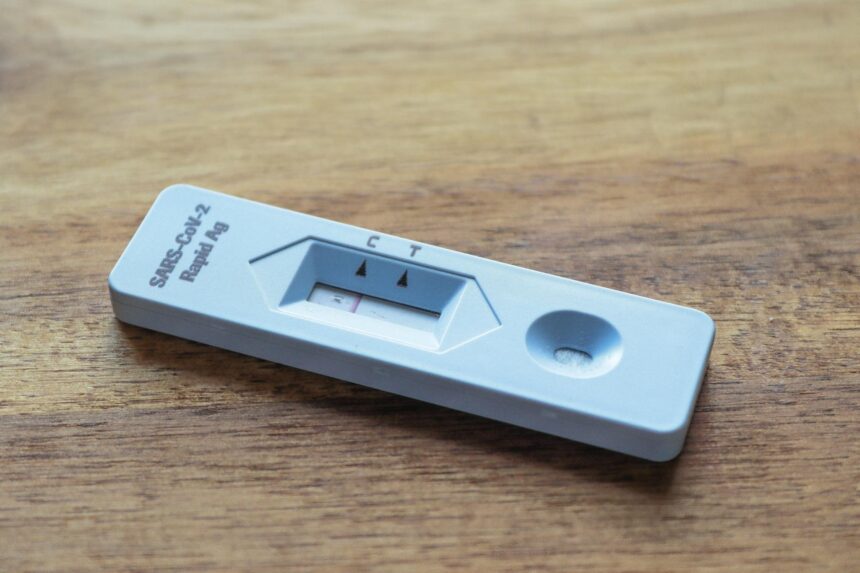
The UK's medicines regulator is planning stricter oversight of high-street health self-tests following a BMJ investigation revealing that most manufacturers refuse to provide evidence supporting their claims. The self-test market is projected to reach £660 million by 2030. — Photo: detait / Pexels
SHARE

The UK’s medicines and devices regulator is planning stricter oversight of popular health self-testing kits sold in high street retailers, including enforcement against “misleading or unsubstantiated claims,” following an investigation published in The BMJ that revealed significant safety and evidentiary gaps in the self-test market.

Contents
      • Self-test market growth and regulatory gaps
  • A market growing faster than oversight
  • The evidence gap: manufacturers dodge accountability
  • Regulatory response: enforcement on the horizon
  • Implications for patients and clinicians
    • Key takeaways
  • Frequently asked questions
    • Why are self-tests not already regulated like prescription diagnostics?
    • How can I tell if a self-test is reliable before buying it?
    • Will the new regulations make self-tests more expensive?
£660m
Projected UK self-test market revenue by 2030, up from current high-street availability in major retailers including Tesco and Superdrug at prices between £1.89 and £39.99

Self-test market growth and regulatory gaps

UK self-test market revenue projection to 2030, alongside key safety findings from BMJ investigation

£660m
Projected market
value by 2030
Majority
Manufacturers refused
or ignored evidence
requests
Multiple
Tests for serious
diseases found
unsafe

Source: The BMJ Investigation, 2026; UK market projections | Georgian Medical Journal News

A market growing faster than oversight

Self-testing kits for health conditions—from fertility and thyroid function to cancer screening markers—have proliferated on UK shelves without rigorous pre-market validation. According to The BMJ investigation, the explosive growth of direct-to-consumer testing has outpaced regulatory scrutiny, leaving consumers vulnerable to inaccurate results and unsubstantiated health claims.

Submit Your Paper
GMJ_Submit_Banner

The market’s expansion reflects genuine consumer demand for autonomy and convenience in healthcare. Yet this convenience comes with hidden costs: patients purchasing self-tests in supermarkets often lack clinical support to interpret results or understand the limitations of these products.

The evidence gap: manufacturers dodge accountability

A central finding of the BMJ investigation was the systematic reluctance of self-test manufacturers to provide scientific evidence supporting their products’ safety and accuracy claims. The research team contacted manufacturers requesting clinical validation data—the gold standard for evaluating diagnostic performance—and found that most either refused outright or ignored repeated requests.

This opacity is particularly troubling for tests marketed for serious conditions. Tests claiming to screen for cancer, cardiac disease, or infectious disease carry significant clinical consequences if false negatives cause delayed diagnosis. Without access to peer-reviewed studies demonstrating analytical and clinical validity, regulators and clinicians cannot assess whether these products perform as claimed.

The lack of manufacturer transparency stands in stark contrast to pharmaceutical and medical device standards elsewhere in the European Union and United States, where FDA and EMA premarket approval processes require extensive clinical evidence. Self-tests, by contrast, have often entered the UK market with minimal regulatory friction.

Regulatory response: enforcement on the horizon

In response to the BMJ findings, the UK’s Medicines and Healthcare Products Regulatory Agency (MHRA) has signalled its intention to strengthen enforcement against unsubstantiated marketing claims and unsafe products. The regulator is reportedly developing clearer guidance on what constitutes acceptable evidence for self-test claims and plans to remove products that fail to meet new standards.

This shift reflects a broader recognition that consumer protection requires pre-market scrutiny, not post-market surveillance alone. The MHRA’s planned approach mirrors recommendations from WHO guidance on in vitro diagnostics, which emphasizes the need for clinical validation before market entry, particularly for tests used in serious disease screening.

Most high-street health self-test manufacturers either refused or ignored requests to provide reports of studies supporting their claims, raising serious questions about the scientific basis for their marketing.

— BMJ Investigation Team (The BMJ, 2026)

Implications for patients and clinicians

Stricter oversight carries important implications for three stakeholder groups. For patients, stronger regulation should reduce the risk of purchasing inaccurate or misleading tests. For primary care clinicians, clearer regulatory standards will help establish which self-tests are sufficiently validated to inform clinical decision-making. For manufacturers, the change signals that competing on price and shelf space alone is no longer viable—scientific evidence will become a market requirement.

The timing of this regulatory shift is significant. As the self-test market approaches £660 million in annual revenue by 2030, establishing regulatory coherence now—rather than retrospectively managing safety crises—is both prudent and cost-effective. Countries including the European Union and Canada have already begun similar reviews of direct-to-consumer diagnostics.

Yet questions remain about enforcement capacity and timelines. How quickly will the MHRA review existing products on shelves? Will retailers bear responsibility for removing non-compliant tests? Will manufacturers have a grace period to submit evidence, or will non-compliance trigger immediate delisting? These operational details will determine whether the regulatory intent translates into measurable improvements in patient safety.

Key takeaways

  • The UK self-test market is projected to reach £660 million by 2030, yet most manufacturers have refused or ignored requests to provide scientific evidence supporting their product claims, according to recent clinical evidence published in The BMJ.
  • Tests for serious diseases including cancer are being sold on high streets without adequate pre-market validation, creating potential risks for false negatives and delayed diagnosis.
  • The MHRA is planning stricter enforcement against misleading claims and plans to remove unsafe products, bringing UK standards closer to FDA and EMA practices for regulated diagnostics.
  • Regulatory clarity on acceptable evidence standards will reshape the self-test market, potentially excluding low-cost products that lack scientific validation while establishing rigorous competitors.

Frequently asked questions

Why are self-tests not already regulated like prescription diagnostics?

In the UK and many countries, over-the-counter self-tests occupy a regulatory grey zone between consumer products and medical devices. Unlike prescription diagnostics, which require formal premarket approval, many self-tests have been classified as general wellness products or low-risk devices, requiring minimal evidence of clinical validity. The BMJ investigation revealed that this light-touch approach has allowed unsafe and unvalidated products to reach consumers.

How can I tell if a self-test is reliable before buying it?

Look for products that manufacturers are willing to support with published clinical evidence—specifically, papers showing analytical validity (does it accurately measure what it claims?) and clinical validity (does it correlate with the actual disease?). Ask retailers whether they have seen manufacturer evidence supporting the test’s accuracy. If a manufacturer refuses to provide this information, that is a red flag. Products validated by healthcare professional bodies or listed on trusted databases (such as NHS-approved diagnostics) carry greater assurance than those sold solely by shelf price.

Will the new regulations make self-tests more expensive?

Potentially, yes. Self-tests that can demonstrate robust clinical evidence will likely command higher prices than unvalidated competitors currently sold at £1.89–£5.99. However, regulatory clarity should also incentivize legitimate manufacturers to invest in validation, creating a competitive market of properly vetted products rather than a price-driven race to the bottom. The long-term benefit—fewer false results and delayed diagnoses—justifies the near-term increase in cost for validated self-tests.

The UK’s regulatory shift reflects a maturing understanding that consumer autonomy in health testing must be balanced with evidence-based oversight. As self-testing becomes routine for millions of people seeking to avoid NHS delays or take proactive control of their health, the scientific validity of these products ceases to be a niche concern. It becomes a public health imperative. The MHRA’s planned enforcement offers a pragmatic pathway forward—removing the weakest players while rewarding manufacturers who embrace transparency and clinical evidence. Whether this framework can be implemented swiftly enough to match the market’s growth will determine whether the self-test revolution improves or undermines diagnostic accuracy and patient trust.

Source: Health self-testing kit crackdown: Tougher regulations set to remove harmful products from the UK high street following BMJ studies


TAGGED:clinical evidencediagnostic-safetyhealth-self-testingMHRAUK-regulation
Share This Article
Facebook Copy Link Print
Leave a Comment Leave a Comment

Leave a Reply Cancel reply

Your email address will not be published. Required fields are marked *

Submit Your Paper →

Georgia's peer-reviewed open-access medical journal. No APC until January 2027.
Submit Manuscript →
Why Patient-Centred Care Fails in Practice: Georgian Study Reveals the Hidden Barriers

A new commentary in the Georgian Medical Journal reveals why patient-centred care…

Why Patient-Centred Care Fails in Practice: Georgian Study Reveals the Hidden Barriers

A new commentary in the Georgian Medical Journal reveals why patient-centred care…

The Hidden Cost of Risk: When Medical Vigilance Becomes a Disease Itself

Modern medicine's focus on risk identification has created a new burden: the…

Submit Your Paper to GMJ

No APC until January 2027.
Submit Manuscript →

You Might Also Like

Graph showing weight cycling does not increase mortality risk compared to baseline obesity
New Studies

Weight cycling does not increase mortality risk, major study finds

By
GMJ News Desk
FDA medical device alert notice for TRUE METRIX blood glucose monitor
Clinical Updates

FDA Issues Correction Notice for TRUE METRIX Blood Glucose Monitors Over Error Code Risk

By
GMJ News Desk
Clinical laboratory showing advanced cell and gene therapy preparation in a controlled environment
Clinical Updates

New guidance on advanced therapy clinical trials: What researchers need to know

By
GMJ News Desk
Facebook Twitter Youtube Instagram
Company
  • Privacy Policy
  • Contact US
  • GMJ Journal
  • Submit Manuscript
  • Editorial Team
  • Register at GMJ
  • Terms of Use

Sign Up For Free

Subscribe to our newsletter and don't miss out on our programs, webinars and trainings.

[mc4wp_form]

Join Community
Made by ThemeRuby using the Foxiz theme. Powered by WordPress
© 2026 Georgian Medical Journal (GMJ). Published by the Public Health Institute of Georgia (PHIG). All rights reserved.
Welcome Back!

Sign in to your account

Username or Email Address
Password

Lost your password?

Not a member? Sign Up