By using this site, you agree to the Privacy Policy and Terms of Use.
Accept
GMJ NewsGMJ NewsGMJ News
  • Latest News
    • GMJ Briefs
  • Podcast & Media
    • Podcast Episodes
    • GMJ Audio
    • GMJ Videos
  • Research Digest
    • New Studies
    • Georgian Research
    • Data & Numbers
  • Policy & Systems
    • Health Policy
    • Quality & Safety
    • Migration & Health
    • Global Health
  • Practice
    • Clinical Updates
    • Case Discussions
    • Pharmacy & Prescribing
    • Ingredients A-Z
  • Perspectives
    • Editorial
    • Explainers
    • Voices
    • Letters
  • GMJ Articles
    • Vol. 1 Issue 2 (2026)
    • Vol. 1 Issue 1 (2026)
    • Pre-Launch Articles (2025)
  • Read the Journal →
  • About GMJ News
Notification Show More
Font ResizerAa
GMJ NewsGMJ News
Font ResizerAa
  • Latest News
    • GMJ Briefs
  • Podcast & Media
    • Podcast Episodes
    • GMJ Audio
    • GMJ Videos
  • Research Digest
    • New Studies
    • Georgian Research
    • Data & Numbers
  • Policy & Systems
    • Health Policy
    • Quality & Safety
    • Migration & Health
    • Global Health
  • Practice
    • Clinical Updates
    • Case Discussions
    • Pharmacy & Prescribing
    • Ingredients A-Z
  • Perspectives
    • Editorial
    • Explainers
    • Voices
    • Letters
  • GMJ Articles
    • Vol. 1 Issue 2 (2026)
    • Vol. 1 Issue 1 (2026)
    • Pre-Launch Articles (2025)
  • Read the Journal →
  • About GMJ News
Follow US
GMJ News > GMJ Briefs > Autism Disparities: Why Asian/Pacific Islander Children Show Lower Diagnosis Rates

Autism Disparities: Why Asian/Pacific Islander Children Show Lower Diagnosis Rates

GMJ
Last updated: 16/07/2026 18:43
By
Prof. Giorgi Pkhakadze
Share
1 Min Read
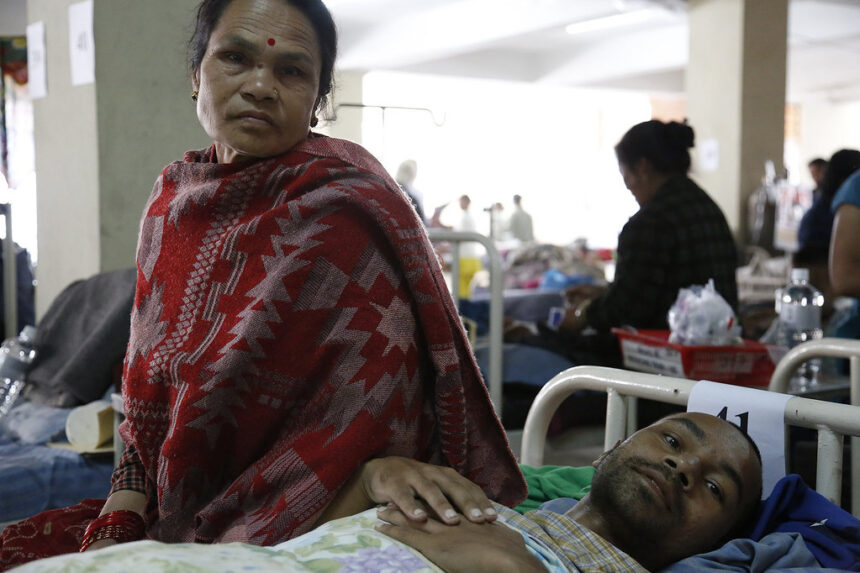
Healthcare provider counseling diverse family about autism support services
Cultural stigma in South Asian American families creates unique barriers to autism care access. Psychiatrist highlights how family crisis responses can delay necessary interventions. — "British medics help earthquake-hit hospital in Kathmandu, Nepal" by DFID - UK Department for International Development is licensed under CC BY 2.0. To view a copy of this license, visit https://creativecommons.org/licenses/by/2.0/. (CC BY 2.0)
SHARE
1 min read|130 words

CDC surveillance data reveals a significant disparity in autism diagnosis rates across ethnic groups in the United States. Asian and Pacific Islander children show a reported prevalence of 14.8 per 1,000, compared to 24.7 per 1,000 among white children—a substantial gap that experts attribute partly to cultural and systemic barriers. These lower reported rates may not reflect true prevalence but rather underdiagnosis influenced by cultural stigma, language barriers, and healthcare access disparities. Dr. Ritu Goel argues that cultural factors in South Asian families—including concerns about family reputation and disability disclosure—may contribute to delayed diagnoses and underreporting. The data underscores the need for targeted outreach, culturally competent screening practices, and community education to ensure equitable identification and care for all children with autism spectrum disorder. Read the full article on GMJ Newsroom.

Was this article helpful?

GMJ Brief · Key Finding

📰 Read the full article: Autism Stigma in South Asian American Families Creates Barriers to Care, Psychiatrist Warns →

Share This Article
Facebook LinkedIn Bluesky Copy Link Print
GMJ
ByProf. Giorgi Pkhakadze
Follow:
Prof. Giorgi Pkhakadze, MD, MPH, PhD, is Editor-in-Chief of the Georgian Medical Journal and Chair of the Public Health Institute of Georgia (PHIG). He is Professor and Head of the Department of Social and Behavioural Sciences at David Tvildiani Medical University, and Secretary/Treasurer of the UEMS Section of Public Health. ORCID: 0000-0001-7609-4515.

Submit Your Paper →

Georgia's peer-reviewed open-access medical journal. No APC until January 2027.
Submit Manuscript →
Zinc depletion in athletes: why the standard RDA falls short during training

The human body stores only ~2 grams of zinc with no physiological…

How Your Body Switches Between Two Operating Systems: The Autonomic Nervous System Explained

Your body operates two competing nervous systems that constantly switch control. The…

How Diet Shapes Your Gut Microbiome—and Why It Matters for Health

Food functions as a biological intervention that reshapes your gut microbiome, directly…

Submit Your Paper to GMJ

No APC until January 2027.
Submit Manuscript →

You Might Also Like

Illustration of microglia immune cells in brain tissue with amyloid-beta plaques

Novel Molecule OLE Shows Promise in Reprogramming Brain Immune Cells Against Alzheimer’s

By
Prof. Giorgi Pkhakadze
21/07/2026
Healthcare providers attending to pregnant women in clinical setting

The Quality-Coverage Gap: What Three Exemplar Countries Reveal About Maternal Health Progress

By
Prof. Giorgi Pkhakadze
22/06/2026
UK pharmaceutical regulation document showing medicine broker oversight framework

What Healthcare Providers Need to Know About UK Medicine Broker Verification

By
Prof. Giorgi Pkhakadze
13/07/2026
Infographic showing global mental health disability statistics with rising trend line

1.2 Billion People Disabled by Mental Health: A Stark Global Inequality

By
Prof. Giorgi Pkhakadze
15/06/2026
Facebook Twitter Youtube Instagram
Company
  • Privacy Policy
  • Contact US
  • GMJ Journal
  • Submit Manuscript
  • Editorial Team
  • Register at GMJ
  • Terms of Use

Subscribe to GMJ News — Click here

Join Community
© 2026 Georgian Medical Journal (GMJ). Published by the Public Health Institute of Georgia (PHIG). All rights reserved.
Welcome Back!

Sign in to your account

Username or Email Address
Password

Lost your password?

Not a member? Sign Up