By using this site, you agree to the Privacy Policy and Terms of Use.
Accept
GMJ NewsGMJ NewsGMJ News
  • Latest News
    • GMJ Briefs
  • Podcast & Media
    • Podcast Episodes
    • GMJ Audio
    • GMJ Videos
  • Research Digest
    • New Studies
    • Georgian Research
    • Data & Numbers
  • Policy & Systems
    • Health Policy
    • Quality & Safety
    • Migration & Health
    • Global Health
  • Practice
    • Clinical Updates
    • Case Discussions
    • Pharmacy & Prescribing
    • Ingredients A-Z
  • Perspectives
    • Editorial
    • Explainers
    • Voices
    • Letters
  • GMJ Articles
    • Vol. 1 Issue 2 (2026)
    • Vol. 1 Issue 1 (2026)
    • Pre-Launch Articles (2025)
  • Read the Journal →
  • About GMJ News
Notification Show More
Font ResizerAa
GMJ NewsGMJ News
Font ResizerAa
  • Latest News
    • GMJ Briefs
  • Podcast & Media
    • Podcast Episodes
    • GMJ Audio
    • GMJ Videos
  • Research Digest
    • New Studies
    • Georgian Research
    • Data & Numbers
  • Policy & Systems
    • Health Policy
    • Quality & Safety
    • Migration & Health
    • Global Health
  • Practice
    • Clinical Updates
    • Case Discussions
    • Pharmacy & Prescribing
    • Ingredients A-Z
  • Perspectives
    • Editorial
    • Explainers
    • Voices
    • Letters
  • GMJ Articles
    • Vol. 1 Issue 2 (2026)
    • Vol. 1 Issue 1 (2026)
    • Pre-Launch Articles (2025)
  • Read the Journal →
  • About GMJ News
Follow US
GMJ News > GMJ Briefs > Three Critical Implications from Septic Shock Treatment Trial for Clinical Practice

Three Critical Implications from Septic Shock Treatment Trial for Clinical Practice

GMJ
Last updated: 04/08/2026 00:43
By
Prof. Giorgi Pkhakadze
Share
1 Min Read
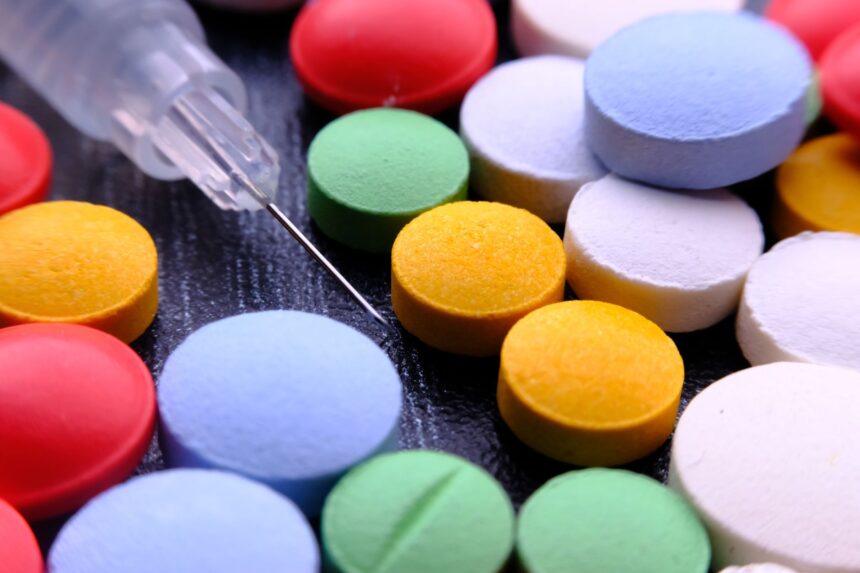
Medical chart showing comparison between vasopressor and fluid therapy outcomes in septic shock patients
Landmark NEJM trial shows early vasopressor therapy is as effective as aggressive fluid resuscitation in septic shock patients. Results challenge current international guidelines emphasizing fluid-first approaches. — Photo by Towfiqu barbhuiya on Pexels (Pexels License)
SHARE
1 min read|171 words

A major randomized controlled trial published in The New England Journal of Medicine offers three essential insights that clinicians should understand about septic shock management. First, early vasopressor therapy demonstrates equivalent efficacy to aggressive fluid resuscitation for improving survival, meaning both approaches can achieve comparable 90-day mortality outcomes across diverse patient populations.

Second, the vasopressor-first strategy may offer distinct advantages by reducing fluid overload—a significant concern in contemporary critical care, as excessive crystalloid administration is associated with increased complications including acute kidney injury and prolonged mechanical ventilation. Third, the trial’s findings suggest current international guidelines emphasizing early aggressive fluids may require substantial revision, potentially expanding treatment options available to emergency and ICU teams.

Clinicians should recognize these results indicate greater flexibility in initial septic shock management, with treatment selection potentially based on individual patient factors such as baseline kidney function, cardiac status, and fluid responsiveness rather than a universal protocol. These evidence-based insights may enable more personalized, physiologically-guided approaches to this life-threatening condition.

Read the full article on GMJ Newsroom.

Submit Your Paper
GMJ_Submit_Banner

Was this article helpful?

GMJ Brief · Takeaway

📰 Read the full article: Early Vasopressors Versus Fluid Resuscitation in Septic Shock: Major Trial Challenges Standard Practice →

Share This Article
Facebook LinkedIn Bluesky Copy Link Print
GMJ
ByProf. Giorgi Pkhakadze
Follow:
Prof. Giorgi Pkhakadze, MD, MPH, PhD, is Editor-in-Chief of the Georgian Medical Journal and Chair of the Public Health Institute of Georgia (PHIG). He is Professor and Head of the Department of Social and Behavioural Sciences at David Tvildiani Medical University, and Secretary/Treasurer of the UEMS Section of Public Health. ORCID: 0000-0001-7609-4515.

Submit Your Paper →

Georgia's peer-reviewed open-access medical journal. No APC until January 2027.
Submit Manuscript →
L-Theanine Improves Task Accuracy Without Expected Brain Wave Changes, Research Shows

L-theanine marketing claims about alpha brain wave enhancement lack experimental support in…

Astrocytes Reshape Understanding of Brain Control: Beyond Neurons to Cellular Regulation

Astrocytes, comprising roughly 50% of brain cells, are now recognised as active…

How the immune system learns to remember threats: the science of innate and adaptive immunity

The immune system operates in two coordinated layers: an immediate innate response…

Submit Your Paper to GMJ

No APC until January 2027.
Submit Manuscript →

You Might Also Like

PHEIC Declaration: Ebola Cross-Border Transmission DRC-Uganda

By
Prof. Giorgi Pkhakadze
31/05/2026
Colorful children's picture books focused on mental health education for ages 7-12

Supporting Childhood Mental Health: What Parents and Educators Need to Know

By
Prof. Giorgi Pkhakadze
26/07/2026
Medical illustration showing targeted cancer therapy attacking tumor cells

Daraxonrasib Marks a Turning Point in Pancreatic Cancer Treatment

By
Prof. Giorgi Pkhakadze
10/06/2026
Health PolicyPolicy & Systems

Healthcare Systems Face ‘Moral Emergency’ as Human Connection Erodes Despite Technical Advances

By
Prof. Giorgi Pkhakadze
26/05/2026
Facebook Twitter Youtube Instagram
Company
  • Privacy Policy
  • Contact US
  • GMJ Journal
  • Submit Manuscript
  • Editorial Team
  • Register at GMJ
  • Terms of Use

Subscribe to GMJ News — Click here

Join Community
© 2026 Georgian Medical Journal (GMJ). Published by the Public Health Institute of Georgia (PHIG). All rights reserved.
Welcome Back!

Sign in to your account

Username or Email Address
Password

Lost your password?

Not a member? Sign Up