By using this site, you agree to the Privacy Policy and Terms of Use.
Accept
GMJ NewsGMJ NewsGMJ News
  • Latest News
    • GMJ Briefs
  • Podcast & Media
    • Podcast Episodes
    • GMJ Audio
    • GMJ Videos
  • Research Digest
    • New Studies
    • Georgian Research
    • Data & Numbers
  • Policy & Systems
    • Health Policy
    • Quality & Safety
    • Migration & Health
    • Global Health
  • Practice
    • Clinical Updates
    • Case Discussions
    • Pharmacy & Prescribing
    • Ingredients A-Z
  • Perspectives
    • Editorial
    • Explainers
    • Voices
    • Letters
  • Health Topics
  • GMJ Articles
    • Vol. 1 Issue 2 (2026)
    • Vol. 1 Issue 1 (2026)
    • Pre-Launch Articles (2025)
  • Read the Journal →
  • About GMJ News
Notification Show More
Font ResizerAa
GMJ NewsGMJ News
Font ResizerAa
  • Latest News
    • GMJ Briefs
  • Podcast & Media
    • Podcast Episodes
    • GMJ Audio
    • GMJ Videos
  • Research Digest
    • New Studies
    • Georgian Research
    • Data & Numbers
  • Policy & Systems
    • Health Policy
    • Quality & Safety
    • Migration & Health
    • Global Health
  • Practice
    • Clinical Updates
    • Case Discussions
    • Pharmacy & Prescribing
    • Ingredients A-Z
  • Perspectives
    • Editorial
    • Explainers
    • Voices
    • Letters
  • Health Topics
  • GMJ Articles
    • Vol. 1 Issue 2 (2026)
    • Vol. 1 Issue 1 (2026)
    • Pre-Launch Articles (2025)
  • Read the Journal →
  • About GMJ News
Follow US
GMJ News > GMJ Briefs > From Paper to Practice: What the WHO Migrant Health Scorecard Means for Your System

From Paper to Practice: What the WHO Migrant Health Scorecard Means for Your System

GMJ
Last updated: 06/08/2026 15:06
By
Prof. Giorgi Pkhakadze
Share
1 Min Read
Infographic showing the gap between migration health policies and data collection systems globally
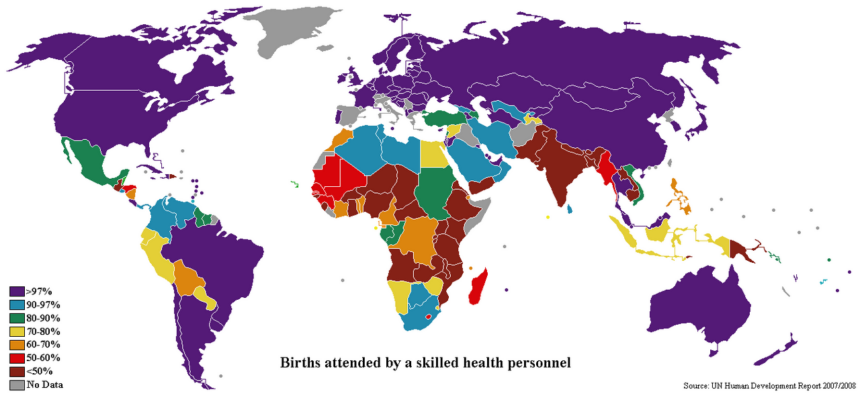
WHO's first global scorecard reveals that while 60+ countries now include migrants in health policies, only 37% collect migration-related health data. Without measurement systems, health policies for over a billion migrants remain unverifiable promises. — Births attended by a skilled health personnel UNHDR 2007-2008.PNG by Sbw01f / CC BY-SA 3.0 via Wikimedia Commons (CC BY-SA 3.0)
SHARE
1 min read|145 words

The WHO’s 2026 migrant health scorecard offers both progress markers and a practical roadmap for health systems lagging behind. The positive: more than 60 countries have successfully embedded migrants into national health policies, demonstrating political will at the highest levels. The challenge: translating these policies into measurable health outcomes requires three critical elements that the report identifies. First, establish routine migration-related data collection mechanisms—currently absent in 63% of countries. Second, integrate migrants into emergency preparedness plans, a step only 42% of countries have completed. Third, learn from proven models: countries like Spain and Brazil have demonstrated concrete approaches that include barrier removal strategies and intersectoral coordination between health, social services, and migration authorities. These aren’t revolutionary changes; they’re systematic improvements that other nations can adapt and implement immediately. The scorecard reveals that the infrastructure for better migrant health exists—it simply requires sustained commitment to measurement and coordination.

Was this article helpful?

GMJ Brief · Takeaway

📰 Read the full article: Health & Migration: policy is moving faster than the data →

Share This Article
Facebook LinkedIn Bluesky Copy Link Print
GMJ
ByProf. Giorgi Pkhakadze
Follow:
Prof. Giorgi Pkhakadze, MD, MPH, PhD, is Editor-in-Chief of the Georgian Medical Journal and Chair of the Public Health Institute of Georgia (PHIG). He is Professor and Head of the Department of Social and Behavioural Sciences at David Tvildiani Medical University, and Secretary/Treasurer of the UEMS Section of Public Health. ORCID: 0000-0001-7609-4515.

Submit Your Paper →

Georgia's peer-reviewed open-access medical journal. No APC until January 2027.
Submit Manuscript →
Timing of Second Stent Placement After Heart Attack: New Trial Challenges Immediate Intervention Strategy

A randomized controlled trial published in the New England Journal of Medicine…

Africa’s Regional Research Hubs: Building Local Capacity for Drug Manufacturing and Health Innovation

Africa needs strategically distributed regional research and development hubs to accelerate local…

New optical imaging technique could improve donor liver assessment before transplantation

Researchers have developed polarization-sensitive optical coherence tomography (PS-OCT) to assess donor liver…

Submit Your Paper to GMJ

No APC until January 2027.
Submit Manuscript →

You Might Also Like

Global HealthPolicy & Systems

WHO Expert Panel Identifies Candidate Vaccines for Rare Bundibugyo Ebola Outbreak

By
Prof. Giorgi Pkhakadze
03/06/2026
Hematopoietic stem cell differentiation pathway showing myeloid and lymphoid lineages

200 Billion Daily: The Staggering Output of Your Bone Marrow Stem Cells

By
Prof. Giorgi Pkhakadze
31/07/2026
Brain wave patterns showing alpha (calm focus) and beta (stress) waves, illustrating L-theanine's neurochemical effects

Brain Wave Shift: L-Theanine Increases Alpha Waves While Suppressing Stress Patterns

By
Prof. Giorgi Pkhakadze
07/08/2026

EBOLA OUTBREAK – DRC/UGANDA CROSS-BORDER TRANSMISSION CONFIRMED

By
Prof. Giorgi Pkhakadze
31/05/2026
Facebook Twitter Youtube Instagram
Company
  • Privacy Policy
  • Contact US
  • GMJ Journal
  • Submit Manuscript
  • Editorial Team
  • Register at GMJ
  • Terms of Use

Subscribe to GMJ News — Click here

Join Community
© 2026 Georgian Medical Journal (GMJ). Published by the Public Health Institute of Georgia (PHIG). All rights reserved.
Welcome Back!

Sign in to your account

Username or Email Address
Password

Lost your password?

Not a member? Sign Up