By using this site, you agree to the Privacy Policy and Terms of Use.
Accept
GMJ NewsGMJ NewsGMJ News
  • Latest News
    • GMJ Briefs
  • Podcast & Media
    • Podcast Episodes
    • GMJ Audio
    • GMJ Videos
  • Research Digest
    • New Studies
    • Georgian Research
    • Data & Numbers
  • Policy & Systems
    • Health Policy
    • Quality & Safety
    • Migration & Health
    • Global Health
  • Practice
    • Clinical Updates
    • Case Discussions
    • Pharmacy & Prescribing
    • Ingredients A-Z
  • Perspectives
    • Editorial
    • Explainers
    • Voices
    • Letters
  • Health Topics
  • GMJ Articles
    • Vol. 1 Issue 2 (2026)
    • Vol. 1 Issue 1 (2026)
    • Pre-Launch Articles (2025)
  • Read the Journal →
  • About GMJ News
Notification Show More
Font ResizerAa
GMJ NewsGMJ News
Font ResizerAa
  • Latest News
    • GMJ Briefs
  • Podcast & Media
    • Podcast Episodes
    • GMJ Audio
    • GMJ Videos
  • Research Digest
    • New Studies
    • Georgian Research
    • Data & Numbers
  • Policy & Systems
    • Health Policy
    • Quality & Safety
    • Migration & Health
    • Global Health
  • Practice
    • Clinical Updates
    • Case Discussions
    • Pharmacy & Prescribing
    • Ingredients A-Z
  • Perspectives
    • Editorial
    • Explainers
    • Voices
    • Letters
  • Health Topics
  • GMJ Articles
    • Vol. 1 Issue 2 (2026)
    • Vol. 1 Issue 1 (2026)
    • Pre-Launch Articles (2025)
  • Read the Journal →
  • About GMJ News
Follow US
GMJ News > GMJ Briefs > Three Essential Insights into Phosphatidylcholine’s Role in Reversing Aging

Three Essential Insights into Phosphatidylcholine’s Role in Reversing Aging

GMJ
Last updated: 07/08/2026 03:06
By
Prof. Giorgi Pkhakadze
Share
1 Min Read
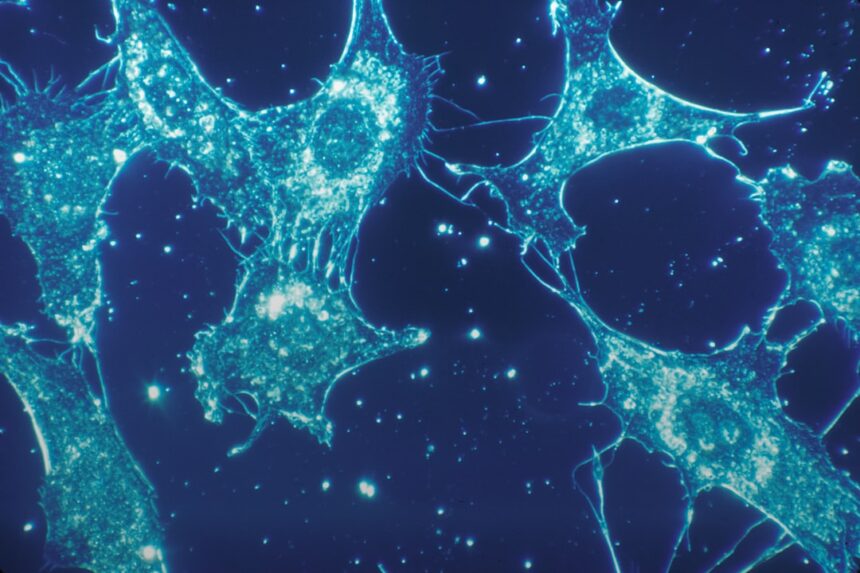
Microscopic view of healthy mitochondria showing restored cellular energy production
New research identifies declining phosphatidylcholine levels as a reversible cause of age-related mitochondrial dysfunction. Supplementation restored youthful cellular energy production in aging organisms. — Photo by National Cancer Institute on Unsplash (Unsplash License)
SHARE
1 min read|132 words

Recent scientific research reveals three critical takeaways about cellular aging and potential interventions. First, phosphatidylcholine deficiency has been identified as a major molecular driver of age-related cellular decline, representing a previously misunderstood aspect of aging mechanisms. Second, supplementation with this essential phospholipid successfully restored mitochondrial function to youthful levels in aging organisms, providing direct evidence of intervention efficacy. Third, these findings suggest that cellular aging may be partially reversible through targeted nutritional approaches rather than being an entirely inevitable process. This knowledge has significant implications for developing preventive strategies and treatment options for age-related diseases. Rather than accepting aging as unchangeable, researchers now point toward the possibility of restoring cellular vitality through molecular interventions. Healthcare professionals and individuals interested in longevity should recognize the potential importance of phosphatidylcholine in maintaining cellular health.

Was this article helpful?

GMJ Brief · Takeaway

📰 Read the full article: Scientists discover reversible molecular cause of cellular aging →

Related reference
  • Choline · Ingredient
Share This Article
Facebook LinkedIn Bluesky Copy Link Print
GMJ
ByProf. Giorgi Pkhakadze
Follow:
Prof. Giorgi Pkhakadze, MD, MPH, PhD, is Editor-in-Chief of the Georgian Medical Journal and Chair of the Public Health Institute of Georgia (PHIG). He is Professor and Head of the Department of Social and Behavioural Sciences at David Tvildiani Medical University, and Secretary/Treasurer of the UEMS Section of Public Health. ORCID: 0000-0001-7609-4515.

Submit Your Paper →

Georgia's peer-reviewed open-access medical journal. No APC until January 2027.
Submit Manuscript →
Physicians as Political Voices: 250 Years of Medicine and American Democracy

A New England Journal of Medicine historical analysis examines 250 years of…

Cat Scratch Disease Returns: What Clinicians and Patients Need to Know

Cat scratch disease, caused by Bartonella henselae, presents with varied clinical manifestations…

Mechanism of chemotherapy resistance in ovarian cancer identified—and reversible

Michigan State University researchers have identified a protein mechanism that confers chemotherapy…

Submit Your Paper to GMJ

No APC until January 2027.
Submit Manuscript →

You Might Also Like

Clinical UpdatesPolicy & SystemsPracticeQuality & Safety

Cyclospora Outbreak Across US: What Patients, Clinicians, and Public Health Officials Need to Know

By
Prof. Giorgi Pkhakadze
19/07/2026
CoQ10 supplement comparison chart showing bioavailability differences between formulations

Your Body Converts CoQ10 Forms Efficiently—Here’s What the Data Shows

By
Prof. Giorgi Pkhakadze
10/06/2026
Adult caregiver supporting both child and elderly parent, representing sandwich generation dual caregiving responsibilities

78% Experience Financial Strain: The Hidden Cost of Dual Caregiving

By
Prof. Giorgi Pkhakadze
27/07/2026
Healthcare professionals participating in pregnancy substance use disorder training program

Three Critical Lessons from Colorado’s Pregnancy Substance Use Training Program for Healthcare Systems

By
Prof. Giorgi Pkhakadze
03/08/2026
Facebook Twitter Youtube Instagram
Company
  • Privacy Policy
  • Contact US
  • GMJ Journal
  • Submit Manuscript
  • Editorial Team
  • Register at GMJ
  • Terms of Use

Subscribe to GMJ News — Click here

Join Community
© 2026 Georgian Medical Journal (GMJ). Published by the Public Health Institute of Georgia (PHIG). All rights reserved.
Welcome Back!

Sign in to your account

Username or Email Address
Password

Lost your password?

Not a member? Sign Up