By using this site, you agree to the Privacy Policy and Terms of Use.
Accept
GMJ NewsGMJ NewsGMJ News
  • Latest News
    • GMJ Briefs
  • Podcast & Media
    • Podcast Episodes
    • GMJ Audio
    • GMJ Videos
  • Research Digest
    • New Studies
    • Georgian Research
    • Data & Numbers
  • Policy & Systems
    • Health Policy
    • Quality & Safety
    • Migration & Health
    • Global Health
  • Practice
    • Clinical Updates
    • Case Discussions
    • Pharmacy & Prescribing
    • Ingredients A-Z
  • Perspectives
    • Editorial
    • Explainers
    • Voices
    • Letters
  • Health Topics
  • GMJ Articles
    • Vol. 1 Issue 2 (2026)
    • Vol. 1 Issue 1 (2026)
    • Pre-Launch Articles (2025)
  • Read the Journal →
  • About GMJ News
Notification Show More
Font ResizerAa
GMJ NewsGMJ News
Font ResizerAa
  • Latest News
    • GMJ Briefs
  • Podcast & Media
    • Podcast Episodes
    • GMJ Audio
    • GMJ Videos
  • Research Digest
    • New Studies
    • Georgian Research
    • Data & Numbers
  • Policy & Systems
    • Health Policy
    • Quality & Safety
    • Migration & Health
    • Global Health
  • Practice
    • Clinical Updates
    • Case Discussions
    • Pharmacy & Prescribing
    • Ingredients A-Z
  • Perspectives
    • Editorial
    • Explainers
    • Voices
    • Letters
  • Health Topics
  • GMJ Articles
    • Vol. 1 Issue 2 (2026)
    • Vol. 1 Issue 1 (2026)
    • Pre-Launch Articles (2025)
  • Read the Journal →
  • About GMJ News
Follow US
GMJ News > GMJ Briefs > Three Critical Elements of Europe’s New H5N1 Detection System Every Health Professional Should Know

Three Critical Elements of Europe’s New H5N1 Detection System Every Health Professional Should Know

GMJ
Last updated: 10/08/2026 11:52
By
Prof. Giorgi Pkhakadze
Share
1 Min Read
Laboratory technician performing avian influenza testing with RT-PCR equipment
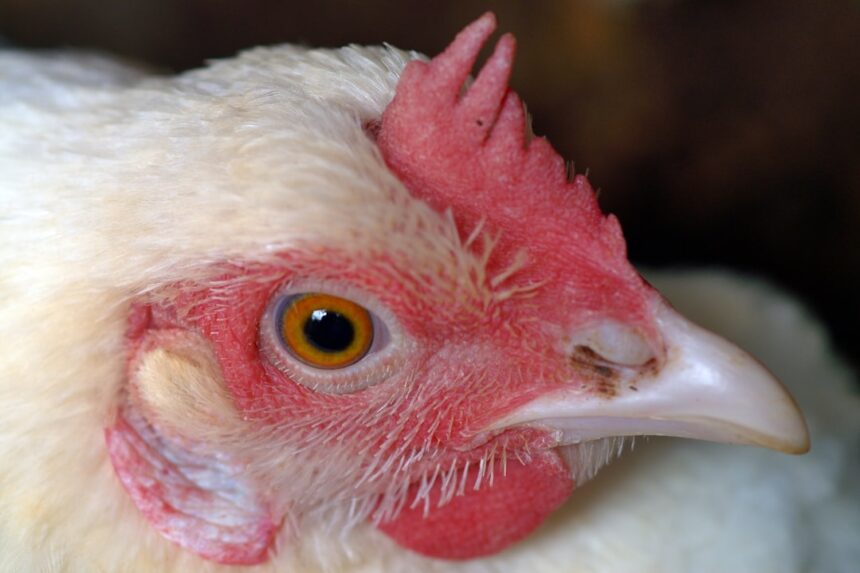
The European Centre for Disease Prevention and Control has released unified surveillance guidelines for avian influenza, establishing standardised laboratory protocols and real-time data sharing across all EU member states to detect H5N1 outbreaks rapidly and coordinate cross-border response. — Photo by Jet Stouten on Unsplash (Unsplash License)
SHARE
1 min read|136 words

The ECDC’s updated surveillance guidelines introduce three interconnected mechanisms that strengthen H5N1 detection and response across Europe. First, standardised laboratory protocols eliminate diagnostic variation, ensuring that H5N1 is identified consistently across all 27 EU member states using identical confirmation criteria. This standardisation is critical because variable testing procedures can delay detection or produce conflicting results that undermine coordinated response.

Second, the framework enables cross-border alerts within hours of laboratory confirmation, rather than the days previously required through traditional reporting channels. Third, integrated wild bird and poultry monitoring allows public health authorities to track H5N1 circulation patterns before zoonotic spillover risk escalates to human populations. Together, these elements create a proactive surveillance system that shifts focus from reactive outbreak response to early detection and prevention of human transmission.

Read the full article on GMJ Newsroom.

Was this article helpful?

GMJ Brief · Takeaway

📰 Read the full article: Europe tightens avian flu surveillance as H5N1 spreads among wild birds →

Share This Article
Facebook LinkedIn Bluesky Copy Link Print
GMJ
ByProf. Giorgi Pkhakadze
Follow:
Prof. Giorgi Pkhakadze, MD, MPH, PhD, is Editor-in-Chief of the Georgian Medical Journal and Chair of the Public Health Institute of Georgia (PHIG). He is Professor and Head of the Department of Social and Behavioural Sciences at David Tvildiani Medical University, and Secretary/Treasurer of the UEMS Section of Public Health. ORCID: 0000-0001-7609-4515.

Submit Your Paper →

Georgia's peer-reviewed open-access medical journal. No APC until January 2027.
Submit Manuscript →
What makes prostate cancer aggressive? Biology, genetics, and clinical grading explained

Prostate cancer aggressiveness is determined by histological grade (Gleason score), genetic mutations…

UK childhood vaccination coverage holds steady at high levels, latest quarterly data shows

The UK's Cover of Vaccination Evaluated Rapidly (COVER) programme reports sustained high…

EMA Launches Email Notifications for Clinical Trial Information System

The European Medicines Agency has rolled out email notification subscriptions in CTIS,…

Submit Your Paper to GMJ

No APC until January 2027.
Submit Manuscript →

You Might Also Like

Clinical UpdatesPharmacy & PrescribingPolicy & SystemsPracticeQuality & Safety

BD Recalls Intraosseous Needle Sets Over Difficult Obturator Removal

By
Prof. Giorgi Pkhakadze
04/08/2026
WOAH strategic planning document with global animal health priorities and surveillance systems

75% of Emerging Infectious Diseases Originate in Animals: WOAH Responds With Enhanced Global Surveillance

By
Prof. Giorgi Pkhakadze
04/07/2026
Clinical UpdatesGlobal HealthPolicy & SystemsPractice

Eastern Congo Ebola Outbreak Becomes Fastest-Growing on Record, 1,700 Deaths Confirmed

By
Prof. Giorgi Pkhakadze
05/08/2026
Diagram showing iron absorption, folate and B12 synthesis, and red blood cell recycling

Announcement: Iron, folate, and B12: the three nutrients that build your blood

By
Prof. Giorgi Pkhakadze
04/08/2026
Facebook Twitter Youtube Instagram
Company
  • Privacy Policy
  • Contact US
  • GMJ Journal
  • Submit Manuscript
  • Editorial Team
  • Register at GMJ
  • Terms of Use

Subscribe to GMJ News — Click here

Join Community
© 2026 Georgian Medical Journal (GMJ). Published by the Public Health Institute of Georgia (PHIG). All rights reserved.
Welcome Back!

Sign in to your account

Username or Email Address
Password

Lost your password?

Not a member? Sign Up