By using this site, you agree to the Privacy Policy and Terms of Use.
Accept
GMJ NewsGMJ NewsGMJ News
  • Latest News
    • GMJ Briefs
  • Podcast & Media
    • Podcast Episodes
    • GMJ Audio
    • GMJ Videos
  • Research Digest
    • New Studies
    • Georgian Research
    • Data & Numbers
  • Policy & Systems
    • Health Policy
    • Quality & Safety
    • Migration & Health
    • Global Health
  • Practice
    • Clinical Updates
    • Case Discussions
    • Pharmacy & Prescribing
    • Ingredients A-Z
  • Perspectives
    • Editorial
    • Explainers
    • Voices
    • Letters
  • GMJ Articles
    • Vol. 1 Issue 2 (2026)
    • Vol. 1 Issue 1 (2026)
    • Pre-Launch Articles (2025)
  • Read the Journal →
  • About GMJ News
Notification Show More
Font ResizerAa
GMJ NewsGMJ News
Font ResizerAa
  • Latest News
    • GMJ Briefs
  • Podcast & Media
    • Podcast Episodes
    • GMJ Audio
    • GMJ Videos
  • Research Digest
    • New Studies
    • Georgian Research
    • Data & Numbers
  • Policy & Systems
    • Health Policy
    • Quality & Safety
    • Migration & Health
    • Global Health
  • Practice
    • Clinical Updates
    • Case Discussions
    • Pharmacy & Prescribing
    • Ingredients A-Z
  • Perspectives
    • Editorial
    • Explainers
    • Voices
    • Letters
  • GMJ Articles
    • Vol. 1 Issue 2 (2026)
    • Vol. 1 Issue 1 (2026)
    • Pre-Launch Articles (2025)
  • Read the Journal →
  • About GMJ News
Follow US
GMJ News > GMJ Briefs > Silent Crisis: How Parental Immigration Detention Reshapes Children’s Mental Health

Silent Crisis: How Parental Immigration Detention Reshapes Children’s Mental Health

GMJ
Last updated: 20/07/2026 13:30
By
Prof. Giorgi Pkhakadze
Share
1 Min Read
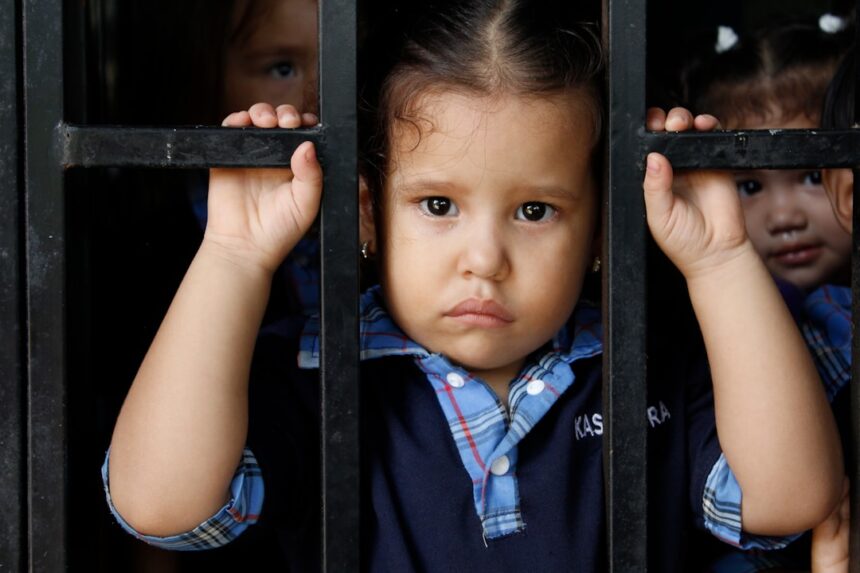
Clinical manifestations of family separation in children showing sleep disturbances and behavioral regression
Hundreds of thousands of children, many U.S. citizens, experience acute mental health symptoms following parental immigration detention, including sleep disruption, behavioral regression, and academic decline. Clinical evidence aligns these presentations with established trauma sequelae, indicating potential long-term health consequences. — Photo by Stefano Carboni on Unsplash (Unsplash License)
SHARE
1 min read|148 words

Hundreds of thousands of children across the United States—many citizens themselves—are experiencing acute mental health crises in the aftermath of parental immigration detention and deportation. Pediatricians and mental health clinicians report consistent patterns of psychological distress, with children presenting sleep disruption, behavioral regression, somatic complaints, and measurable academic decline within weeks of family separation.

These clinical observations align with established trauma research documenting long-term neurobiological consequences of childhood family separation. The symptom constellation mirrors responses seen in other adverse childhood experiences, suggesting that immigration enforcement actions create measurable public health impacts that extend far beyond legal and social domains.

Despite growing clinical awareness, pediatric and mental health systems lack standardized screening and intervention protocols for separation-related trauma. This emerging population health crisis demands coordinated clinical and systemic responses to identify affected children and provide evidence-based care during their recovery.

Read the full article on GMJ Newsroom.

Submit Your Paper
GMJ_Submit_Banner

Was this article helpful?

GMJ Brief · Announcement

📰 Read the full article: Parental Immigration Detention and Children’s Mental Health: What the Evidence Shows →

Share This Article
Facebook LinkedIn Bluesky Copy Link Print
GMJ
ByProf. Giorgi Pkhakadze
Follow:
Prof. Giorgi Pkhakadze, MD, MPH, PhD, is Editor-in-Chief of the Georgian Medical Journal and Chair of the Public Health Institute of Georgia (PHIG). He is Professor and Head of the Department of Social and Behavioural Sciences at David Tvildiani Medical University, and Secretary/Treasurer of the UEMS Section of Public Health. ORCID: 0000-0001-7609-4515.

Submit Your Paper →

Georgia's peer-reviewed open-access medical journal. No APC until January 2027.
Submit Manuscript →
Skin Biopsy PCR Test Accelerates Diagnosis of Tattoo-Associated Toxic Shock Syndrome

A new PCR-based diagnostic test on skin biopsies enables rapid confirmation of…

Young widowhood linked to elevated HIV risk behaviours in Kenya’s Siaya County

Young widowhood emerges as a significant predictor of HIV risk behaviours in…

Blood Type O Shows Lower Risk in Severe Malaria: Updated Meta-Analysis

An updated meta-analysis published in Tropical Medicine & International Health confirms that…

Submit Your Paper to GMJ

No APC until January 2027.
Submit Manuscript →

You Might Also Like

Medical chart showing increased mortality and cancer risks in coeliac disease patients

What Coeliac Disease Patients Need to Know: Three Critical Health Risks Identified

By
Prof. Giorgi Pkhakadze
12/07/2026
Scientific illustration showing CD4+ T cells attacking MHC I-deficient cancer cells

Three Essential Insights into Cancer’s Immune Evasion Backfire

By
Prof. Giorgi Pkhakadze
11/07/2026
Infographic showing PEPFAR HIV treatment statistics and former CDC directors warning

Former CDC Leadership Sounds Alarm on PEPFAR Restructuring Plan

By
Prof. Giorgi Pkhakadze
14/07/2026
WHO filovirus disease clinical management guidelines for all Ebola and Marburg virus species

16 Evidence-Based Recommendations Shape New WHO Filovirus Clinical Standards

By
Prof. Giorgi Pkhakadze
24/07/2026
Facebook Twitter Youtube Instagram
Company
  • Privacy Policy
  • Contact US
  • GMJ Journal
  • Submit Manuscript
  • Editorial Team
  • Register at GMJ
  • Terms of Use

Subscribe to GMJ News — Click here

Join Community
© 2026 Georgian Medical Journal (GMJ). Published by the Public Health Institute of Georgia (PHIG). All rights reserved.
Welcome Back!

Sign in to your account

Username or Email Address
Password

Lost your password?

Not a member? Sign Up