By using this site, you agree to the Privacy Policy and Terms of Use.
Accept
GMJ NewsGMJ NewsGMJ News
  • Latest News
    • GMJ Briefs
  • Podcast & Media
    • Podcast Episodes
    • GMJ Audio
    • GMJ Videos
  • Research Digest
    • New Studies
    • Georgian Research
    • Data & Numbers
  • Policy & Systems
    • Health Policy
    • Quality & Safety
    • Migration & Health
    • Global Health
  • Practice
    • Clinical Updates
    • Case Discussions
    • Pharmacy & Prescribing
    • Ingredients A-Z
  • Perspectives
    • Editorial
    • Explainers
    • Voices
    • Letters
  • GMJ Articles
    • Vol. 1 Issue 2 (2026)
    • Vol. 1 Issue 1 (2026)
    • Pre-Launch Articles (2025)
  • Read the Journal →
  • About GMJ News
Notification Show More
Font ResizerAa
GMJ NewsGMJ News
Font ResizerAa
  • Latest News
    • GMJ Briefs
  • Podcast & Media
    • Podcast Episodes
    • GMJ Audio
    • GMJ Videos
  • Research Digest
    • New Studies
    • Georgian Research
    • Data & Numbers
  • Policy & Systems
    • Health Policy
    • Quality & Safety
    • Migration & Health
    • Global Health
  • Practice
    • Clinical Updates
    • Case Discussions
    • Pharmacy & Prescribing
    • Ingredients A-Z
  • Perspectives
    • Editorial
    • Explainers
    • Voices
    • Letters
  • GMJ Articles
    • Vol. 1 Issue 2 (2026)
    • Vol. 1 Issue 1 (2026)
    • Pre-Launch Articles (2025)
  • Read the Journal →
  • About GMJ News
Follow US
GMJ News > GMJ Briefs > The Missing Link in Collagen Supplements: Why Vitamin C Matters More Than You Think

The Missing Link in Collagen Supplements: Why Vitamin C Matters More Than You Think

GMJ
Last updated: 24/07/2026 17:30
By
Prof. Giorgi Pkhakadze
Share
1 Min Read
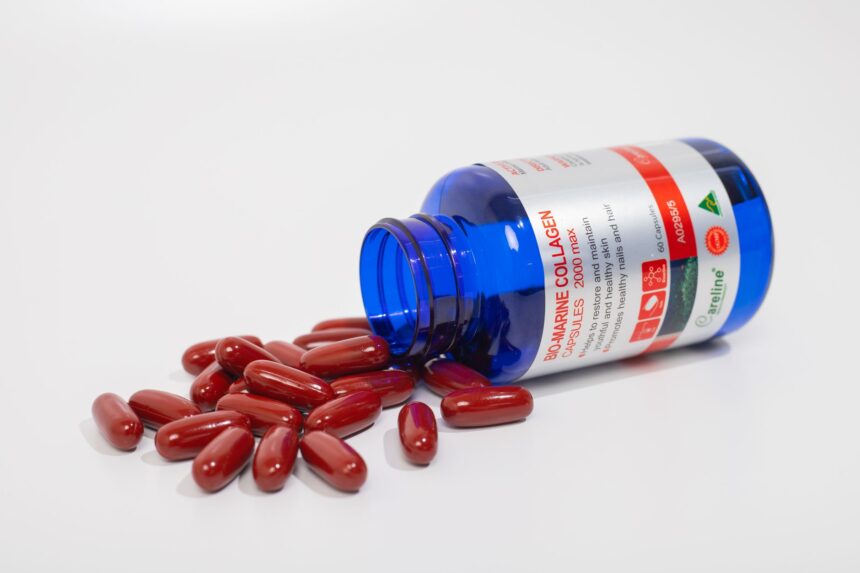
Diagram showing collagen triple helix formation and the role of vitamin C in hydroxylation modification
Vitamin C is not optional in collagen formation—it is catalytic. Your body continuously synthesizes collagen, but the newly formed protein cannot stabilize without a vitamin C–dependent enzymatic modification. Most collagen supplements fail to include adequate vitamin C, potentially explaining variable efficacy. — Photo by Hoàng Ngọc Long on Pexels (Pexels License)
SHARE
1 min read|140 words

Your body synthesizes collagen continuously, but a critical step determines whether that newly formed protein can actually function. Without vitamin C, collagen cannot undergo hydroxylation—the chemical modification that locks three collagen strands into a stable triple-helix structure. Research published in the American Journal of Clinical Nutrition reveals that unmodified collagen denatures at approximately 24°C, a full 13 degrees below normal body temperature. This means unhydroxylated collagen literally cannot maintain its integrity in the human body. Yet most commercial collagen supplements fail to address this biochemical requirement, often lacking adequate vitamin C or failing to measure baseline vitamin C status in clinical trials. The enzyme prolyl hydroxylase requires vitamin C as an essential cofactor, and crucially, vitamin C is consumed during each hydroxylation cycle and must be continuously replenished. Understanding this mechanism explains the variable efficacy reported across collagen supplement studies.

Was this article helpful?

GMJ Brief · Announcement

📰 Read the full article: Why Vitamin C Is Essential for Collagen Formation—and Why Supplements Often Miss the Mark →

Related reference
  • Vitamin C · Ingredient
Share This Article
Facebook LinkedIn Bluesky Copy Link Print
GMJ
ByProf. Giorgi Pkhakadze
Follow:
Prof. Giorgi Pkhakadze, MD, MPH, PhD, is Editor-in-Chief of the Georgian Medical Journal and Chair of the Public Health Institute of Georgia (PHIG). He is Professor and Head of the Department of Social and Behavioural Sciences at David Tvildiani Medical University, and Secretary/Treasurer of the UEMS Section of Public Health. ORCID: 0000-0001-7609-4515.

Submit Your Paper →

Georgia's peer-reviewed open-access medical journal. No APC until January 2027.
Submit Manuscript →
Waist Circumference Outperforms BMI in Predicting Disability Risk, Whitehall II Cohort Study Shows

A new analysis of the Whitehall II cohort study shows that waist…

FDA-Cleared AI Tool EchoNext Enables ECG-Based Heart Disease Screening

Pathway Labs' EchoNext, an FDA-cleared artificial intelligence tool, enables detection of structural…

Beyond Minimum Requirements: New Evidence Suggests Higher Protein Intake Supports Healthy Aging

A new review of aging and nutrition research suggests that protein intake…

Submit Your Paper to GMJ

No APC until January 2027.
Submit Manuscript →

You Might Also Like

Laboratory mice study examining effects of sugar-free versus moderate sugar diets on metabolic health

Study Reveals Paradox: Sugar-Free Diets Associated with Worse Glucose Control

By
Prof. Giorgi Pkhakadze
13/07/2026
UK mortality surveillance data showing below-expected death rates for England

What England’s Below-Expected Mortality Data Means for Public Health Planning

By
Prof. Giorgi Pkhakadze
03/07/2026
Infographic showing global blood donation statistics and safety improvements by WHO

New Data Shows 85% of Global Blood Donations Are Now Voluntary, Highest Safety Level Ever

By
Prof. Giorgi Pkhakadze
12/07/2026
Scientific illustration showing DNA repair processes and melatonin molecular structure

What Night Shift Workers Should Know About Melatonin’s Cellular Protection Potential

By
Prof. Giorgi Pkhakadze
01/07/2026
Facebook Twitter Youtube Instagram
Company
  • Privacy Policy
  • Contact US
  • GMJ Journal
  • Submit Manuscript
  • Editorial Team
  • Register at GMJ
  • Terms of Use

Subscribe to GMJ News — Click here

Join Community
© 2026 Georgian Medical Journal (GMJ). Published by the Public Health Institute of Georgia (PHIG). All rights reserved.
Welcome Back!

Sign in to your account

Username or Email Address
Password

Lost your password?

Not a member? Sign Up