By using this site, you agree to the Privacy Policy and Terms of Use.
Accept
GMJ NewsGMJ NewsGMJ News
  • Latest News
    • GMJ Briefs
  • The Wire
  • Health Topics
  • Podcast & Media
    • GMJ Audio
    • GMJ Videos
    • Podcast & Media
    • Podcast Episodes
  • GMJ Articles
    • Vol. 1 Issue 3 (2026)
    • Public Health Dictionary — Supplement Edition
    • IAP Legacy Series
    • Read Full Journal (gmj.ge) →
    • Pre-Launch Articles (2025)
    • Vol. 1 Issue 1 (2026)
    • Vol. 1 Issue 2 (2026)
  • Perspectives
    • Editorial
    • Explainers
    • Letters
    • Voices
  • Policy & Systems
    • Global Health
    • Health Policy
    • Migration & Health
    • Quality & Safety
    • Work & Health
  • Dictionary
    • Our Story: 20 Years in the Making
    • Browse A–Z
    • About the Project
    • Contribute a Term
  • Practice
    • Case Discussions
    • Clinical Updates
    • Pharmacy & Prescribing
  • Research Digest
    • Data & Numbers
    • Georgian Research
    • New Studies
  • Read the Journal →
Notification Show More
Font ResizerAa
GMJ NewsGMJ News
Font ResizerAa
  • Latest News
  • The Wire
  • Health Topics
  • Podcast & Media
  • GMJ Articles
  • Perspectives
  • Policy & Systems
  • Dictionary
  • Practice
  • Research Digest
  • Read the Journal →
  • Latest News
    • GMJ Briefs
  • The Wire
  • Health Topics
  • Podcast & Media
    • GMJ Audio
    • GMJ Videos
    • Podcast & Media
    • Podcast Episodes
  • GMJ Articles
    • Vol. 1 Issue 3 (2026)
    • Public Health Dictionary — Supplement Edition
    • IAP Legacy Series
    • Read Full Journal (gmj.ge) →
    • Pre-Launch Articles (2025)
    • Vol. 1 Issue 1 (2026)
    • Vol. 1 Issue 2 (2026)
  • Perspectives
    • Editorial
    • Explainers
    • Letters
    • Voices
  • Policy & Systems
    • Global Health
    • Health Policy
    • Migration & Health
    • Quality & Safety
    • Work & Health
  • Dictionary
    • Our Story: 20 Years in the Making
    • Browse A–Z
    • About the Project
    • Contribute a Term
  • Practice
    • Case Discussions
    • Clinical Updates
    • Pharmacy & Prescribing
  • Research Digest
    • Data & Numbers
    • Georgian Research
    • New Studies
  • Read the Journal →
Follow US
GMJ News > GMJ Briefs > Two Decades of Evidence: Why Pediatric Creatine Safety Fears Don’t Hold Up

Two Decades of Evidence: Why Pediatric Creatine Safety Fears Don’t Hold Up

GMJ
Last updated: 01/08/2026 05:30
By
Prof. Giorgi Pkhakadze, MD, MPH, PhD
Share
1 Min Read
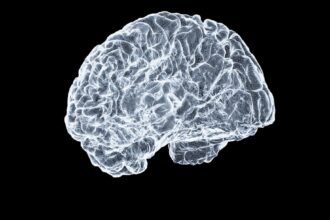
Chart showing pediatric creatine trials timeline, 2004–2025, with safety and efficacy endpoints
A 20-year body of controlled trials demonstrates that creatine supplementation is safe and well-tolerated in children, even at high doses and in vulnerable populations. A 2025 consensus statement from the International Society of Sports Nutrition challenges regulatory restrictions lacking scientific support. — Photo by MART PRODUCTION on Pexels (Pexels License)
SHARE
1 min read|129 words

A comprehensive body of controlled clinical trials spanning over 20 years demonstrates that creatine supplementation is safe and well-tolerated in children, yet regulatory restrictions on pediatric use persist in many countries. A landmark 2006 study published in the Journal of Trauma administered creatine at 28 grams daily—five times the typical adult athletic dose—to infants and children with severe traumatic brain injuries, documenting no clinically significant adverse events alongside improved cognitive and functional recovery outcomes. The 2025 position statement from the International Society of Sports Nutrition now concludes that legislative bans on creatine for minors lack scientific foundation. As evidence continues to mount across multiple pediatric neurological conditions, medical professionals and policymakers face a growing disconnect between regulatory policy and clinical data, raising important questions about evidence-based approaches to pediatric supplement oversight.

Was this article helpful?

GMJ Brief · Announcement

📰 Read the full article: Creatine in Children With Brain Injury: Evidence Contradicts Safety Fears →

Related reference
  • Creatine · Ingredient
Share This Article
Facebook Whatsapp Whatsapp LinkedIn Telegram Bluesky Copy Link Print
GMJ
ByProf. Giorgi Pkhakadze, MD, MPH, PhD
Follow:
MD, MPH, PhD. Editor-in-Chief, Georgian Medical Journal (GMJ). Professor and Head, School of Public Health, David Tvildiani Medical University (DTMU), Tbilisi, Georgia. Chair, Public Health Institute of Georgia (PHIG). President, Accréditation Sans Frontières (ASF), Paris. Secretary/Treasurer, UEMS Section of Public Health. WHO Consultant, Health and Migration, Geneva. Former Member, UN Secretary-General's Independent Accountability Panel for Every Woman, Every Child, Every Adolescent (IAP-EWEC, 2016–2021). ORCID: 0000-0001-7609-4515.

Submit Your Paper →

Georgia's peer-reviewed open-access medical journal. No APC until January 2027.
Submit Manuscript →
UK Health Authority Escalates Heat-Health Alerts to Red Level Across England

The UK Health Security Agency has escalated heat-health alerts to red level—the…

HIV progress stalling as funding pressures threaten four decades of gains, UN warns

World leaders gathered at UN Headquarters issued a stark warning: four decades…

Why Afternoon Fatigue Strikes After Lunch—and How Nutrition Can Help

Post-lunch afternoon fatigue is a common metabolic phenomenon driven by blood sugar…

Submit Your Paper to GMJ

No APC until January 2027.
Submit Manuscript →

You Might Also Like

Conceptual diagram comparing legal and scientific frameworks for causation in product liability

Announcement: Supreme Court’s Roundup ruling exposes a fundamental divide between legal and scientific causation standards

By
Prof. Giorgi Pkhakadze, MD, MPH, PhD
28/08/2026

PHEIC Declaration: Ebola Cross-Border Transmission DRC-Uganda

By
Prof. Giorgi Pkhakadze, MD, MPH, PhD
31/05/2026
Microscopic image showing damaged brain tissue from anti-aging drug treatment in laboratory mice

Anti-Aging Drug Combination Linked to Severe Neurological Damage in Preclinical Study

By
Prof. Giorgi Pkhakadze, MD, MPH, PhD
05/06/2026
Brain scan showing auditory and somatosensory cortex activation during speech learning task

Takeaway: Brain imaging reveals speech learning depends on sensory processing, not motor control alone

By
Prof. Giorgi Pkhakadze, MD, MPH, PhD
08/09/2026
Facebook Twitter Youtube Instagram
Company
  • Privacy Policy
  • Accreditation Canada in Georgia
  • GMJ Journal
  • Submit Manuscript
  • Editorial Team
  • Register at GMJ

Subscribe to GMJ News — Click here

Join Community
© 2026 Georgian Medical Journal (GMJ). Published by the Public Health Institute of Georgia (PHIG). All rights reserved.
Welcome Back!

Sign in to your account

Username or Email Address
Password

Lost your password?