By using this site, you agree to the Privacy Policy and Terms of Use.
Accept
GMJ NewsGMJ NewsGMJ News
  • Latest News
    • GMJ Briefs
  • Podcast & Media
    • Podcast Episodes
    • GMJ Audio
    • GMJ Videos
  • Research Digest
    • New Studies
    • Georgian Research
    • Data & Numbers
  • Policy & Systems
    • Health Policy
    • Quality & Safety
    • Migration & Health
    • Global Health
  • Practice
    • Clinical Updates
    • Case Discussions
    • Pharmacy & Prescribing
    • Ingredients A-Z
  • Perspectives
    • Editorial
    • Explainers
    • Voices
    • Letters
  • GMJ Articles
    • Vol. 1 Issue 2 (2026)
    • Vol. 1 Issue 1 (2026)
    • Pre-Launch Articles (2025)
  • Read the Journal →
  • About GMJ News
Notification Show More
Font ResizerAa
GMJ NewsGMJ News
Font ResizerAa
  • Latest News
    • GMJ Briefs
  • Podcast & Media
    • Podcast Episodes
    • GMJ Audio
    • GMJ Videos
  • Research Digest
    • New Studies
    • Georgian Research
    • Data & Numbers
  • Policy & Systems
    • Health Policy
    • Quality & Safety
    • Migration & Health
    • Global Health
  • Practice
    • Clinical Updates
    • Case Discussions
    • Pharmacy & Prescribing
    • Ingredients A-Z
  • Perspectives
    • Editorial
    • Explainers
    • Voices
    • Letters
  • GMJ Articles
    • Vol. 1 Issue 2 (2026)
    • Vol. 1 Issue 1 (2026)
    • Pre-Launch Articles (2025)
  • Read the Journal →
  • About GMJ News
Follow US
GMJ News > GMJ Briefs > The Cellular Orchestra: How Specialized Immune Cells Coordinate Your Body’s Defense

The Cellular Orchestra: How Specialized Immune Cells Coordinate Your Body’s Defense

GMJ
Last updated: 03/08/2026 23:30
By
Prof. Giorgi Pkhakadze
Share
1 Min Read
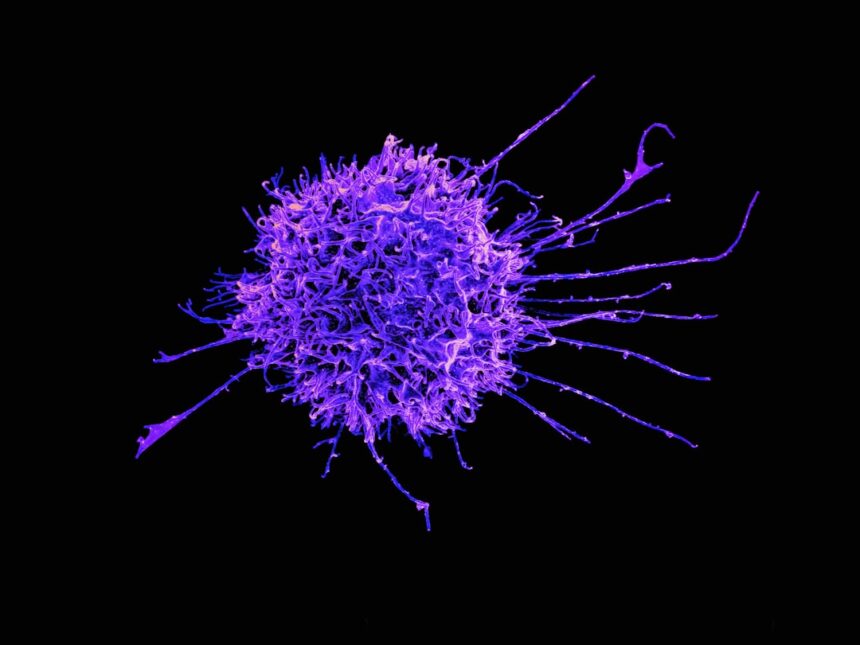
Diagram showing immune cell types and their roles in detection, coordination, and defense
Your immune system is an organized network of specialized cells—dendritic cells, T cells, B cells, and NK cells—each with distinct detection, coordination, and defensive roles. Lifestyle factors including sleep, training intensity, and stress modulate immune balance; more activation does not always improve immunity. — Photo by National Institute of Allergy and Infectious Diseases on Unsplash (Unsplash License)
SHARE
1 min read|140 words

Your immune system operates not as a monolithic force, but as a highly organized network of specialized cells, each performing a critical role in maintaining health and combating infection. Dendritic cells function as sentinels, detecting pathogenic threats and foreign antigens before alerting the adaptive immune system. Helper T cells then process this information and coordinate the broader defensive response, determining the appropriate level of immune activation. Natural killer and cytotoxic T cells execute direct elimination of infected or abnormal cells, while memory cells establish long-term protection against future encounters with the same pathogens. This coordinated cellular cast—dendritic cells, T cells, B cells, NK cells, and support cells—demonstrates that effective immunity requires seamless communication and specialized function across multiple cell types. Understanding this intricate system provides insight into how the body maintains homeostasis and responds to infection with precision.

Was this article helpful?
GMJ Brief · Announcement

📰 Read the full article: How Your Immune System Works: A Guide to Its Specialized Cells and Functions →

Related reference
  • SAMe · Ingredient
Share This Article
Facebook LinkedIn Bluesky Copy Link Print
GMJ
ByProf. Giorgi Pkhakadze
Follow:
Prof. Giorgi Pkhakadze, MD, MPH, PhD, is Editor-in-Chief of the Georgian Medical Journal and Chair of the Public Health Institute of Georgia (PHIG). He is Professor and Head of the Department of Social and Behavioural Sciences at David Tvildiani Medical University, and Secretary/Treasurer of the UEMS Section of Public Health. ORCID: 0000-0001-7609-4515.

Submit Your Paper →

Georgia's peer-reviewed open-access medical journal. No APC until January 2027.
Submit Manuscript →
Cancer Survivors in Their Teens and Twenties Face Unique Long-Term Health Risks

Adolescents and young adults surviving cancer face distinct long-term complications and psychosocial…

Indiana Enacts Hospital Price Caps as States Challenge Healthcare Cost Growth

Indiana has enacted direct price caps on hospital charges to employers, becoming…

NHS Medical Training Act boosts UK doctor recruitment, data shows

NHS England data confirms the Medical Training Prioritisation Act has successfully increased…

Submit Your Paper to GMJ

No APC until January 2027.
Submit Manuscript →

You Might Also Like

Medical research laboratory with IBD disease mechanism illustrations

Oxford Researchers Overturn Century-Old Understanding of Inflammatory Bowel Disease

By
Prof. Giorgi Pkhakadze
02/07/2026
Medical professional preparing enhanced flu vaccine for older adult patient

What UK Adults 50+ Need to Know About the New Enhanced Flu Vaccine

By
Prof. Giorgi Pkhakadze
15/07/2026
Pharmacy & PrescribingPractice

NAFDAC Issues Alert Following South African Recall of Citro-Soda Antacid Batches

By
Prof. Giorgi Pkhakadze
03/06/2026
Illustration of muscle strength signalling neuroprotective mechanisms in the aging brain: endothelial function, neurotrophic factors, and neuroinflammation control.

Beyond Biceps: How Resistance Training Rewires Brain Protection

By
Prof. Giorgi Pkhakadze
31/07/2026
Facebook Twitter Youtube Instagram
Company
  • Privacy Policy
  • Contact US
  • GMJ Journal
  • Submit Manuscript
  • Editorial Team
  • Register at GMJ
  • Terms of Use

Subscribe to GMJ News — Click here

Join Community
© 2026 Georgian Medical Journal (GMJ). Published by the Public Health Institute of Georgia (PHIG). All rights reserved.
Welcome Back!

Sign in to your account

Username or Email Address
Password

Lost your password?

Not a member? Sign Up