By using this site, you agree to the Privacy Policy and Terms of Use.
Accept
GMJ NewsGMJ NewsGMJ News
  • Latest News
    • GMJ Briefs
  • Podcast & Media
    • Podcast Episodes
    • GMJ Audio
    • GMJ Videos
  • Research Digest
    • New Studies
    • Georgian Research
    • Data & Numbers
  • Policy & Systems
    • Health Policy
    • Quality & Safety
    • Migration & Health
    • Global Health
  • Practice
    • Clinical Updates
    • Case Discussions
    • Pharmacy & Prescribing
    • Ingredients A-Z
  • Perspectives
    • Editorial
    • Explainers
    • Voices
    • Letters
  • Health Topics
  • GMJ Articles
    • Vol. 1 Issue 2 (2026)
    • Vol. 1 Issue 1 (2026)
    • Pre-Launch Articles (2025)
  • Read the Journal →
  • About GMJ News
Notification Show More
Font ResizerAa
GMJ NewsGMJ News
Font ResizerAa
  • Latest News
    • GMJ Briefs
  • Podcast & Media
    • Podcast Episodes
    • GMJ Audio
    • GMJ Videos
  • Research Digest
    • New Studies
    • Georgian Research
    • Data & Numbers
  • Policy & Systems
    • Health Policy
    • Quality & Safety
    • Migration & Health
    • Global Health
  • Practice
    • Clinical Updates
    • Case Discussions
    • Pharmacy & Prescribing
    • Ingredients A-Z
  • Perspectives
    • Editorial
    • Explainers
    • Voices
    • Letters
  • Health Topics
  • GMJ Articles
    • Vol. 1 Issue 2 (2026)
    • Vol. 1 Issue 1 (2026)
    • Pre-Launch Articles (2025)
  • Read the Journal →
  • About GMJ News
Follow US
GMJ News > GMJ Briefs > More Training, Worse Immunity? How Recovery Shapes Immune Function

More Training, Worse Immunity? How Recovery Shapes Immune Function

GMJ
Last updated: 10/08/2026 23:30
By
Prof. Giorgi Pkhakadze
Share
1 Min Read
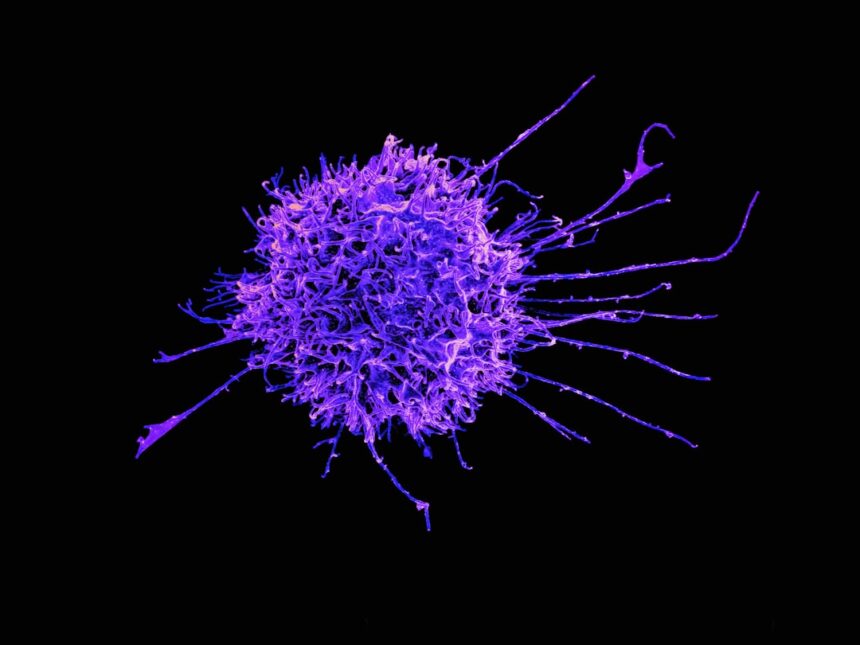
Diagram showing immune cell types and their roles in detection, coordination, and defense
Your immune system is an organized network of specialized cells—dendritic cells, T cells, B cells, and NK cells—each with distinct detection, coordination, and defensive roles. Lifestyle factors including sleep, training intensity, and stress modulate immune balance; more activation does not always improve immunity. — Photo by National Institute of Allergy and Infectious Diseases on Unsplash (Unsplash License)
SHARE
1 min read|139 words

Counterintuitive to common assumptions, increased immune activation does not necessarily translate to improved immunity. Recent immunological research reveals that intense training combined with inadequate sleep and chronic stress paradoxically shifts immune signaling toward inflammation, potentially reducing defensive efficiency rather than enhancing it. This phenomenon underscores a critical principle: recovery is as essential as exertion in maintaining robust immune competence. When the body faces cumulative physiological stressors without sufficient recovery time, the immune system becomes exhausted rather than strengthened. The regulatory mechanisms that coordinate effective immune responses deteriorate under chronic inflammatory pressure. Athletes, active individuals, and high-stress professionals must recognize that balanced training protocols with adequate sleep, nutritional support, and stress management are fundamental to preserving immune function. The data suggest that immune health depends not solely on effort intensity but on the integration of training, recovery, and lifestyle factors.

Was this article helpful?

GMJ Brief · Key Finding

📰 Read the full article: How Your Immune System Works: A Guide to Its Specialized Cells and Functions →

Share This Article
Facebook LinkedIn Bluesky Copy Link Print
GMJ
ByProf. Giorgi Pkhakadze
Follow:
Prof. Giorgi Pkhakadze, MD, MPH, PhD, is Editor-in-Chief of the Georgian Medical Journal and Chair of the Public Health Institute of Georgia (PHIG). He is Professor and Head of the Department of Social and Behavioural Sciences at David Tvildiani Medical University, and Secretary/Treasurer of the UEMS Section of Public Health. ORCID: 0000-0001-7609-4515.

Submit Your Paper →

Georgia's peer-reviewed open-access medical journal. No APC until January 2027.
Submit Manuscript →
H. pylori screening yields fivefold return in gastric cancer prevention, health economics analysis shows

Health economics analysis shows each dollar invested in Helicobacter pylori screening generates…

Cancer drug shortages force US hospitals to ration chemotherapy as supply crisis deepens

US oncology departments face critical shortages of essential generic chemotherapy drugs, forcing…

NHS Expands Access to Pembrolizumab for Advanced Cervical Cancer

The NHS has approved pembrolizumab, an immune checkpoint inhibitor, for hundreds of…

Submit Your Paper to GMJ

No APC until January 2027.
Submit Manuscript →

You Might Also Like

Healthcare worker conducting phone-based mortality survey in rural Bangladesh setting

Phone-Based Mortality Tracking Emerges as Viable Alternative in Low-Income Countries

By
Prof. Giorgi Pkhakadze
07/08/2026
Medical illustration of bacteriophages attacking antibiotic-resistant bacteria in bone tissue

Bacteriophage Therapy Achieves Cure in Weeks Where Antibiotics Failed Over 18 Months

By
Prof. Giorgi Pkhakadze
21/07/2026
Global HealthPolicy & Systems

US aid cuts hamper Ebola outbreak detection and response in DRC, experts warn

By
Prof. Giorgi Pkhakadze
26/05/2026

WHO Declares International Health Emergency Over Ebola Outbreak Spreading From DRC to Uganda

By
Prof. Giorgi Pkhakadze
31/05/2026
Facebook Twitter Youtube Instagram
Company
  • Privacy Policy
  • Contact US
  • GMJ Journal
  • Submit Manuscript
  • Editorial Team
  • Register at GMJ
  • Terms of Use

Subscribe to GMJ News — Click here

Join Community
© 2026 Georgian Medical Journal (GMJ). Published by the Public Health Institute of Georgia (PHIG). All rights reserved.
Welcome Back!

Sign in to your account

Username or Email Address
Password

Lost your password?

Not a member? Sign Up