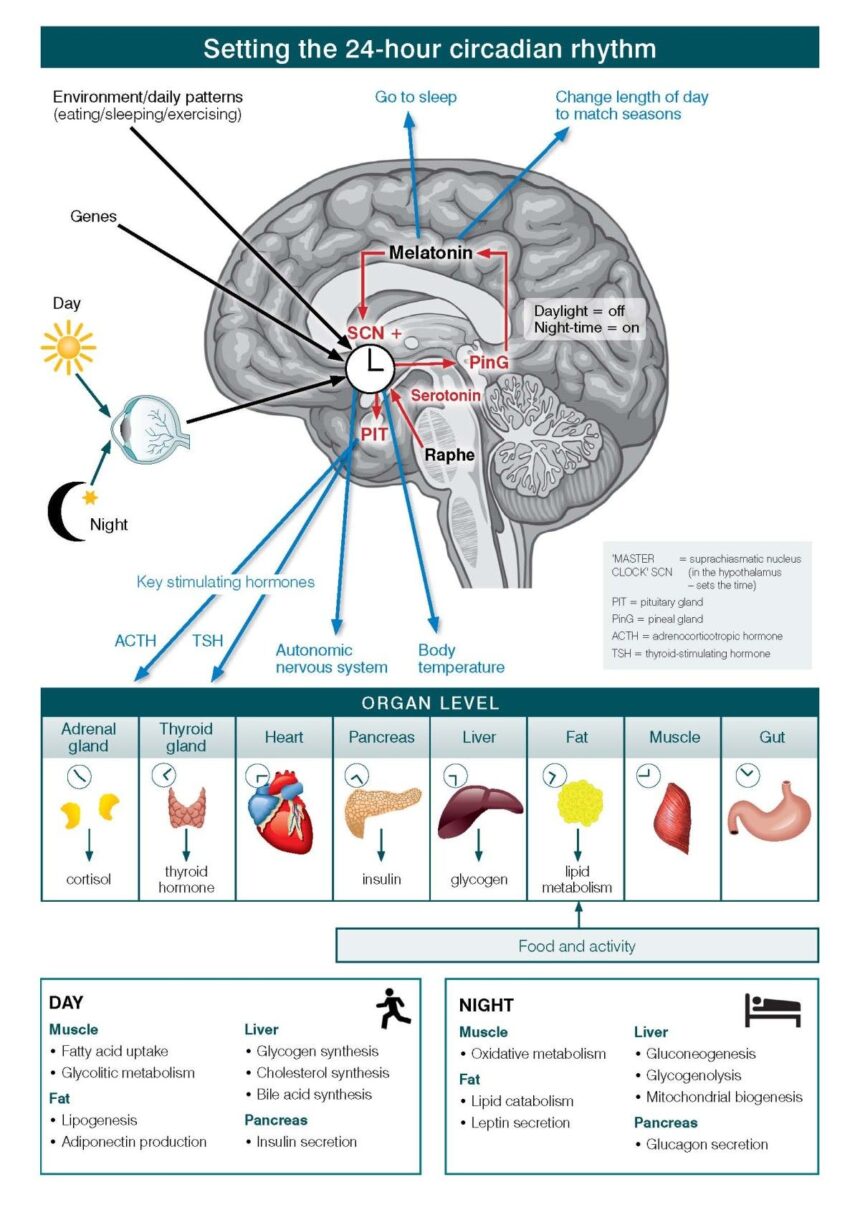
Your body is governed by an invisible timekeeper: the suprachiasmatic nucleus, a cluster of approximately 20,000 neurons nestled in the hypothalamus. This neural master clock orchestrates a 24-hour symphony of biological processes—from sleep and hunger to hormone release and mood regulation—synchronising virtually every organ system in your body.
Light exposure serves as the primary reset signal for this internal clock. When sunlight reaches your eyes in the early morning, it triggers a cascade of physiological changes: cortisol levels rise, body temperature climbs, and alertness sharpens. Conversely, as evening darkness falls, reduced light input signals melatonin production, initiating sleep. Understanding this light-dependent mechanism reveals why your biology at 8 AM differs profoundly from 8 PM, and why circadian misalignment through irregular light exposure or shift work can disrupt metabolic function, mood stability, and sleep quality.
Read the full article on GMJ Newsroom.
Was this article helpful?