By using this site, you agree to the Privacy Policy and Terms of Use.
Accept
GMJ NewsGMJ NewsGMJ News
  • Latest News
    • GMJ Briefs
  • Podcast & Media
    • Podcast Episodes
    • GMJ Audio
    • GMJ Videos
  • Research Digest
    • New Studies
    • Georgian Research
    • Data & Numbers
  • Policy & Systems
    • Health Policy
    • Quality & Safety
    • Migration & Health
    • Global Health
  • Practice
    • Clinical Updates
    • Case Discussions
    • Pharmacy & Prescribing
    • Ingredients A-Z
  • Perspectives
    • Editorial
    • Explainers
    • Voices
    • Letters
  • Health Topics
  • GMJ Articles
    • Vol. 1 Issue 2 (2026)
    • Vol. 1 Issue 1 (2026)
    • Pre-Launch Articles (2025)
  • Read the Journal →
  • About GMJ News
Notification Show More
Font ResizerAa
GMJ NewsGMJ News
Font ResizerAa
  • Latest News
    • GMJ Briefs
  • Podcast & Media
    • Podcast Episodes
    • GMJ Audio
    • GMJ Videos
  • Research Digest
    • New Studies
    • Georgian Research
    • Data & Numbers
  • Policy & Systems
    • Health Policy
    • Quality & Safety
    • Migration & Health
    • Global Health
  • Practice
    • Clinical Updates
    • Case Discussions
    • Pharmacy & Prescribing
    • Ingredients A-Z
  • Perspectives
    • Editorial
    • Explainers
    • Voices
    • Letters
  • Health Topics
  • GMJ Articles
    • Vol. 1 Issue 2 (2026)
    • Vol. 1 Issue 1 (2026)
    • Pre-Launch Articles (2025)
  • Read the Journal →
  • About GMJ News
Follow US
GMJ News > GMJ Briefs > Study Reveals Butyrate’s Dominant Role in Powering Colon Cell Function

Study Reveals Butyrate’s Dominant Role in Powering Colon Cell Function

GMJ
Last updated: 10/06/2026 01:38
By
Prof. Giorgi Pkhakadze
Share
1 Min Read
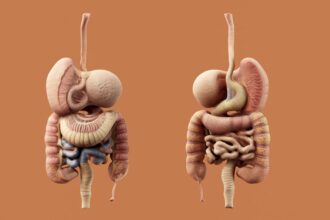
Scientific diagram showing bacterial fermentation of fiber into butyrate in the colon
New research reveals fiber benefits gut health through bacterial butyrate production rather than mechanical cleansing. Colon cells derive 70% of their energy from butyrate produced when specific bacteria ferment dietary fiber. — Photo: Jessica Lewis 🦋 thepaintedsquare / Pexels
SHARE
1 min read|129 words

Recent research has quantified the remarkable energy dependence colonocytes have on bacterial-derived butyrate. Published in Cell Metabolism, findings show that colon cells obtain approximately 70% of their energy from butyrate produced through bacterial fermentation of dietary fiber—far exceeding contributions from glucose or glutamine. This butyrate production occurs when bacterial species ferment indigestible plant compounds that reach the colon intact. Beyond energy provision, research in Nature demonstrates that adequate butyrate levels maintain tight junctions forming the gut barrier and promote differentiation of regulatory T cells, supporting immune tolerance. These mechanisms explain the protective association between dietary fiber consumption and reduced rates of inflammatory bowel conditions. The implications are significant: optimizing fiber intake becomes less about quantity and more about selecting fiber sources that most effectively stimulate beneficial bacterial butyrate production.

Was this article helpful?

GMJ Brief · Key Finding

📰 Read the full article: Fiber Fuels Gut Health Through Bacterial Butyrate Production, Not Physical Cleansing →

Share This Article
Facebook LinkedIn Bluesky Copy Link Print
GMJ
ByProf. Giorgi Pkhakadze
Follow:
Prof. Giorgi Pkhakadze, MD, MPH, PhD, is Editor-in-Chief of the Georgian Medical Journal and Chair of the Public Health Institute of Georgia (PHIG). He is Professor and Head of the Department of Social and Behavioural Sciences at David Tvildiani Medical University, and Secretary/Treasurer of the UEMS Section of Public Health. ORCID: 0000-0001-7609-4515.

Submit Your Paper →

Georgia's peer-reviewed open-access medical journal. No APC until January 2027.
Submit Manuscript →
Whey protein triggers substantial insulin response despite low carbohydrate content, research shows

Whey protein consumed on an empty stomach triggers insulin secretion 90% higher…

What makes prostate cancer aggressive? Biology, genetics, and clinical grading explained

Prostate cancer aggressiveness is determined by histological grade (Gleason score), genetic mutations…

UK childhood vaccination coverage holds steady at high levels, latest quarterly data shows

The UK's Cover of Vaccination Evaluated Rapidly (COVER) programme reports sustained high…

Submit Your Paper to GMJ

No APC until January 2027.
Submit Manuscript →

You Might Also Like

Medical illustration of bacteriophages attacking antibiotic-resistant bacteria in bone tissue

Three Critical Lessons from Bacteriophage Success Against Untreatable Skull Infection

By
Prof. Giorgi Pkhakadze
07/08/2026
Bar chart comparing mortality risk by age group and sleep patterns in Israeli industrial cohort study

Announcement: Short sleep in workers under 45 linked to 55% higher mortality, Israeli 36-year study finds

By
Prof. Giorgi Pkhakadze
27/07/2026
Map showing air pollution impacts from deforestation across Southeast Asian countries

Southeast Asia’s Deforestation Crisis: 13,000 Annual Deaths from Air Pollution

By
Prof. Giorgi Pkhakadze
13/07/2026

🚨 Orange notification for tropical cyclone TEN-26. Population affected by Category 1 (120 km/h) wind speeds or higher is 0 (17.193 million in Tropical Storm).

By
Prof. Giorgi Pkhakadze
02/07/2026
Facebook Twitter Youtube Instagram
Company
  • Privacy Policy
  • Contact US
  • GMJ Journal
  • Submit Manuscript
  • Editorial Team
  • Register at GMJ
  • Terms of Use

Subscribe to GMJ News — Click here

Join Community
© 2026 Georgian Medical Journal (GMJ). Published by the Public Health Institute of Georgia (PHIG). All rights reserved.
Welcome Back!

Sign in to your account

Username or Email Address
Password

Lost your password?

Not a member? Sign Up