By using this site, you agree to the Privacy Policy and Terms of Use.
Accept
GMJ NewsGMJ NewsGMJ News
  • Latest News
    • GMJ Briefs
  • Podcast & Media
    • Podcast Episodes
    • GMJ Audio
    • GMJ Videos
  • Research Digest
    • New Studies
    • Georgian Research
    • Data & Numbers
  • Policy & Systems
    • Health Policy
    • Quality & Safety
    • Migration & Health
    • Global Health
  • Practice
    • Clinical Updates
    • Case Discussions
    • Pharmacy & Prescribing
    • Ingredients A-Z
  • Perspectives
    • Editorial
    • Explainers
    • Voices
    • Letters
  • GMJ Articles
    • Vol. 1 Issue 2 (2026)
    • Vol. 1 Issue 1 (2026)
    • Pre-Launch Articles (2025)
  • Read the Journal →
  • About GMJ News
Notification Show More
Font ResizerAa
GMJ NewsGMJ News
Font ResizerAa
  • Latest News
    • GMJ Briefs
  • Podcast & Media
    • Podcast Episodes
    • GMJ Audio
    • GMJ Videos
  • Research Digest
    • New Studies
    • Georgian Research
    • Data & Numbers
  • Policy & Systems
    • Health Policy
    • Quality & Safety
    • Migration & Health
    • Global Health
  • Practice
    • Clinical Updates
    • Case Discussions
    • Pharmacy & Prescribing
    • Ingredients A-Z
  • Perspectives
    • Editorial
    • Explainers
    • Voices
    • Letters
  • GMJ Articles
    • Vol. 1 Issue 2 (2026)
    • Vol. 1 Issue 1 (2026)
    • Pre-Launch Articles (2025)
  • Read the Journal →
  • About GMJ News
Follow US
GMJ News > GMJ Briefs > Creatine Supplementation Triggers Metabolic Adaptation in Methylation Pathways

Creatine Supplementation Triggers Metabolic Adaptation in Methylation Pathways

GMJ
Last updated: 28/07/2026 21:30
By
Prof. Giorgi Pkhakadze
Share
1 Min Read
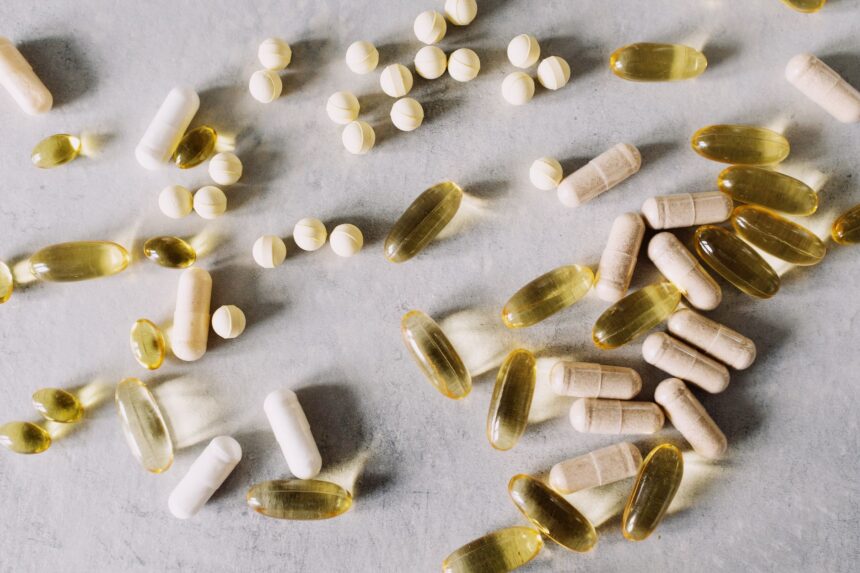
Diagram of creatine synthesis pathway and methylation cycle in human metabolism
Your body produces 2 grams of creatine daily, consuming 40% of your total methyl group supply. When you supplement creatine, this metabolic demand shifts, with implications for vegetarians, vegans, and metabolic health. — Photo by ready made on Pexels (Pexels License)
SHARE
1 min read|125 words

Emerging evidence reveals that creatine supplementation initiates a measurable shift in your body’s methylation metabolism. Your cells naturally synthesize approximately 2 grams of creatine daily—a process that consumes roughly 40% of your total methyl group supply, the critical chemical tags involved in DNA repair, neurotransmitter synthesis, and gene regulation. When you supplement with creatine, your body responds by downregulating its own production, thereby reducing downstream methylation demands. A 12-week randomized controlled trial documented significantly reduced plasma guanidinoacetate levels with 3g daily supplementation, confirming the biochemical reality of this adaptation. However, researchers caution that while this mechanism is genuine, downstream clinical benefits—such as homocysteine reduction—remain inconsistent across studies. The findings suggest context-dependent outcomes rather than universal metabolic advantage. Read the full article on GMJ Newsroom.

Was this article helpful?

GMJ Brief · Announcement

📰 Read the full article: How Creatine Supplements Reshape Your Body’s Methylation Cycle →

Related reference
  • Creatine · Ingredient
Share This Article
Facebook LinkedIn Bluesky Copy Link Print
GMJ
ByProf. Giorgi Pkhakadze
Follow:
Prof. Giorgi Pkhakadze, MD, MPH, PhD, is Editor-in-Chief of the Georgian Medical Journal and Chair of the Public Health Institute of Georgia (PHIG). He is Professor and Head of the Department of Social and Behavioural Sciences at David Tvildiani Medical University, and Secretary/Treasurer of the UEMS Section of Public Health. ORCID: 0000-0001-7609-4515.

Submit Your Paper →

Georgia's peer-reviewed open-access medical journal. No APC until January 2027.
Submit Manuscript →
Brain network fragmentation at legal alcohol limits predicts subjective intoxication

Functional MRI reveals that individuals with identical blood alcohol levels show variable…

Evidence Review: Five Health Behaviours Reshaping 2025 Clinical Practice

Real-world studies and trials in 2025 reveal that timing and context shape…

L-Theanine Improves Sleep Quality Without Drowsiness, Systematic Review Finds

A systematic review of 13 randomised trials found that L-theanine supplementation at…

Submit Your Paper to GMJ

No APC until January 2027.
Submit Manuscript →

You Might Also Like

Medical AI algorithm interface showing sepsis prediction with temporal data warning

Critical Flaw Discovered: Sepsis AI Tools Trained on Information From the Future

By
Prof. Giorgi Pkhakadze
13/07/2026
Microscopic image of microglia brain immune cells responding to amyloid and tau proteins

Three Key Insights: How Brain Immune Cells May Hold the Key to Dementia Prevention

By
Prof. Giorgi Pkhakadze
12/07/2026
Illustration of barriers to prenatal care access driven by immigration policy

Policy Barriers to Prenatal Care Drive Measurable Cascade of Maternal and Child Health Complications

By
Prof. Giorgi Pkhakadze
23/07/2026
Hospital finance executives discussing revenue cycle management reforms at healthcare conference

8 Percent of U.S. Healthcare Spending Consumed by Administrative Costs, HFMA Data Reveals

By
Prof. Giorgi Pkhakadze
11/07/2026
Facebook Twitter Youtube Instagram
Company
  • Privacy Policy
  • Contact US
  • GMJ Journal
  • Submit Manuscript
  • Editorial Team
  • Register at GMJ
  • Terms of Use

Subscribe to GMJ News — Click here

Join Community
© 2026 Georgian Medical Journal (GMJ). Published by the Public Health Institute of Georgia (PHIG). All rights reserved.
Welcome Back!

Sign in to your account

Username or Email Address
Password

Lost your password?

Not a member? Sign Up