
By using this site, you agree to the Privacy Policy and Terms of Use.
Accept
GMJ NewsGMJ NewsGMJ News
  • Latest News
    • GMJ Briefs
  • Podcast & Media
    • Podcast Episodes
    • GMJ Audio
    • GMJ Videos
  • Research Digest
    • New Studies
    • Georgian Research
    • Data & Numbers
  • Policy & Systems
    • Health Policy
    • Quality & Safety
    • Migration & Health
    • Global Health
  • Practice
    • Clinical Updates
    • Case Discussions
    • Pharmacy & Prescribing
    • Ingredients A-Z
  • Perspectives
    • Editorial
    • Explainers
    • Voices
    • Letters
  • GMJ Articles
    • Vol. 1 Issue 2 (2026)
    • Vol. 1 Issue 1 (2026)
    • Pre-Launch Articles (2025)
  • Read the Journal →
  • About GMJ News
Notification Show More
Font ResizerAa
GMJ NewsGMJ News
Font ResizerAa
  • Latest News
    • GMJ Briefs
  • Podcast & Media
    • Podcast Episodes
    • GMJ Audio
    • GMJ Videos
  • Research Digest
    • New Studies
    • Georgian Research
    • Data & Numbers
  • Policy & Systems
    • Health Policy
    • Quality & Safety
    • Migration & Health
    • Global Health
  • Practice
    • Clinical Updates
    • Case Discussions
    • Pharmacy & Prescribing
    • Ingredients A-Z
  • Perspectives
    • Editorial
    • Explainers
    • Voices
    • Letters
  • GMJ Articles
    • Vol. 1 Issue 2 (2026)
    • Vol. 1 Issue 1 (2026)
    • Pre-Launch Articles (2025)
  • Read the Journal →
  • About GMJ News
Follow US
GMJ News > GMJ Briefs > Evolution’s Hidden Cost: New Gene Links Early Vigor to Accelerated Aging

Evolution’s Hidden Cost: New Gene Links Early Vigor to Accelerated Aging

GMJ
Last updated: 10/06/2026 01:49
By
Prof. Giorgi Pkhakadze
Share
1 Min Read
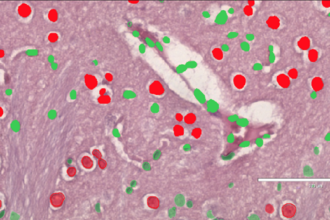
Scientific illustration showing genetic mechanisms of aging and youth trade-offs
Scientists identify the vgll3 gene as a key regulator creating a fundamental trade-off between early-life advantages and long-term health. This breakthrough provides the first experimental evidence for evolutionary theories about aging. — Photo: Sangharsh Lohakare / Pexels
SHARE
1 min read|161 words

An international research collaboration has identified the vgll3 gene as the biological mechanism underlying a fundamental evolutionary trade-off between rapid growth and reproductive success versus longevity and disease resistance. This landmark study provides the first experimental validation of aging theories proposed by evolutionary biologists decades ago, demonstrating that organisms with enhanced vgll3 activity experience accelerated development and earlier reproductive maturity at the cost of increased cellular damage and cancer susceptibility in later life. The discovery reveals how natural selection has favored genes that prioritize early-life advantages—traits that enhance survival and reproduction during youth—despite their negative long-term health consequences. According to the National Institute on Aging, these findings could fundamentally reshape anti-aging research strategies and inform the development of targeted interventions for age-related diseases. Understanding these genetic mechanisms opens new avenues for therapeutic approaches that may one day allow us to decouple the costs of early vigor from the benefits of extended healthspan. Read the full article on GMJ Newsroom.

Was this article helpful?
GMJ Brief · Announcement

📰 Read the full article: Genetic Trade-off Between Youth and Longevity Discovered in Landmark Study →

Share This Article
Facebook LinkedIn Bluesky Copy Link Print
GMJ
ByProf. Giorgi Pkhakadze
Follow:
Prof. Giorgi Pkhakadze, MD, MPH, PhD, is Editor-in-Chief of the Georgian Medical Journal and Chair of the Public Health Institute of Georgia (PHIG). He is Professor and Head of the Department of Social and Behavioural Sciences at David Tvildiani Medical University, and Secretary/Treasurer of the UEMS Section of Public Health. ORCID: 0000-0001-7609-4515.

Submit Your Paper →

Georgia's peer-reviewed open-access medical journal. No APC until January 2027.
Submit Manuscript →
NEJM Images Show Advanced Diabetic Eye Disease Progression and Treatment Response

New NEJM clinical images demonstrate proliferative diabetic retinopathy progression, showing characteristic neovascularization…

NHS workforce crisis threatens patient safety as early career doctors report severe burnout

New NEJM analysis reveals how workforce pressures are forcing early-career doctors to…

GLP-1 Drugs Show 30% Lower Breast Cancer Risk in Major Study

Large observational study finds women taking GLP-1 drugs like Ozempic and Wegovy…

Submit Your Paper to GMJ

No APC until January 2027.
Submit Manuscript →

You Might Also Like

Brain scan showing structural abnormalities in children exposed to chlorpyrifos pesticide

Key Finding: Common Pesticide Chlorpyrifos Linked to Lasting Brain Damage in Children

By
Prof. Giorgi Pkhakadze
09/06/2026
Wearable device on wrist displaying health monitoring data for personalized depression treatment

Depression Affects One in Five Americans—New Data-Driven Algorithm Offers Personalized Solutions

By
Prof. Giorgi Pkhakadze
10/06/2026
Global HealthPolicy & Systems

Cross-border Ebola transmission confirmed between DRC and Uganda as WHO declares international emergency

By
Prof. Giorgi Pkhakadze
31/05/2026
Global HealthPolicy & Systems

UK Health Agency Confirms Hantavirus Outbreak on Cruise Ship with British Nationals

By
Prof. Giorgi Pkhakadze
03/06/2026
Facebook Twitter Youtube Instagram
Company
  • Privacy Policy
  • Contact US
  • GMJ Journal
  • Submit Manuscript
  • Editorial Team
  • Register at GMJ
  • Terms of Use

Subscribe to GMJ News — Click here

Join Community
© 2026 Georgian Medical Journal (GMJ). Published by the Public Health Institute of Georgia (PHIG). All rights reserved.
Welcome Back!

Sign in to your account

Username or Email Address
Password

Lost your password?

Not a member? Sign Up