By using this site, you agree to the Privacy Policy and Terms of Use.
Accept
GMJ NewsGMJ NewsGMJ News
  • Latest News
    • GMJ Briefs
  • Podcast & Media
    • Podcast Episodes
    • GMJ Audio
    • GMJ Videos
  • Research Digest
    • New Studies
    • Georgian Research
    • Data & Numbers
  • Policy & Systems
    • Health Policy
    • Quality & Safety
    • Migration & Health
    • Global Health
  • Practice
    • Clinical Updates
    • Case Discussions
    • Pharmacy & Prescribing
    • Ingredients A-Z
  • Perspectives
    • Editorial
    • Explainers
    • Voices
    • Letters
  • GMJ Articles
    • Vol. 1 Issue 2 (2026)
    • Vol. 1 Issue 1 (2026)
    • Pre-Launch Articles (2025)
  • Read the Journal →
  • About GMJ News
Notification Show More
Font ResizerAa
GMJ NewsGMJ News
Font ResizerAa
  • Latest News
    • GMJ Briefs
  • Podcast & Media
    • Podcast Episodes
    • GMJ Audio
    • GMJ Videos
  • Research Digest
    • New Studies
    • Georgian Research
    • Data & Numbers
  • Policy & Systems
    • Health Policy
    • Quality & Safety
    • Migration & Health
    • Global Health
  • Practice
    • Clinical Updates
    • Case Discussions
    • Pharmacy & Prescribing
    • Ingredients A-Z
  • Perspectives
    • Editorial
    • Explainers
    • Voices
    • Letters
  • GMJ Articles
    • Vol. 1 Issue 2 (2026)
    • Vol. 1 Issue 1 (2026)
    • Pre-Launch Articles (2025)
  • Read the Journal →
  • About GMJ News
Follow US
GMJ News > GMJ Briefs > Filter Your Coffee, Not Your Cholesterol Concerns: How Brewing Method Changes Everything

Filter Your Coffee, Not Your Cholesterol Concerns: How Brewing Method Changes Everything

GMJ
Last updated: 23/07/2026 03:30
By
Prof. Giorgi Pkhakadze
Share
1 Min Read
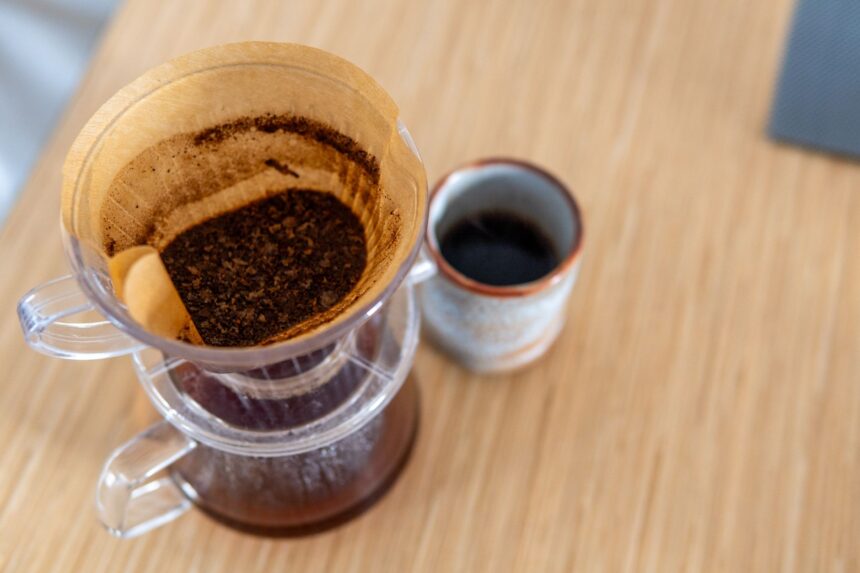
Comparative chart showing cafestol content in boiled, French press, espresso, and filtered coffee brewing methods
Coffee's effect on cholesterol depends entirely on brewing method. Unfiltered coffee—French press, espresso, Turkish—allows diterpenes (cafestol and kahweol) to reach your cup and raise LDL by 5.4 mg/dL on average. Paper-filtered methods eliminate this effect. — Photo by Israyosoy S. on Pexels (Pexels License)
SHARE
1 min read|151 words

Coffee lovers concerned about cardiovascular health can breathe easy—if they choose the right brewing method. According to a comprehensive meta-analysis of over 26 randomized controlled trials, the cholesterol impact of coffee depends almost entirely on how it is prepared, not the coffee itself.

The culprits are cafestol and kahweol, naturally occurring compounds called diterpenes that are carried into brewed coffee via coffee oils. When consumed, these compounds activate liver receptors that suppress cholesterol clearance, raising LDL levels by approximately 5.4 mg/dL on average. However, this effect is entirely preventable. Paper filters used in drip and pour-over brewing methods trap diterpenes completely, eliminating the cholesterol effect. In contrast, metal mesh filters in French presses and espresso machines allow diterpenes to pass through into your cup.

The evidence is clear: switching from unfiltered to filtered brewing eliminates the cholesterol concern while preserving your daily coffee ritual.

Read the full article on GMJ Newsroom.

Submit Your Paper
GMJ_Submit_Banner

Was this article helpful?

GMJ Brief · Announcement

📰 Read the full article: How Coffee Brewing Method Affects Cholesterol: The Science Behind Diterpenes and Filters →

Share This Article
Facebook LinkedIn Bluesky Copy Link Print
GMJ
ByProf. Giorgi Pkhakadze
Follow:
Prof. Giorgi Pkhakadze, MD, MPH, PhD, is Editor-in-Chief of the Georgian Medical Journal and Chair of the Public Health Institute of Georgia (PHIG). He is Professor and Head of the Department of Social and Behavioural Sciences at David Tvildiani Medical University, and Secretary/Treasurer of the UEMS Section of Public Health. ORCID: 0000-0001-7609-4515.

Submit Your Paper →

Georgia's peer-reviewed open-access medical journal. No APC until January 2027.
Submit Manuscript →
Waist Circumference Outperforms BMI in Predicting Disability Risk, Whitehall II Cohort Study Shows

A new analysis of the Whitehall II cohort study shows that waist…

FDA-Cleared AI Tool EchoNext Enables ECG-Based Heart Disease Screening

Pathway Labs' EchoNext, an FDA-cleared artificial intelligence tool, enables detection of structural…

Beyond Minimum Requirements: New Evidence Suggests Higher Protein Intake Supports Healthy Aging

A new review of aging and nutrition research suggests that protein intake…

Submit Your Paper to GMJ

No APC until January 2027.
Submit Manuscript →

You Might Also Like

Medical illustration showing stroke treatment with thrombolytic therapy

Single Case Report Highlights Tenecteplase Efficacy in 68-Year-Old Stroke Patient

By
Prof. Giorgi Pkhakadze
16/06/2026
Clinical UpdatesPolicy & SystemsPracticeQuality & Safety

CDC Issues Alert on Listeria Outbreak Linked to Mexican-Style Fresh Cheese

By
Prof. Giorgi Pkhakadze
11/06/2026
Infographic showing animal health funding represents tiny fraction of global health spending

Animal Health Receives 0.6% of Global Health Funding While Human Health Claims 95%

By
Prof. Giorgi Pkhakadze
10/06/2026
Map showing geographic distribution of measles cases and vaccination coverage in South Carolina

Geographic Disparities in Vaccination Rates Drive Measles Clustering Across South Carolina

By
Prof. Giorgi Pkhakadze
31/05/2026
Facebook Twitter Youtube Instagram
Company
  • Privacy Policy
  • Contact US
  • GMJ Journal
  • Submit Manuscript
  • Editorial Team
  • Register at GMJ
  • Terms of Use

Subscribe to GMJ News — Click here

Join Community
© 2026 Georgian Medical Journal (GMJ). Published by the Public Health Institute of Georgia (PHIG). All rights reserved.
Welcome Back!

Sign in to your account

Username or Email Address
Password

Lost your password?

Not a member? Sign Up