By using this site, you agree to the Privacy Policy and Terms of Use.
Accept
GMJ NewsGMJ NewsGMJ News
  • Latest News
    • GMJ Briefs
  • Podcast & Media
    • Podcast Episodes
    • GMJ Audio
    • GMJ Videos
  • Research Digest
    • New Studies
    • Georgian Research
    • Data & Numbers
  • Policy & Systems
    • Health Policy
    • Quality & Safety
    • Migration & Health
    • Global Health
  • Practice
    • Clinical Updates
    • Case Discussions
    • Pharmacy & Prescribing
    • Ingredients A-Z
  • Perspectives
    • Editorial
    • Explainers
    • Voices
    • Letters
  • GMJ Articles
    • Vol. 1 Issue 2 (2026)
    • Vol. 1 Issue 1 (2026)
    • Pre-Launch Articles (2025)
  • Read the Journal →
  • About GMJ News
Notification Show More
Font ResizerAa
GMJ NewsGMJ News
Font ResizerAa
  • Latest News
    • GMJ Briefs
  • Podcast & Media
    • Podcast Episodes
    • GMJ Audio
    • GMJ Videos
  • Research Digest
    • New Studies
    • Georgian Research
    • Data & Numbers
  • Policy & Systems
    • Health Policy
    • Quality & Safety
    • Migration & Health
    • Global Health
  • Practice
    • Clinical Updates
    • Case Discussions
    • Pharmacy & Prescribing
    • Ingredients A-Z
  • Perspectives
    • Editorial
    • Explainers
    • Voices
    • Letters
  • GMJ Articles
    • Vol. 1 Issue 2 (2026)
    • Vol. 1 Issue 1 (2026)
    • Pre-Launch Articles (2025)
  • Read the Journal →
  • About GMJ News
Follow US
GMJ News > GMJ Briefs > Key Finding: Brain preservation depends on where you store fat, not how much you weigh

Key Finding: Brain preservation depends on where you store fat, not how much you weigh

GMJ
Last updated: 03/08/2026 17:29
By
Prof. Giorgi Pkhakadze
Share
0 Min Read
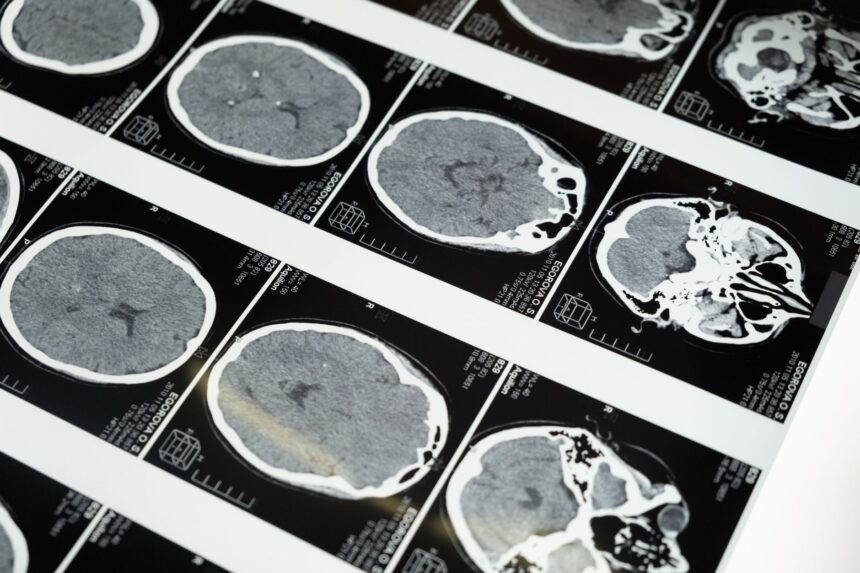
Illustration comparing visceral and subcutaneous fat distribution and their effects on brain volume
A 16-year study reveals that visceral fat accumulation—not total weight—predicts brain volume loss and cognitive decline. Glucose control, not cholesterol, mediates the effect. — Photo by cottonbro studio on Pexels (Pexels License)
SHARE
1 min read|33 words

86% of study participants were male—a critical limitation for understanding how visceral fat affects women's brain aging. Generalizability remains a key gap in metabolic neuroscience.

Read the full article on GMJ Newsroom →

Was this article helpful?

GMJ Brief · Key Finding

📰 Read the full article: Brain preservation depends on where you store fat, not how much you weigh →

Share This Article
Facebook LinkedIn Bluesky Copy Link Print
GMJ
ByProf. Giorgi Pkhakadze
Follow:
Prof. Giorgi Pkhakadze, MD, MPH, PhD, is Editor-in-Chief of the Georgian Medical Journal and Chair of the Public Health Institute of Georgia (PHIG). He is Professor and Head of the Department of Social and Behavioural Sciences at David Tvildiani Medical University, and Secretary/Treasurer of the UEMS Section of Public Health. ORCID: 0000-0001-7609-4515.


Submit Your Paper →

Georgia's peer-reviewed open-access medical journal. No APC until January 2027.
Submit Manuscript →
How the immune system learns to remember threats: the science of innate and adaptive immunity

The immune system operates in two coordinated layers: an immediate innate response…

How Brain Chemistry Shapes Mood, Sleep, and Focus: A Guide to Neurotransmitters

Neurotransmitters—chemical messengers between brain cells—regulate mood, sleep, motivation, and cognitive focus. Understanding…

Extra Virgin Olive Oil: 20 Grams Daily Linked to Lower Cancer and All-Cause Mortality

Approximately 23,000 Italian adults consuming 30 grams of extra virgin olive oil…

Submit Your Paper to GMJ

No APC until January 2027.
Submit Manuscript →

You Might Also Like

Chart showing TB financing capacity across different country income levels

Three Critical Lessons on TB Financing Sustainability and Global Health Equity

By
Prof. Giorgi Pkhakadze
01/07/2026
Global HealthPolicy & Systems

Ebola Outbreak Spreads in Eastern DRC as Child Infections Expected to Rise

By
Prof. Giorgi Pkhakadze
13/06/2026
Global HealthPolicy & Systems

WHO Declares Public Health Emergency as Congo Ebola Outbreak Claims 220 Lives

By
Prof. Giorgi Pkhakadze
31/05/2026
Brain synaptic network illustration showing enhanced connectivity with combined nutrient approach

Announcement: Why Nutrients Work Better Together: New Research Reveals Synaptic Benefits of Combined Nutrition

By
Prof. Giorgi Pkhakadze
02/06/2026
Facebook Twitter Youtube Instagram
Company
  • Privacy Policy
  • Contact US
  • GMJ Journal
  • Submit Manuscript
  • Editorial Team
  • Register at GMJ
  • Terms of Use

Subscribe to GMJ News — Click here

Join Community
© 2026 Georgian Medical Journal (GMJ). Published by the Public Health Institute of Georgia (PHIG). All rights reserved.
Welcome Back!

Sign in to your account

Username or Email Address
Password

Lost your password?

Not a member? Sign Up