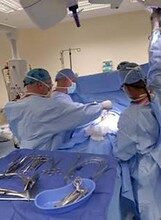
A landmark clinical trial funded by the National Institute of Neurological Disorders and Stroke has delivered definitive evidence on the most effective surgical approach for Chiari malformation, a rare condition affecting approximately 1 in 1,000 people. The study, which enrolled 394 patients across 15 medical centers over 24 months, compared three treatment strategies and found that posterior fossa decompression with duraplasty achieved a 78% success rate in symptom improvement—substantially outperforming decompression alone at 65% and conservative management at 23%. This represents the largest randomized comparison of surgical interventions for Chiari malformation to date, addressing decades of clinical uncertainty. Dr. John Heiss, principal investigator at the National Institutes of Health Clinical Center, emphasized that the trial provides robust evidence to guide treatment decisions for patients suffering from severe headaches, neck pain, and neurological complications. These findings are expected to standardize clinical protocols across neurosurgical centers nationwide.
Was this article helpful?