By using this site, you agree to the Privacy Policy and Terms of Use.
Accept
GMJ NewsGMJ NewsGMJ News
  • Latest News
    • GMJ Briefs
  • Podcast & Media
    • Podcast Episodes
    • GMJ Audio
    • GMJ Videos
  • Research Digest
    • New Studies
    • Georgian Research
    • Data & Numbers
  • Policy & Systems
    • Health Policy
    • Quality & Safety
    • Migration & Health
    • Global Health
  • Practice
    • Clinical Updates
    • Case Discussions
    • Pharmacy & Prescribing
    • Ingredients A-Z
  • Perspectives
    • Editorial
    • Explainers
    • Voices
    • Letters
  • GMJ Articles
    • Vol. 1 Issue 2 (2026)
    • Vol. 1 Issue 1 (2026)
    • Pre-Launch Articles (2025)
  • Read the Journal →
  • About GMJ News
Notification Show More
Font ResizerAa
GMJ NewsGMJ News
Font ResizerAa
  • Latest News
    • GMJ Briefs
  • Podcast & Media
    • Podcast Episodes
    • GMJ Audio
    • GMJ Videos
  • Research Digest
    • New Studies
    • Georgian Research
    • Data & Numbers
  • Policy & Systems
    • Health Policy
    • Quality & Safety
    • Migration & Health
    • Global Health
  • Practice
    • Clinical Updates
    • Case Discussions
    • Pharmacy & Prescribing
    • Ingredients A-Z
  • Perspectives
    • Editorial
    • Explainers
    • Voices
    • Letters
  • GMJ Articles
    • Vol. 1 Issue 2 (2026)
    • Vol. 1 Issue 1 (2026)
    • Pre-Launch Articles (2025)
  • Read the Journal →
  • About GMJ News
Follow US
GMJ News > GMJ Briefs > Mitochondrial Metabolites Emerge as Master Controllers of Immunity and Cancer Risk

Mitochondrial Metabolites Emerge as Master Controllers of Immunity and Cancer Risk

GMJ
Last updated: 30/07/2026 03:30
By
Prof. Giorgi Pkhakadze
Share
1 Min Read
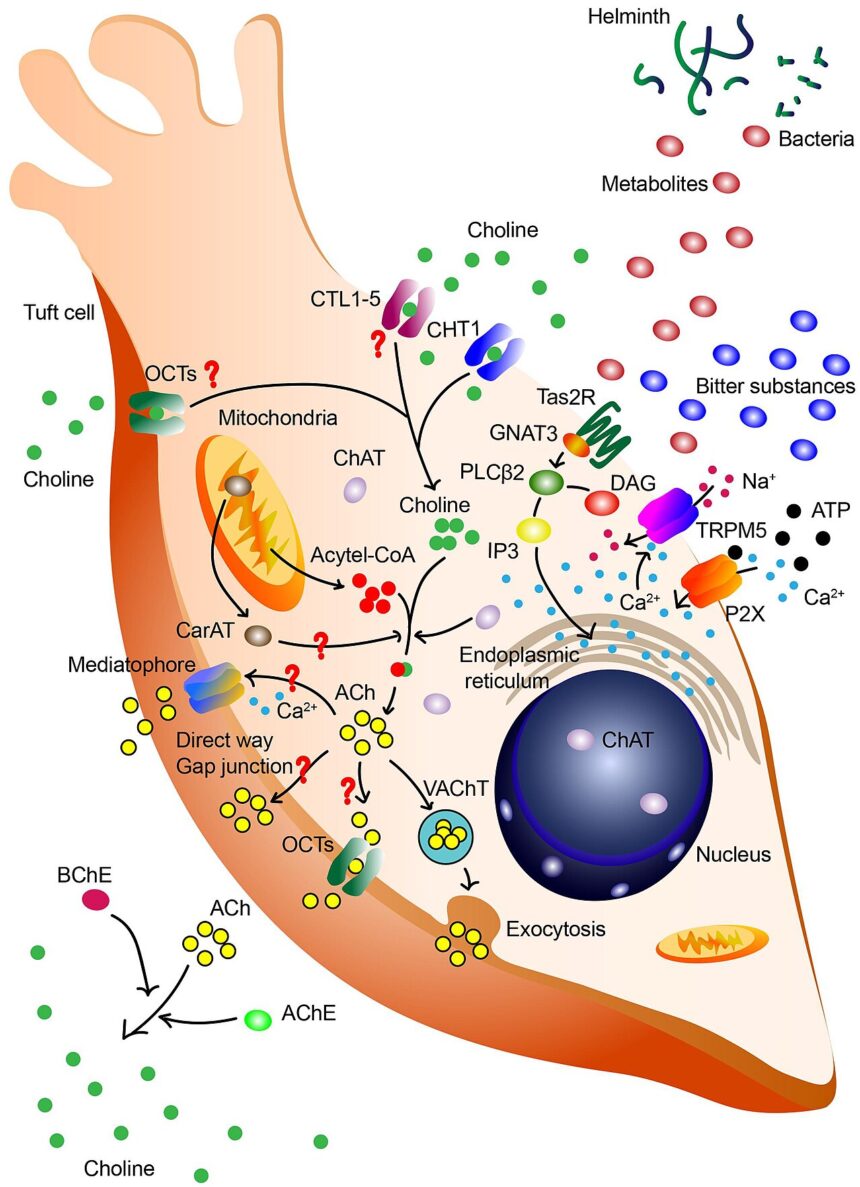
Diagram of TCA cycle intermediates and their regulatory roles in immune and stem cell biology
Mitochondrial metabolites—acetyl-CoA, α-ketoglutarate, itaconate, succinate, and fumarate—function as master regulators of immune tolerance, stem cell fate, and tumor suppression, not merely fuel precursors. Evidence-based strategies including exercise, calorie restriction, and targeted nutrients can optimize TCA cycle flux for cellular signaling. — Synthesis and release of non-neuronal acetylcholine by tuft cells.jpg by Pan J, Zhang L, Shao X and Huang J / CC BY 4.0 via Wikimedia Commons (CC BY 4.0)
SHARE
1 min read|135 words

Mitochondria function far beyond simple energy production. New mechanistic research published in Nature Communications reveals that citric acid cycle intermediates—acetyl-CoA, α-ketoglutarate, itaconate, succinate, and fumarate—act as sophisticated signaling molecules controlling immune tolerance, stem cell fate, and tumor suppression through epigenetic pathways.

According to Martínez-Reyes and Chandel’s analysis, these metabolites were previously assumed to be merely fuel precursors. However, evidence now demonstrates their direct regulation of gene expression and cellular behavior. Acetyl-CoA drives histone acetylation and lymphatic vessel formation, while α-ketoglutarate and itaconate toggle between stem cell maintenance and immune activation. Critically, succinate and fumarate accumulation can promote tumorigenesis through epigenetic dysregulation.

Supporting optimal metabolite signaling requires practical interventions: calorie restriction, aerobic exercise, B vitamins, magnesium, CoQ10, and alpha-lipoic acid maintain metabolite flux and cellular function. Read the full article on GMJ Newsroom.

Was this article helpful?

GMJ Brief · Announcement

📰 Read the full article: Beyond Energy: How Mitochondrial Metabolites Control Immunity, Stem Cells, and Cancer Risk →

Related reference
  • Alpha-Lipoic Acid · Ingredient
  • Magnesium · Ingredient
Share This Article
Facebook LinkedIn Bluesky Copy Link Print
GMJ
ByProf. Giorgi Pkhakadze
Follow:
Prof. Giorgi Pkhakadze, MD, MPH, PhD, is Editor-in-Chief of the Georgian Medical Journal and Chair of the Public Health Institute of Georgia (PHIG). He is Professor and Head of the Department of Social and Behavioural Sciences at David Tvildiani Medical University, and Secretary/Treasurer of the UEMS Section of Public Health. ORCID: 0000-0001-7609-4515.

Submit Your Paper →

Georgia's peer-reviewed open-access medical journal. No APC until January 2027.
Submit Manuscript →
Frozen and Canned Produce Offer Similar Nutritional Value to Fresh, Research Shows

Frozen and canned fruits and vegetables retain nutritional quality comparable to fresh…

Even Light Smoking Raises Heart Disease Risk by 50–60%, Study Shows—and Quitting Doesn’t Fully Reverse It

A pooled analysis of 302,522 adults in PLOS Medicine found that smoking…

Daily Peanut Consumption Reverses a Decade of Age-Related Brain Blood Flow Decline

Consuming 60 grams of skin-roasted peanuts daily improved cerebral blood flow by…

Submit Your Paper to GMJ

No APC until January 2027.
Submit Manuscript →

You Might Also Like

Clinical UpdatesGlobal HealthPolicy & SystemsPractice

Ebola outbreak in DRC vastly undercounted, Africa CDC warns as insecurity hampers response

By
Prof. Giorgi Pkhakadze
01/07/2026
Medical researchers analyzing viral genomic sequences in laboratory setting

Complete Genomic Characterization Sets New Standard for Filovirus Case Documentation

By
Prof. Giorgi Pkhakadze
11/07/2026

PHEIC Declaration: Cross-Border Ebola Transmission DRC-Uganda

By
Prof. Giorgi Pkhakadze
31/05/2026
Variety of legumes including beans, lentils, and soy products representing cardiovascular health benefits

Plant-Based Proteins Show Promise in Hypertension Prevention Strategy

By
Prof. Giorgi Pkhakadze
14/07/2026
Facebook Twitter Youtube Instagram
Company
  • Privacy Policy
  • Contact US
  • GMJ Journal
  • Submit Manuscript
  • Editorial Team
  • Register at GMJ
  • Terms of Use

Subscribe to GMJ News — Click here

Join Community
© 2026 Georgian Medical Journal (GMJ). Published by the Public Health Institute of Georgia (PHIG). All rights reserved.
Welcome Back!

Sign in to your account

Username or Email Address
Password

Lost your password?

Not a member? Sign Up