By using this site, you agree to the Privacy Policy and Terms of Use.
Accept
GMJ NewsGMJ NewsGMJ News
  • Latest News
    • GMJ Briefs
  • Podcast & Media
    • Podcast Episodes
    • GMJ Audio
    • GMJ Videos
  • Research Digest
    • New Studies
    • Georgian Research
    • Data & Numbers
  • Policy & Systems
    • Health Policy
    • Quality & Safety
    • Migration & Health
    • Global Health
  • Practice
    • Clinical Updates
    • Case Discussions
    • Pharmacy & Prescribing
    • Ingredients A-Z
  • Perspectives
    • Editorial
    • Explainers
    • Voices
    • Letters
  • Health Topics
  • GMJ Articles
    • Vol. 1 Issue 2 (2026)
    • Vol. 1 Issue 1 (2026)
    • Pre-Launch Articles (2025)
  • Read the Journal →
  • About GMJ News
Notification Show More
Font ResizerAa
GMJ NewsGMJ News
Font ResizerAa
  • Latest News
    • GMJ Briefs
  • Podcast & Media
    • Podcast Episodes
    • GMJ Audio
    • GMJ Videos
  • Research Digest
    • New Studies
    • Georgian Research
    • Data & Numbers
  • Policy & Systems
    • Health Policy
    • Quality & Safety
    • Migration & Health
    • Global Health
  • Practice
    • Clinical Updates
    • Case Discussions
    • Pharmacy & Prescribing
    • Ingredients A-Z
  • Perspectives
    • Editorial
    • Explainers
    • Voices
    • Letters
  • Health Topics
  • GMJ Articles
    • Vol. 1 Issue 2 (2026)
    • Vol. 1 Issue 1 (2026)
    • Pre-Launch Articles (2025)
  • Read the Journal →
  • About GMJ News
Follow US
GMJ News > GMJ Briefs > Seven Disease Categories Share One Root Cause: Mitochondrial Dysfunction

Seven Disease Categories Share One Root Cause: Mitochondrial Dysfunction

GMJ
Last updated: 04/08/2026 17:30
By
Prof. Giorgi Pkhakadze
Share
1 Min Read
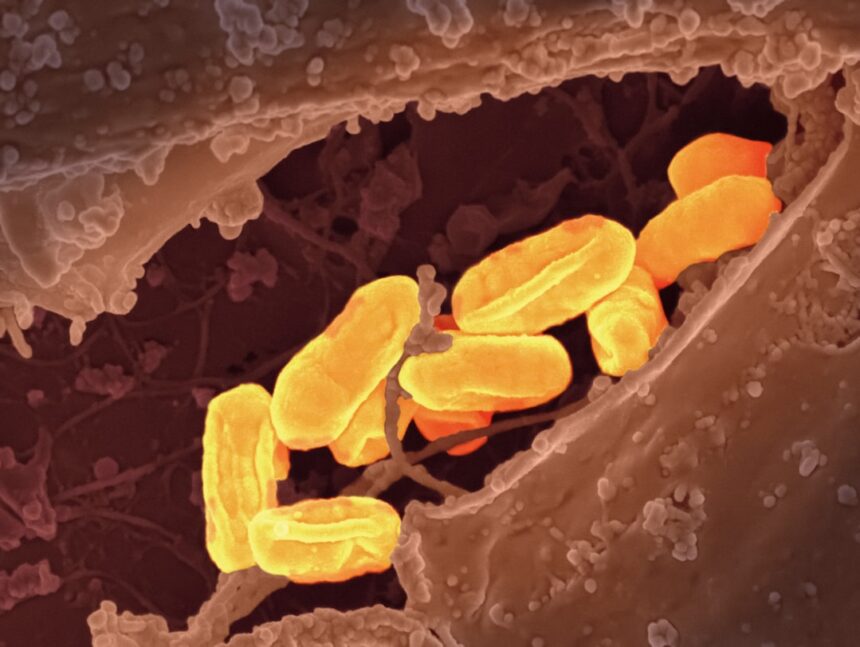
Illustration of mitochondrial structure and cellular energy signaling pathways
Mitochondria function as metabolic control centers that regulate inflammation, aging, and disease susceptibility across multiple organ systems through energy signaling and cellular quality control mechanisms. Emerging research demonstrates that diverse diseases including neurodegeneration, cardiovascular disease, and diabetes share a common underlying mechanism of mitochondrial dysfunction. — Photo by National Institute of Allergy and Infectious Diseases on Unsplash (Unsplash License)
SHARE
1 min read|118 words

A striking pattern has emerged in disease research: mitochondrial dysfunction serves as a common underlying mechanism across seven major disease categories, despite their distinct clinical presentations. According to data from Signal Transduction and Targeted Therapy, neurodegenerative diseases show 95 percent attribution to mitochondrial failure, followed by autoimmune disease at 85 percent and cardiovascular disease at 88 percent. Type 2 diabetes, obesity, cancer, and septic diseases similarly demonstrate significant mitochondrial involvement ranging from 72 to 82 percent. This convergence of pathophysiology across seemingly unrelated conditions raises a compelling question for clinicians and researchers: could restoring mitochondrial function represent a universal therapeutic strategy? Understanding mitochondria as metabolic decision-makers rather than simple energy factories may fundamentally reshape how we approach treatment and prevention across multiple disease categories.

Was this article helpful?

GMJ Brief · Key Finding

📰 Read the full article: Mitochondria as metabolic decision-makers: how cellular power plants regulate inflammation, aging, and disease →

Related reference
  • Type 2 Diabetes · Condition
  • Obesity · Condition
Share This Article
Facebook LinkedIn Bluesky Copy Link Print
GMJ
ByProf. Giorgi Pkhakadze
Follow:
Prof. Giorgi Pkhakadze, MD, MPH, PhD, is Editor-in-Chief of the Georgian Medical Journal and Chair of the Public Health Institute of Georgia (PHIG). He is Professor and Head of the Department of Social and Behavioural Sciences at David Tvildiani Medical University, and Secretary/Treasurer of the UEMS Section of Public Health. ORCID: 0000-0001-7609-4515.

Submit Your Paper →

Georgia's peer-reviewed open-access medical journal. No APC until January 2027.
Submit Manuscript →
Why Fiber Causes Stomach Upset—And How to Build Tolerance

Fiber-induced stomach upset stems from rapid fermentation, not true intolerance. Microbial adaptation…

How Your Gut Controls Magnesium Absorption: The TRPM6 Channel and What Form Actually Matters

Your gut's TRPM6 ion channels regulate magnesium absorption based on body status,…

Stress Reduces Cognitive Performance by 20%, Study Shows—Botanicals May Offer Partial Relief

Acute psychological stress impairs memory and attention by approximately 20%, according to…

Submit Your Paper to GMJ

No APC until January 2027.
Submit Manuscript →

You Might Also Like

NHS healthcare workers in hospital corridor discussing new uniform policy restrictions

Understanding the NHS Antisemitism Review: What Healthcare Professionals Need to Know

By
Prof. Giorgi Pkhakadze
16/07/2026

🚨 M 6.3 – 260 km SSE of Dunhuang, China

By
Prof. Giorgi Pkhakadze
16/06/2026
Children receiving medical care showing impact of supply chain disruptions on healthcare delivery

Shipping Cost Inflation Directly Reduces UNICEF’s Child Health Supply Capacity

By
Prof. Giorgi Pkhakadze
16/06/2026
Medical facility in Lebanon showing impact of healthcare disruptions during conflict

Three Critical Implications of Healthcare Attacks on Lebanese Medical Services

By
Prof. Giorgi Pkhakadze
03/07/2026
Facebook Twitter Youtube Instagram
Company
  • Privacy Policy
  • Contact US
  • GMJ Journal
  • Submit Manuscript
  • Editorial Team
  • Register at GMJ
  • Terms of Use

Subscribe to GMJ News — Click here

Join Community
© 2026 Georgian Medical Journal (GMJ). Published by the Public Health Institute of Georgia (PHIG). All rights reserved.
Welcome Back!

Sign in to your account

Username or Email Address
Password

Lost your password?

Not a member? Sign Up