By using this site, you agree to the Privacy Policy and Terms of Use.
Accept
GMJ NewsGMJ NewsGMJ News
  • Latest News
    • GMJ Briefs
  • Podcast & Media
    • Podcast Episodes
    • GMJ Audio
    • GMJ Videos
  • Research Digest
    • New Studies
    • Georgian Research
    • Data & Numbers
  • Policy & Systems
    • Health Policy
    • Quality & Safety
    • Migration & Health
    • Global Health
  • Practice
    • Clinical Updates
    • Case Discussions
    • Pharmacy & Prescribing
    • Ingredients A-Z
  • Perspectives
    • Editorial
    • Explainers
    • Voices
    • Letters
  • GMJ Articles
    • Vol. 1 Issue 2 (2026)
    • Vol. 1 Issue 1 (2026)
    • Pre-Launch Articles (2025)
  • Read the Journal →
  • About GMJ News
Notification Show More
Font ResizerAa
GMJ NewsGMJ News
Font ResizerAa
  • Latest News
    • GMJ Briefs
  • Podcast & Media
    • Podcast Episodes
    • GMJ Audio
    • GMJ Videos
  • Research Digest
    • New Studies
    • Georgian Research
    • Data & Numbers
  • Policy & Systems
    • Health Policy
    • Quality & Safety
    • Migration & Health
    • Global Health
  • Practice
    • Clinical Updates
    • Case Discussions
    • Pharmacy & Prescribing
    • Ingredients A-Z
  • Perspectives
    • Editorial
    • Explainers
    • Voices
    • Letters
  • GMJ Articles
    • Vol. 1 Issue 2 (2026)
    • Vol. 1 Issue 1 (2026)
    • Pre-Launch Articles (2025)
  • Read the Journal →
  • About GMJ News
Follow US
GMJ News > GMJ Briefs > STING Pathway Activation Drives Myofibroblast-Mediated Treatment Resistance in Ovarian Cancer

STING Pathway Activation Drives Myofibroblast-Mediated Treatment Resistance in Ovarian Cancer

GMJ
Last updated: 11/06/2026 23:46
By
Prof. Giorgi Pkhakadze
Share
1 Min Read
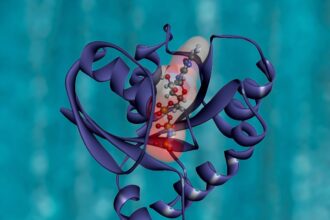
Diagram showing genomic instability pathway leading to cancer treatment resistance
New research reveals how genomic instability in ovarian cancer activates the STING-WNT pathway, creating protective myofibroblasts that drive both immune suppression and PARP inhibitor resistance.
SHARE
1 min read|133 words

A critical finding from Science Translational Medicine reveals the quantifiable relationship between genomic instability and therapy resistance: POSTN+ myofibroblast formation through STING-WNT axis activation creates a measurable immunosuppressive microenvironment that significantly promotes PARP inhibitor resistance. The data demonstrates that baseline DNA damage directly correlates with STING pathway activation, which subsequently triggers WNT signaling and myofibroblast transformation at proportional levels. This dose-response relationship explains why tumors with high genomic instability paradoxically show enhanced treatment resistance. The transformed myofibroblasts establish an immunosuppressive niche that actively prevents anti-tumor immune responses while simultaneously conferring resistance to standard therapies. These quantitative insights provide mechanistic clarity on why certain ovarian cancers develop aggressive therapy-resistant phenotypes and suggest that measuring STING-WNT axis activation could help predict treatment outcomes and guide therapeutic strategy selection. Read the full article on GMJ Newsroom.

Was this article helpful?

GMJ Brief · Key Finding

📰 Read the full article: Genomic instability fuels cancer resistance through newly identified cellular pathway →

Related reference
  • Iron · Ingredient
Share This Article
Facebook LinkedIn Bluesky Copy Link Print
GMJ
ByProf. Giorgi Pkhakadze
Follow:
Prof. Giorgi Pkhakadze, MD, MPH, PhD, is Editor-in-Chief of the Georgian Medical Journal and Chair of the Public Health Institute of Georgia (PHIG). He is Professor and Head of the Department of Social and Behavioural Sciences at David Tvildiani Medical University, and Secretary/Treasurer of the UEMS Section of Public Health. ORCID: 0000-0001-7609-4515.

Submit Your Paper →

Georgia's peer-reviewed open-access medical journal. No APC until January 2027.
Submit Manuscript →
Preoperative Exercise Improves Recovery in Elderly Spinal Fusion Patients, New Trial Shows

A randomized controlled trial shows that preoperative exercise programs—prehabilitation—significantly reduce postoperative complications…

Eight Years On: Refugee and Migrant Health Progress Remains Slow Despite COVID-19 Proof of Concept

The UCL–Lancet Commission's latest review in The Lancet finds that progress toward…

The Sandwich Generation: Balancing Child and Elder Care in Modern Healthcare

The sandwich generation—adults balancing childcare and elder care—faces mounting stress and fragmented…

Submit Your Paper to GMJ

No APC until January 2027.
Submit Manuscript →

You Might Also Like

Medical illustration showing teclistamab bispecific antibody mechanism in multiple myeloma treatment

Teclistamab Reshapes Multiple Myeloma Treatment Strategy with Earlier-Line Success

By
Prof. Giorgi Pkhakadze
16/06/2026
Global HealthPolicy & Systems

WHO Declares Health Emergency as Ebola Outbreak Spreads from DRC to Uganda

By
Prof. Giorgi Pkhakadze
31/05/2026
Infographic showing animal health funding represents tiny fraction of global health spending

Why Underfunding Animal Health Systems Creates Global Disease Risks: What You Need to Know

By
Prof. Giorgi Pkhakadze
27/06/2026
Map showing Ebola outbreak locations in Democratic Republic of Congo and Uganda with WHO emergency response indicators

What Healthcare Professionals Need to Know About the WHO Ebola Emergency Declaration

By
Prof. Giorgi Pkhakadze
25/06/2026
Facebook Twitter Youtube Instagram
Company
  • Privacy Policy
  • Contact US
  • GMJ Journal
  • Submit Manuscript
  • Editorial Team
  • Register at GMJ
  • Terms of Use

Subscribe to GMJ News — Click here

Join Community
© 2026 Georgian Medical Journal (GMJ). Published by the Public Health Institute of Georgia (PHIG). All rights reserved.
Welcome Back!

Sign in to your account

Username or Email Address
Password

Lost your password?

Not a member? Sign Up