By using this site, you agree to the Privacy Policy and Terms of Use.
Accept
GMJ NewsGMJ NewsGMJ News
  • Latest News
    • GMJ Briefs
  • Podcast & Media
    • Podcast Episodes
    • GMJ Audio
    • GMJ Videos
  • Research Digest
    • New Studies
    • Georgian Research
    • Data & Numbers
  • Policy & Systems
    • Health Policy
    • Quality & Safety
    • Migration & Health
    • Global Health
  • Practice
    • Clinical Updates
    • Case Discussions
    • Pharmacy & Prescribing
    • Ingredients A-Z
  • Perspectives
    • Editorial
    • Explainers
    • Voices
    • Letters
  • Health Topics
  • GMJ Articles
    • Vol. 1 Issue 2 (2026)
    • Vol. 1 Issue 1 (2026)
    • Pre-Launch Articles (2025)
  • Read the Journal →
  • About GMJ News
Notification Show More
Font ResizerAa
GMJ NewsGMJ News
Font ResizerAa
  • Latest News
    • GMJ Briefs
  • Podcast & Media
    • Podcast Episodes
    • GMJ Audio
    • GMJ Videos
  • Research Digest
    • New Studies
    • Georgian Research
    • Data & Numbers
  • Policy & Systems
    • Health Policy
    • Quality & Safety
    • Migration & Health
    • Global Health
  • Practice
    • Clinical Updates
    • Case Discussions
    • Pharmacy & Prescribing
    • Ingredients A-Z
  • Perspectives
    • Editorial
    • Explainers
    • Voices
    • Letters
  • Health Topics
  • GMJ Articles
    • Vol. 1 Issue 2 (2026)
    • Vol. 1 Issue 1 (2026)
    • Pre-Launch Articles (2025)
  • Read the Journal →
  • About GMJ News
Follow US
GMJ News > GMJ Briefs > Study Quantifies Brain Blood Flow Gain: Peanuts Reverse Decade of Aging Decline

Study Quantifies Brain Blood Flow Gain: Peanuts Reverse Decade of Aging Decline

GMJ
Last updated: 12/08/2026 05:29
By
Prof. Giorgi Pkhakadze
Share
1 Min Read
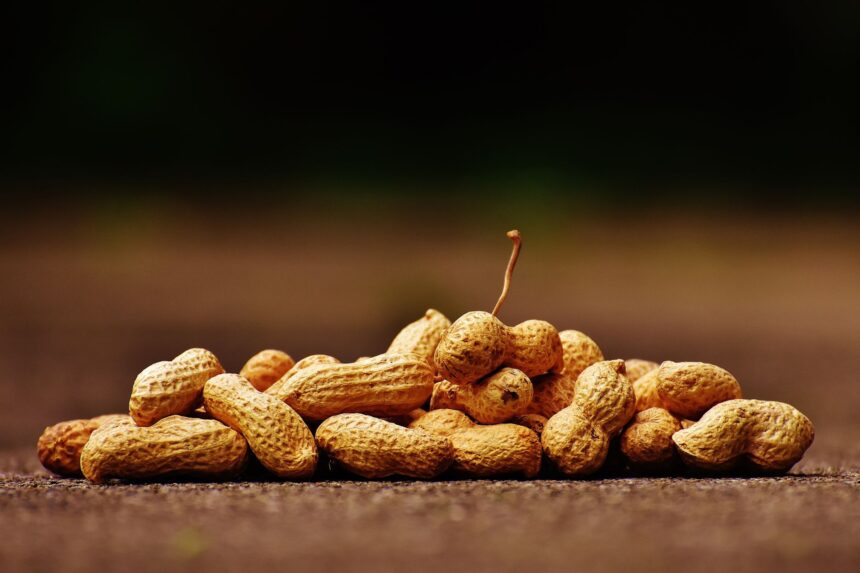
Infographic showing 4% improvement in cerebral blood flow from daily peanut consumption compared to 10-year aging decline
A new study in Clinical Nutrition (2025) found that consuming 60 grams of skin-roasted peanuts daily improved global brain blood flow by 4% in older adults—equivalent to reversing 10 years of age-related cognitive decline. The effect appears mediated by arginine, an amino acid that enhances nitric-oxide–driven vascular dilation. — Photo by Pixabay on Pexels (Pexels License)
SHARE
1 min read|118 words

A new Clinical Nutrition study (2025) has quantified the cerebral impact of daily peanut consumption with striking precision. The research demonstrates that a 4% improvement in cerebral perfusion from consuming just 60 grams of skin-roasted peanuts is functionally equivalent to reversing approximately 10 years of age-related brain blood flow decline—a substantial physiological outcome from a modest dietary intervention.

This quantification carries significant implications for aging populations seeking non-pharmacological strategies to maintain cognitive resilience. The mechanism driving this improvement involves arginine-mediated nitric oxide production, which induces vasodilation in cerebral vessels and enhances oxygen delivery. With each 60-gram serving providing 1.8–2.0 grams of arginine, the intervention represents a straightforward, reproducible dietary approach grounded in established vascular biology.

Read the full article on GMJ Newsroom.

Was this article helpful?

GMJ Brief · Key Finding

📰 Read the full article: Daily Peanut Consumption Linked to 4% Improvement in Brain Blood Flow in Older Adults →

Share This Article
Facebook LinkedIn Bluesky Copy Link Print
GMJ
ByProf. Giorgi Pkhakadze
Follow:
Prof. Giorgi Pkhakadze, MD, MPH, PhD, is Editor-in-Chief of the Georgian Medical Journal and Chair of the Public Health Institute of Georgia (PHIG). He is Professor and Head of the Department of Social and Behavioural Sciences at David Tvildiani Medical University, and Secretary/Treasurer of the UEMS Section of Public Health. ORCID: 0000-0001-7609-4515.

Submit Your Paper →

Georgia's peer-reviewed open-access medical journal. No APC until January 2027.
Submit Manuscript →
Mobile HPV screening aboard river ships reaches cervical cancer care to remote Amazon communities

A mobile point-of-care HPV screening and treatment strategy delivered by river vessels…

Healthy Diet and Exercise Cut Disease Risk Even Without Weight Loss, Major US Study Finds

New analysis of three US cohorts published in The Lancet Regional Health—Americas…

WHO Adopts New Decade-Long Strategy to Combat Antimicrobial Resistance Through 2036

The WHO has adopted a comprehensive 10-year action plan (2026–2036) to combat…

Submit Your Paper to GMJ

No APC until January 2027.
Submit Manuscript →

You Might Also Like

Illustration of brain cooling mechanism in acute ischemic stroke treatment

Drug-Induced Hypothermia Emerges as Promising Neuroprotective Strategy for Acute Stroke

By
Prof. Giorgi Pkhakadze
19/07/2026
Clinical UpdatesGlobal HealthPolicy & SystemsPractice

Ebola outbreak in eastern DRC accelerates amid conflict, regional spread deepens

By
Prof. Giorgi Pkhakadze
20/06/2026

PHEIC Declaration for Cross-Border Ebola Outbreak: DRC-Uganda

By
Prof. Giorgi Pkhakadze
31/05/2026
Modern home interior with health-focused design modifications including improved ventilation and safe play areas

From Blueprint to Better Health: How Home Design Becomes Clinical Intervention

By
Prof. Giorgi Pkhakadze
03/06/2026
Facebook Twitter Youtube Instagram
Company
  • Privacy Policy
  • Contact US
  • GMJ Journal
  • Submit Manuscript
  • Editorial Team
  • Register at GMJ
  • Terms of Use

Subscribe to GMJ News — Click here

Join Community
© 2026 Georgian Medical Journal (GMJ). Published by the Public Health Institute of Georgia (PHIG). All rights reserved.
Welcome Back!

Sign in to your account

Username or Email Address
Password

Lost your password?

Not a member? Sign Up