By using this site, you agree to the Privacy Policy and Terms of Use.
Accept
GMJ NewsGMJ NewsGMJ News
  • Latest News
    • GMJ Briefs
  • Podcast & Media
    • Podcast Episodes
    • GMJ Audio
    • GMJ Videos
  • Research Digest
    • New Studies
    • Georgian Research
    • Data & Numbers
  • Policy & Systems
    • Health Policy
    • Quality & Safety
    • Migration & Health
    • Global Health
  • Practice
    • Clinical Updates
    • Case Discussions
    • Pharmacy & Prescribing
    • Ingredients A-Z
  • Perspectives
    • Editorial
    • Explainers
    • Voices
    • Letters
  • GMJ Articles
    • Vol. 1 Issue 2 (2026)
    • Vol. 1 Issue 1 (2026)
    • Pre-Launch Articles (2025)
  • Read the Journal →
  • About GMJ News
Notification Show More
Font ResizerAa
GMJ NewsGMJ News
Font ResizerAa
  • Latest News
    • GMJ Briefs
  • Podcast & Media
    • Podcast Episodes
    • GMJ Audio
    • GMJ Videos
  • Research Digest
    • New Studies
    • Georgian Research
    • Data & Numbers
  • Policy & Systems
    • Health Policy
    • Quality & Safety
    • Migration & Health
    • Global Health
  • Practice
    • Clinical Updates
    • Case Discussions
    • Pharmacy & Prescribing
    • Ingredients A-Z
  • Perspectives
    • Editorial
    • Explainers
    • Voices
    • Letters
  • GMJ Articles
    • Vol. 1 Issue 2 (2026)
    • Vol. 1 Issue 1 (2026)
    • Pre-Launch Articles (2025)
  • Read the Journal →
  • About GMJ News
Follow US
GMJ News > GMJ Briefs > The Resistant Starch Gap: Why Western Diets Fall Short of Clinical Evidence

The Resistant Starch Gap: Why Western Diets Fall Short of Clinical Evidence

GMJ
Last updated: 30/07/2026 17:30
By
Prof. Giorgi Pkhakadze
Share
1 Min Read
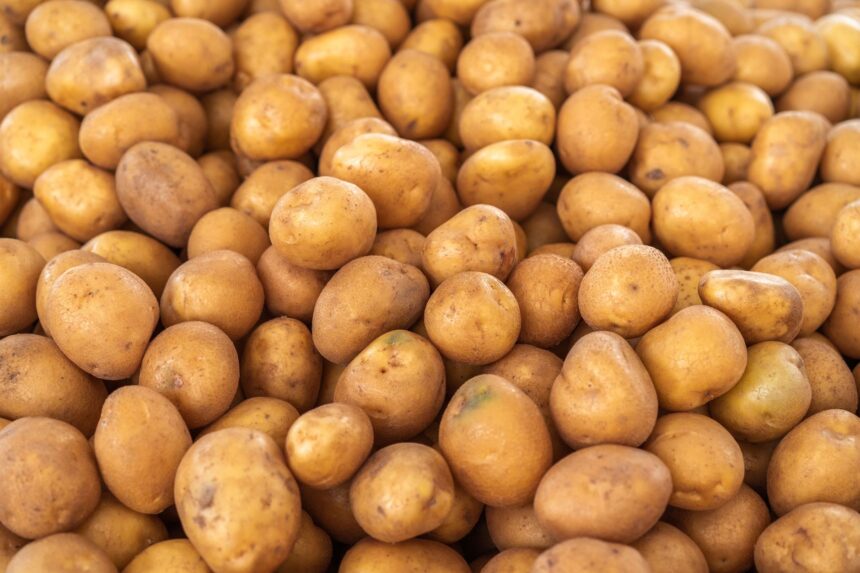
Diagram showing resistant starch fermentation pathway in colon, butyrate-producing bacteria, and colonocyte energy metabolism
Resistant starch works through a specific bacterial fermentation pathway that other fibers do not, requiring doses of 15–30g daily—far above typical food intake. Response depends critically on baseline microbiota composition. — Photo by Atlantic Ambience on Pexels (Pexels License)
SHARE
1 min read|127 words

A significant disconnect exists between current dietary intake and evidence-based recommendations for resistant starch. The typical Western diet delivers only 3–6g of resistant starch daily, while clinical intervention studies demonstrate therapeutic benefits at 15–30g per day—a gap of 250–500 percent.

Food sources alone contribute modestly to daily intake: a single cooked, cooled potato provides approximately 3–4g, and 100g of cooked rice yields roughly 2g. For patients seeking the documented benefits of resistant starch fermentation—including enhanced butyrate production and improved colonocyte health—dietary sources alone prove insufficient.

This quantitative shortfall has important clinical implications. Achieving therapeutic doses typically requires supplementation with high-amylose maize starch or similar resistant starch products. Understanding this gap helps clinicians counsel patients realistically about whether food-based approaches alone can reach evidence-supported dosing levels.

Was this article helpful?

GMJ Brief · Key Finding

📰 Read the full article: Resistant Starch and Gut Health: Why Fiber Type Matters More Than You Think →

Share This Article
Facebook LinkedIn Bluesky Copy Link Print
GMJ
ByProf. Giorgi Pkhakadze
Follow:
Prof. Giorgi Pkhakadze, MD, MPH, PhD, is Editor-in-Chief of the Georgian Medical Journal and Chair of the Public Health Institute of Georgia (PHIG). He is Professor and Head of the Department of Social and Behavioural Sciences at David Tvildiani Medical University, and Secretary/Treasurer of the UEMS Section of Public Health. ORCID: 0000-0001-7609-4515.

Submit Your Paper →

Georgia's peer-reviewed open-access medical journal. No APC until January 2027.
Submit Manuscript →
Vitamin C May Reverse Skin Aging at the Genetic Level, New Research Suggests

New research in The Journal of Investigative Dermatology reveals that vitamin C…

Bones as Metabolic Organs: How Mechanical Loading Triggers Glucose Control

Bones are metabolic organs, not merely structural tissue. Mechanical loading triggers osteocalcin…

Vitamin B12 deficiency hospitalizations surge 32% in Brazil: a warning for high-income health systems

Hospital admissions for vitamin B12 deficiency rose 32% in Brazil (2016–2023) across…

Submit Your Paper to GMJ

No APC until January 2027.
Submit Manuscript →

You Might Also Like

Virtual reality headset displaying 3D ultrasound imaging visualization technology

MIT’s Augmented Reality Platform Reimagines Ultrasound Visualization for Clinical Practice

By
Prof. Giorgi Pkhakadze
02/07/2026

PHEIC Declaration: Cross-Border Ebola Outbreak DRC-Uganda

By
Prof. Giorgi Pkhakadze
31/05/2026
Global HealthPolicy & Systems

WHO Declares Emergency as Ebola Crosses DRC-Uganda Border in Rare Strain Outbreak

By
Prof. Giorgi Pkhakadze
31/05/2026
Illustration of hippocampus brain region showing volume preservation through aerobic exercise in older adults

Announcement: Aerobic Exercise Reverses Age-Related Hippocampal Shrinkage in Older Adults

By
Prof. Giorgi Pkhakadze
23/07/2026
Facebook Twitter Youtube Instagram
Company
  • Privacy Policy
  • Contact US
  • GMJ Journal
  • Submit Manuscript
  • Editorial Team
  • Register at GMJ
  • Terms of Use

Subscribe to GMJ News — Click here

Join Community
© 2026 Georgian Medical Journal (GMJ). Published by the Public Health Institute of Georgia (PHIG). All rights reserved.
Welcome Back!

Sign in to your account

Username or Email Address
Password

Lost your password?

Not a member? Sign Up