By using this site, you agree to the Privacy Policy and Terms of Use.
Accept
GMJ NewsGMJ NewsGMJ News
  • Latest News
    • GMJ Briefs
  • Podcast & Media
    • Podcast Episodes
    • GMJ Audio
    • GMJ Videos
  • Research Digest
    • New Studies
    • Georgian Research
    • Data & Numbers
  • Policy & Systems
    • Health Policy
    • Quality & Safety
    • Migration & Health
    • Global Health
  • Practice
    • Clinical Updates
    • Case Discussions
    • Pharmacy & Prescribing
    • Ingredients A-Z
  • Perspectives
    • Editorial
    • Explainers
    • Voices
    • Letters
  • Health Topics
  • GMJ Articles
    • Vol. 1 Issue 2 (2026)
    • Vol. 1 Issue 1 (2026)
    • Pre-Launch Articles (2025)
  • Read the Journal →
  • About GMJ News
Notification Show More
Font ResizerAa
GMJ NewsGMJ News
Font ResizerAa
  • Latest News
    • GMJ Briefs
  • Podcast & Media
    • Podcast Episodes
    • GMJ Audio
    • GMJ Videos
  • Research Digest
    • New Studies
    • Georgian Research
    • Data & Numbers
  • Policy & Systems
    • Health Policy
    • Quality & Safety
    • Migration & Health
    • Global Health
  • Practice
    • Clinical Updates
    • Case Discussions
    • Pharmacy & Prescribing
    • Ingredients A-Z
  • Perspectives
    • Editorial
    • Explainers
    • Voices
    • Letters
  • Health Topics
  • GMJ Articles
    • Vol. 1 Issue 2 (2026)
    • Vol. 1 Issue 1 (2026)
    • Pre-Launch Articles (2025)
  • Read the Journal →
  • About GMJ News
Follow US
GMJ News > GMJ Briefs > Three Essential Truths About Your Gut Microbiome Every Person Should Know

Three Essential Truths About Your Gut Microbiome Every Person Should Know

GMJ
Last updated: 26/07/2026 06:43
By
Prof. Giorgi Pkhakadze
Share
1 Min Read
Scientific illustration of diverse gut microorganisms including bacteria, viruses and fungi
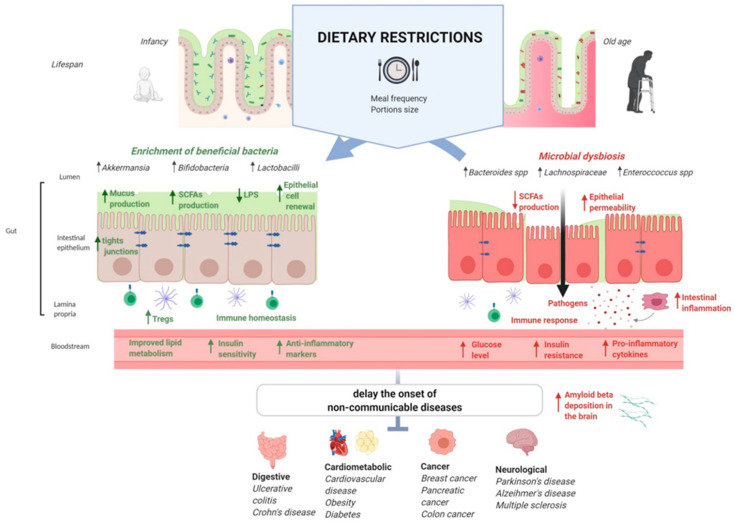
The human gut harbors 100 trillion microorganisms that perform essential functions for digestion, immunity, and overall health. This complex microbial ecosystem influences everything from nutrient metabolism to mental health through intricate host-microbe interactions. — Microorganisms-08-01140-g001 The possible role of gut microbiota in the interplay between dietary restrictions, gut barrier functions, health benefits, and non-communicable diseases.jpg by 1UOC di Nutrizione Clinica, Dipartimento di Scienze mediche e chirurgiche, Fondazione Policlinico Universitario A. Gemelli IRCCS, Largo A. Gemelli 8, 00168 Rome, Italy 2Scuola di Specializzazione in Scienza dell’Alimentazione, Università di Roma Tor Vergata, Via Montpellier 1, 00133 Rome, Italy; moc.liamg@inotnic.ocram 3UOSD di Nutrizione Avanzata in Oncologia, Dipartimento di Scienze mediche e chirurgiche, Fondazione Policlinico Universitario A. Gemelli IRCCS, Largo A. Gemelli 8, 00168 Rome, Italy; moc.liamg@1luoar.eniluap (P.R.); ti.ttacinu@elem.anitsircairam (M.C.M.) 4UOC di Medicina Interna e Gastroenterologia, Dipartimento di Scienze mediche e chirurgiche, Fondazione Policlinico Universitario A. Gemelli IRCCS, Largo A. Gemelli 8, 00168 Rome, Italy; ti.liamtoh@orinai.aculnaig (G.I.); moc.liamg@aizercul.azretal (L.L.); ti.orebil@sirolosutepol (L.R.L.); moc.liamg@inaiznop.acsecnarf (F.R.P.); ti.ttacinu@inirrabsag.oinotna (A.G.) 5Department of Medicine and Ageing Sciences, Faculty of Medicine and Surgery,“G. d’Annunzio” University of Chieti-Pescara, Via dei Vestini 31, 66100 Chieti, Italy 6Center for Advanced Studies and Technology (CAST), “G. d’Annunzio” University of Chieti-Pescara, Via dei Vestini 31, 66100 Chieti, Italy 7Dipartimento di Medicina e Chirurgia traslazionale, Facoltà di Medicina e Chirurgia, Università Cattolica Del Sacro Cuore, Largo F. Vito 1, 00168 Rome, Italy / CC BY-SA 4.0 via Wikimedia Commons (CC BY-SA 4.0)
SHARE
1 min read|155 words

Understanding your gut microbiome’s role in health requires grasping three fundamental facts that reshape how we think about medicine and wellness. First, the sheer numerical dominance of microorganisms in your body—100 trillion microbes outnumbering your own cells by a 10-to-1 margin—demonstrates that human health is fundamentally a collaborative endeavor between our bodies and microbial partners. Second, these microorganisms are not passive residents; they actively produce essential vitamins, metabolize nutrients, and mount defenses against pathogens that could otherwise cause disease. Third, mounting scientific evidence reveals that disruptions to healthy microbiome balance, a condition termed dysbiosis, are associated with serious conditions ranging from inflammatory bowel disease to depression and anxiety disorders. This knowledge carries immediate practical implications: protecting and nurturing your gut microbiome through diet, lifestyle, and medical choices becomes not merely optional wellness advice but fundamental preventive medicine. Understanding these three principles empowers patients and practitioners alike to make informed decisions about health and treatment.

Was this article helpful?

GMJ Brief · Takeaway

📰 Read the full article: The Human Gut Microbiome: Trillions of Microorganisms Shape Health and Disease →

Related reference
  • Inflammatory Bowel Disease · Condition
Share This Article
Facebook LinkedIn Bluesky Copy Link Print
GMJ
ByProf. Giorgi Pkhakadze
Follow:
Prof. Giorgi Pkhakadze, MD, MPH, PhD, is Editor-in-Chief of the Georgian Medical Journal and Chair of the Public Health Institute of Georgia (PHIG). He is Professor and Head of the Department of Social and Behavioural Sciences at David Tvildiani Medical University, and Secretary/Treasurer of the UEMS Section of Public Health. ORCID: 0000-0001-7609-4515.

Submit Your Paper →

Georgia's peer-reviewed open-access medical journal. No APC until January 2027.
Submit Manuscript →
How Your Gut Absorbs Nutrients: A Section-by-Section Guide to Digestive Checkpoints

Nutrient absorption is not a single process but a carefully choreographed sequence…

How Vitamin D Becomes an Antimicrobial Weapon Inside Your Immune Cells

Macrophages actively convert vitamin D into cathelicidin, a potent antimicrobial peptide, when…

Brain’s Energy Demands: Why B Vitamins and Micronutrients Matter for Cognitive Function

The human brain consumes 20% of body energy in adults—rising to 50%…

Submit Your Paper to GMJ

No APC until January 2027.
Submit Manuscript →

You Might Also Like

Medical chart showing toxocariasis case distribution by geographic origin

Barcelona Study Identifies Critical Gaps in Toxocariasis Screening for International Migrants

By
Prof. Giorgi Pkhakadze
14/07/2026
Medical professional reviewing gene therapy cost analysis and payment models on computer screen

$2 Million Barrier: Gene Therapy Costs Expose Healthcare Financing Crisis

By
Prof. Giorgi Pkhakadze
19/07/2026
Pharmaceutical research laboratory with obesity drug development

What Healthcare Providers Should Know About Retatrutide’s Clinical Development

By
Prof. Giorgi Pkhakadze
05/08/2026
NHS Online hospital trust digital healthcare platform interface showing virtual consultation capabilities

What NHS Digital Transformation Means for Patients and Clinicians: Key Developments in Virtual Care

By
Prof. Giorgi Pkhakadze
17/07/2026
Facebook Twitter Youtube Instagram
Company
  • Privacy Policy
  • Contact US
  • GMJ Journal
  • Submit Manuscript
  • Editorial Team
  • Register at GMJ
  • Terms of Use

Subscribe to GMJ News — Click here

Join Community
© 2026 Georgian Medical Journal (GMJ). Published by the Public Health Institute of Georgia (PHIG). All rights reserved.
Welcome Back!

Sign in to your account

Username or Email Address
Password

Lost your password?

Not a member? Sign Up