By using this site, you agree to the Privacy Policy and Terms of Use.
Accept
GMJ NewsGMJ NewsGMJ News
  • Latest News
    • GMJ Briefs
  • Podcast & Media
    • Podcast Episodes
    • GMJ Audio
    • GMJ Videos
  • Research Digest
    • New Studies
    • Georgian Research
    • Data & Numbers
  • Policy & Systems
    • Health Policy
    • Quality & Safety
    • Migration & Health
    • Global Health
  • Practice
    • Clinical Updates
    • Case Discussions
    • Pharmacy & Prescribing
    • Ingredients A-Z
  • Perspectives
    • Editorial
    • Explainers
    • Voices
    • Letters
  • GMJ Articles
    • Vol. 1 Issue 2 (2026)
    • Vol. 1 Issue 1 (2026)
    • Pre-Launch Articles (2025)
  • Read the Journal →
  • About GMJ News
Notification Show More
Font ResizerAa
GMJ NewsGMJ News
Font ResizerAa
  • Latest News
    • GMJ Briefs
  • Podcast & Media
    • Podcast Episodes
    • GMJ Audio
    • GMJ Videos
  • Research Digest
    • New Studies
    • Georgian Research
    • Data & Numbers
  • Policy & Systems
    • Health Policy
    • Quality & Safety
    • Migration & Health
    • Global Health
  • Practice
    • Clinical Updates
    • Case Discussions
    • Pharmacy & Prescribing
    • Ingredients A-Z
  • Perspectives
    • Editorial
    • Explainers
    • Voices
    • Letters
  • GMJ Articles
    • Vol. 1 Issue 2 (2026)
    • Vol. 1 Issue 1 (2026)
    • Pre-Launch Articles (2025)
  • Read the Journal →
  • About GMJ News
Follow US
GMJ News > GMJ Briefs > Two Trials, One Clear Answer: Prehospital Whole Blood Works

Two Trials, One Clear Answer: Prehospital Whole Blood Works

GMJ
Last updated: 26/07/2026 08:52
By
Prof. Giorgi Pkhakadze
Share
1 Min Read
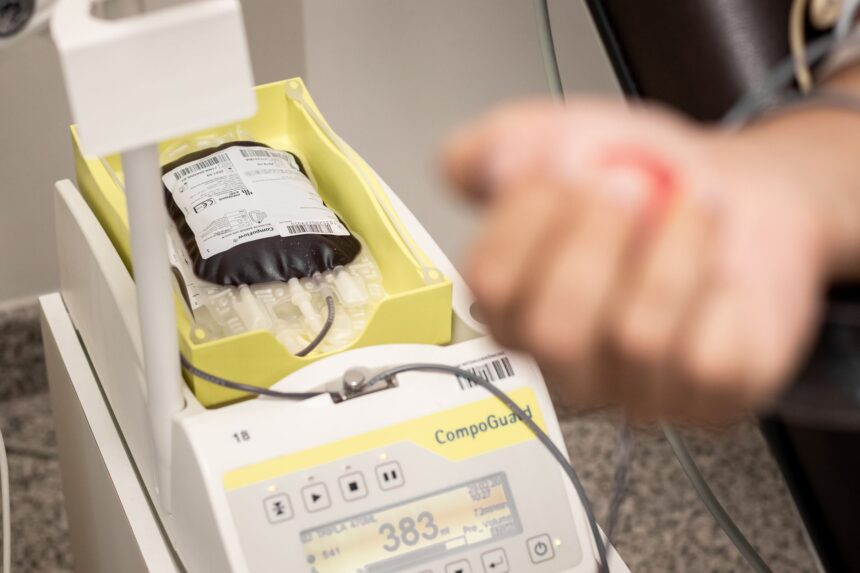
Medical illustration of prehospital trauma resuscitation with whole blood transfusion
Two new randomized trials in the New England Journal of Medicine demonstrate that prehospital whole blood transfusion is safe and effective for severe traumatic hemorrhage. The converging evidence may prompt rapid changes to emergency medical protocols worldwide. — Photo by Lucas Oliveira on Pexels (Pexels License)
SHARE
1 min read|122 words

A striking alignment of findings from two separate randomized controlled trials published in the New England Journal of Medicine now challenges conventional prehospital protocols. Both studies evaluated whole blood transfusion administered during emergency transport for severe hemorrhage and demonstrated consistent evidence of safety and efficacy.

The parallel nature of these trials—with concordant results on both safety and clinical effectiveness—provides robust evidence that prehospital whole blood administration is not only feasible but represents a meaningful advancement in trauma care. These findings underscore the importance of evidence-driven protocol evolution in emergency medical systems. The data support a shift in traditional prehospital resuscitation approaches, particularly for patients requiring rapid hemorrhage control during transport to definitive care.

Read the full article on GMJ Newsroom.

Was this article helpful?

GMJ Brief · Key Finding

📰 Read the full article: Whole Blood for Severe Trauma: New Evidence Supports Earlier Use in Emergency Care →

Share This Article
Facebook LinkedIn Bluesky Copy Link Print
GMJ
ByProf. Giorgi Pkhakadze
Follow:
Prof. Giorgi Pkhakadze, MD, MPH, PhD, is Editor-in-Chief of the Georgian Medical Journal and Chair of the Public Health Institute of Georgia (PHIG). He is Professor and Head of the Department of Social and Behavioural Sciences at David Tvildiani Medical University, and Secretary/Treasurer of the UEMS Section of Public Health. ORCID: 0000-0001-7609-4515.

Submit Your Paper →

Georgia's peer-reviewed open-access medical journal. No APC until January 2027.
Submit Manuscript →
L-Theanine Improves Sleep Quality Without Drowsiness, Systematic Review Finds

A systematic review of 13 randomised trials found that L-theanine supplementation at…

Meta-analysis reveals shared neurochemical signature across anxiety disorders

A meta-analysis of 25 brain imaging studies has identified a consistent neurochemical…

How the immune system learns and remembers: innate defenses meet adaptive immunity

The immune system operates as two integrated networks: innate immunity provides immediate…

Submit Your Paper to GMJ

No APC until January 2027.
Submit Manuscript →

You Might Also Like

EBOLA OUTBREAK – DRC/UGANDA CROSS-BORDER TRANSMISSION CONFIRMED

By
Prof. Giorgi Pkhakadze
31/05/2026
Nigerian food safety officials and WHO World Food Safety Day 2026 campaign materials

Nigeria Launches Coordinated Response to Global Food Safety Crisis

By
Prof. Giorgi Pkhakadze
25/06/2026
Global HealthPolicy & Systems

Ebola Outbreak in Congo Leaves Health Workers Without Protective Equipment

By
Prof. Giorgi Pkhakadze
08/06/2026
Healthcare worker conducting screening interview at Moldova probation centre

One in Seven Probation Entrants Screen Positive for Opioid Disorder in Moldova Study

By
Prof. Giorgi Pkhakadze
12/06/2026
Facebook Twitter Youtube Instagram
Company
  • Privacy Policy
  • Contact US
  • GMJ Journal
  • Submit Manuscript
  • Editorial Team
  • Register at GMJ
  • Terms of Use

Subscribe to GMJ News — Click here

Join Community
© 2026 Georgian Medical Journal (GMJ). Published by the Public Health Institute of Georgia (PHIG). All rights reserved.
Welcome Back!

Sign in to your account

Username or Email Address
Password

Lost your password?

Not a member? Sign Up