By using this site, you agree to the Privacy Policy and Terms of Use.
Accept
GMJ NewsGMJ NewsGMJ News
  • Latest News
    • GMJ Briefs
  • Podcast & Media
    • Podcast Episodes
    • GMJ Audio
    • GMJ Videos
  • Research Digest
    • New Studies
    • Georgian Research
    • Data & Numbers
  • Policy & Systems
    • Health Policy
    • Quality & Safety
    • Migration & Health
    • Global Health
  • Practice
    • Clinical Updates
    • Case Discussions
    • Pharmacy & Prescribing
    • Ingredients A-Z
  • Dictionary
    • Browse A–Z
    • About the Project
    • Contribute a Term
  • Perspectives
    • Editorial
    • Explainers
    • Voices
    • Letters
  • Health Topics
  • GMJ Articles
    • Vol. 1 Issue 2 (2026)
    • Vol. 1 Issue 1 (2026)
    • Pre-Launch Articles (2025)
  • Read the Journal →
  • About GMJ News
Notification Show More
Font ResizerAa
GMJ NewsGMJ News
Font ResizerAa
  • Latest News
    • GMJ Briefs
  • Podcast & Media
    • Podcast Episodes
    • GMJ Audio
    • GMJ Videos
  • Research Digest
    • New Studies
    • Georgian Research
    • Data & Numbers
  • Policy & Systems
    • Health Policy
    • Quality & Safety
    • Migration & Health
    • Global Health
  • Practice
    • Clinical Updates
    • Case Discussions
    • Pharmacy & Prescribing
    • Ingredients A-Z
  • Dictionary
    • Browse A–Z
    • About the Project
    • Contribute a Term
  • Perspectives
    • Editorial
    • Explainers
    • Voices
    • Letters
  • Health Topics
  • GMJ Articles
    • Vol. 1 Issue 2 (2026)
    • Vol. 1 Issue 1 (2026)
    • Pre-Launch Articles (2025)
  • Read the Journal →
  • About GMJ News
Follow US
GMJ News > GMJ Briefs > Weeks, Not Months: How Personalized Grafts Transform Pediatric Airway Surgery Timeline

Weeks, Not Months: How Personalized Grafts Transform Pediatric Airway Surgery Timeline

GMJ
Last updated: 23/07/2026 20:52
By
Prof. Giorgi Pkhakadze
Share
1 Min Read
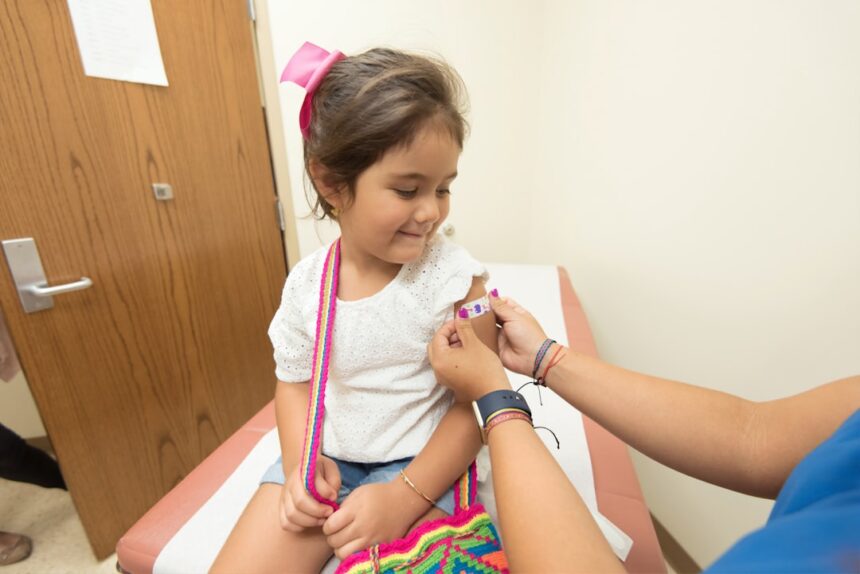
Illustration of decellularized cartilage graft engineering process for pediatric airway reconstruction
Researchers at Children's Hospital of Philadelphia have developed personalized cartilage grafts using decellularized scaffolds and patient-derived cells to treat severe subglottic stenosis in infants. The technique, published in Nature Communications, can be engineered within weeks and avoids donor site morbidity, offering a significant advance over conventional airway reconstruction methods. — Photo by CDC on Unsplash (Unsplash License)
SHARE
1 min read|122 words

Timeline is critical when treating severe subglottic stenosis in infants, and a new study from Children’s Hospital of Philadelphia demonstrates the clinical urgency addressed by their innovation. The personalized cartilage graft technique reduces engineering time dramatically compared to conventional grafting approaches—a distinction that carries profound implications for patients facing life-threatening airway obstruction. In pediatric medicine, where every week of delayed treatment can impact respiratory function and overall development, this acceleration represents more than logistical efficiency. The faster preparation timeline enables surgeons to intervene promptly while maintaining the quality and patient-specificity necessary for optimal surgical outcomes. Published in Nature Communications, this research underscores how precision engineering can directly improve clinical timelines in complex pediatric procedures. Read the full article on GMJ Newsroom.

Was this article helpful?

GMJ Brief · Key Finding

📰 Read the full article: Personalized Cartilage Grafts Offer New Hope for Infants with Life-Threatening Airway Narrowing →

Share This Article
Facebook LinkedIn Bluesky Copy Link Print
GMJ
ByProf. Giorgi Pkhakadze
Follow:
Prof. Giorgi Pkhakadze, MD, MPH, PhD, is Editor-in-Chief of the Georgian Medical Journal and Chair of the Public Health Institute of Georgia (PHIG). He is Professor and Head of the Department of Social and Behavioural Sciences at David Tvildiani Medical University, and Secretary/Treasurer of the UEMS Section of Public Health. ORCID: 0000-0001-7609-4515.

Submit Your Paper →

Georgia's peer-reviewed open-access medical journal. No APC until January 2027.
Submit Manuscript →
Ethiopia Study Reveals Stakeholder Concerns Over Novel Malaria Treatments

A qualitative study in Ethiopia reveals that health workers and patients view…

Sitafloxacin monotherapy matches doxycycline-rifampicin for brucellosis treatment in landmark trial

A multicenter randomized trial in The Lancet Regional Health – Western Pacific…

Ultra-processed foods linked to higher kidney cancer risk in large US study

A prospective analysis of over 300,000 US adults found that higher consumption…

Submit Your Paper to GMJ

No APC until January 2027.
Submit Manuscript →

You Might Also Like

SITUATION BRIEF: Cross-Border Ebola Outbreak – DRC/Uganda

By
Prof. Giorgi Pkhakadze
31/05/2026
Medical professionals operating radiotherapy equipment in hospital treatment room

What UK Radiotherapy Safety Data Means for Clinical Practice: Three Key Takeaways

By
Prof. Giorgi Pkhakadze
01/07/2026
Illustration of artificial intelligence analyzing electronic health records for adverse drug event detection

AI-Powered Clinical Notes Transform Drug Safety Monitoring

By
Prof. Giorgi Pkhakadze
18/07/2026

PHEIC Declaration: Ebola Cross-Border Transmission DRC-Uganda

By
Prof. Giorgi Pkhakadze
31/05/2026
Facebook Twitter Youtube Instagram
Company
  • Privacy Policy
  • Contact US
  • GMJ Journal
  • Submit Manuscript
  • Editorial Team
  • Register at GMJ
  • Terms of Use

Subscribe to GMJ News — Click here

Join Community
© 2026 Georgian Medical Journal (GMJ). Published by the Public Health Institute of Georgia (PHIG). All rights reserved.
Welcome Back!

Sign in to your account

Username or Email Address
Password

Lost your password?