By using this site, you agree to the Privacy Policy and Terms of Use.
Accept
GMJ NewsGMJ NewsGMJ News
  • Latest News
    • GMJ Briefs
  • Podcast & Media
    • Podcast Episodes
    • GMJ Audio
    • GMJ Videos
  • Research Digest
    • New Studies
    • Georgian Research
    • Data & Numbers
  • Policy & Systems
    • Health Policy
    • Quality & Safety
    • Migration & Health
    • Global Health
  • Practice
    • Clinical Updates
    • Case Discussions
    • Pharmacy & Prescribing
    • Ingredients A-Z
  • Perspectives
    • Editorial
    • Explainers
    • Voices
    • Letters
  • GMJ Articles
    • Vol. 1 Issue 2 (2026)
    • Vol. 1 Issue 1 (2026)
    • Pre-Launch Articles (2025)
  • Read the Journal →
  • About GMJ News
Notification Show More
Font ResizerAa
GMJ NewsGMJ News
Font ResizerAa
  • Latest News
    • GMJ Briefs
  • Podcast & Media
    • Podcast Episodes
    • GMJ Audio
    • GMJ Videos
  • Research Digest
    • New Studies
    • Georgian Research
    • Data & Numbers
  • Policy & Systems
    • Health Policy
    • Quality & Safety
    • Migration & Health
    • Global Health
  • Practice
    • Clinical Updates
    • Case Discussions
    • Pharmacy & Prescribing
    • Ingredients A-Z
  • Perspectives
    • Editorial
    • Explainers
    • Voices
    • Letters
  • GMJ Articles
    • Vol. 1 Issue 2 (2026)
    • Vol. 1 Issue 1 (2026)
    • Pre-Launch Articles (2025)
  • Read the Journal →
  • About GMJ News
Follow US
GMJ News > GMJ Briefs > What Clinicians and Patients Should Know About Pramipexole’s Role in Treating Depression

What Clinicians and Patients Should Know About Pramipexole’s Role in Treating Depression

GMJ
Last updated: 03/08/2026 22:43
By
Prof. Giorgi Pkhakadze
Share
1 Min Read
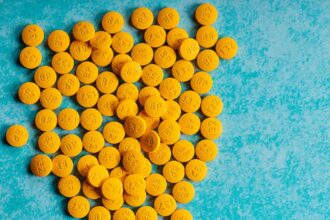
Medical illustration showing dopamine pathways in brain for depression treatment research
Randomized trial shows pramipexole significantly reduces anhedonia symptoms in depression patients. The dopamine agonist demonstrated efficacy across major depressive disorder, dysthymia, and bipolar depression. — Photo by Andrew Patrick Photo on Pexels (Pexels License)
SHARE
1 min read|133 words

A new Nature Medicine trial yields three critical insights for depression management. First, pramipexole demonstrated measurable superiority over placebo in reducing anhedonia symptoms as measured by the Snaith-Hamilton Pleasure Scale. Second, efficacy was consistent across major depressive disorder, dysthymia, and bipolar depression—suggesting broad applicability across depression subtypes. Third, the mechanism represents a departure from conventional practice: rather than targeting serotonin pathways, pramipexole addresses dopamine systems central to reward processing and motivation. This distinction matters clinically, as anhedonia frequently persists when other depressive symptoms improve with standard serotonin-reuptake inhibitors. For patients with treatment-resistant anhedonia or those inadequately responsive to traditional antidepressants, pramipexole may offer meaningful symptom relief and improved functional capacity. These findings encourage clinicians to consider dopamine-pathway interventions as part of comprehensive depression treatment protocols. Read the full article on GMJ Newsroom.

Was this article helpful?
GMJ Brief · Takeaway

📰 Read the full article: Dopamine Agonist Pramipexole Shows Promise for Anhedonia in Depression Trial →

Related reference
  • Major Depressive Disorder · Condition
Share This Article
Facebook LinkedIn Bluesky Copy Link Print
GMJ
ByProf. Giorgi Pkhakadze
Follow:
Prof. Giorgi Pkhakadze, MD, MPH, PhD, is Editor-in-Chief of the Georgian Medical Journal and Chair of the Public Health Institute of Georgia (PHIG). He is Professor and Head of the Department of Social and Behavioural Sciences at David Tvildiani Medical University, and Secretary/Treasurer of the UEMS Section of Public Health. ORCID: 0000-0001-7609-4515.

Submit Your Paper →

Georgia's peer-reviewed open-access medical journal. No APC until January 2027.
Submit Manuscript →
Astrocytes Reshape Understanding of Brain Control: Beyond Neurons to Cellular Regulation

Astrocytes, comprising roughly 50% of brain cells, are now recognised as active…

How the immune system learns to remember threats: the science of innate and adaptive immunity

The immune system operates in two coordinated layers: an immediate innate response…

How Brain Chemistry Shapes Mood, Sleep, and Focus: A Guide to Neurotransmitters

Neurotransmitters—chemical messengers between brain cells—regulate mood, sleep, motivation, and cognitive focus. Understanding…

Submit Your Paper to GMJ

No APC until January 2027.
Submit Manuscript →

You Might Also Like

EBOLA OUTBREAK – DRC/UGANDA CROSS-BORDER TRANSMISSION WITH WHO PHEIC DECLARATION

By
Prof. Giorgi Pkhakadze
31/05/2026
Brain imaging visualization showing metabolic activity patterns in anxiety disorders research

Brain Imaging Meta-Analysis Uncovers Opposite Metabolic Patterns in Anxiety Versus Other Psychiatric Disorders

By
Prof. Giorgi Pkhakadze
09/06/2026
Medical illustration showing vitamin D deficiency effects on human body systems

Global Study Reveals Widespread Vitamin D Crisis Affecting Billion Worldwide

By
Prof. Giorgi Pkhakadze
31/05/2026
Medical illustration showing CRISPR gene editing process for hereditary angioedema treatment

Hereditary Angioedema Affects Thousands Globally: New CRISPR Treatment Offers Hope

By
Prof. Giorgi Pkhakadze
18/07/2026
Facebook Twitter Youtube Instagram
Company
  • Privacy Policy
  • Contact US
  • GMJ Journal
  • Submit Manuscript
  • Editorial Team
  • Register at GMJ
  • Terms of Use

Subscribe to GMJ News — Click here

Join Community
© 2026 Georgian Medical Journal (GMJ). Published by the Public Health Institute of Georgia (PHIG). All rights reserved.
Welcome Back!

Sign in to your account

Username or Email Address
Password

Lost your password?

Not a member? Sign Up