By using this site, you agree to the Privacy Policy and Terms of Use.
Accept
GMJ NewsGMJ NewsGMJ News
  • Latest News
    • GMJ Briefs
  • Podcast & Media
    • Podcast Episodes
    • GMJ Audio
    • GMJ Videos
  • Research Digest
    • New Studies
    • Georgian Research
    • Data & Numbers
  • Policy & Systems
    • Health Policy
    • Quality & Safety
    • Migration & Health
    • Global Health
  • Practice
    • Clinical Updates
    • Case Discussions
    • Pharmacy & Prescribing
    • Ingredients A-Z
  • Perspectives
    • Editorial
    • Explainers
    • Voices
    • Letters
  • GMJ Articles
    • Vol. 1 Issue 2 (2026)
    • Vol. 1 Issue 1 (2026)
    • Pre-Launch Articles (2025)
  • Read the Journal →
  • About GMJ News
Notification Show More
Font ResizerAa
GMJ NewsGMJ News
Font ResizerAa
  • Latest News
    • GMJ Briefs
  • Podcast & Media
    • Podcast Episodes
    • GMJ Audio
    • GMJ Videos
  • Research Digest
    • New Studies
    • Georgian Research
    • Data & Numbers
  • Policy & Systems
    • Health Policy
    • Quality & Safety
    • Migration & Health
    • Global Health
  • Practice
    • Clinical Updates
    • Case Discussions
    • Pharmacy & Prescribing
    • Ingredients A-Z
  • Perspectives
    • Editorial
    • Explainers
    • Voices
    • Letters
  • GMJ Articles
    • Vol. 1 Issue 2 (2026)
    • Vol. 1 Issue 1 (2026)
    • Pre-Launch Articles (2025)
  • Read the Journal →
  • About GMJ News
Follow US
GMJ News > GMJ Briefs > What Every Clinician Should Know About CRISPR Gene Therapy for Pediatric Hemoglobinopathies

What Every Clinician Should Know About CRISPR Gene Therapy for Pediatric Hemoglobinopathies

GMJ
Last updated: 27/07/2026 04:43
By
Prof. Giorgi Pkhakadze
Share
1 Min Read
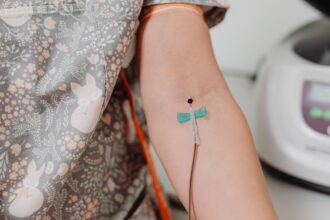
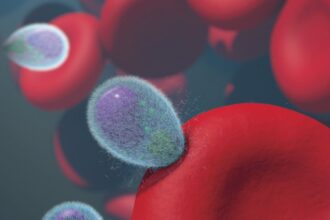
Medical illustration showing CRISPR gene editing process for blood disorders treatment
CRISPR gene therapy exa-cel achieved 95% efficacy in eliminating blood transfusions for children with beta-thalassemia and sickle cell disease. New NEJM research shows sustained benefits lasting over 12 months with manageable safety profile. — "Clinical Feedback!" by juhansonin is licensed under CC BY 2.0. To view a copy of this license, visit https://creativecommons.org/licenses/by/2.0/. (CC BY 2.0)
SHARE
1 min read|158 words

Recent clinical trial data provides healthcare providers with critical insights into CRISPR gene therapy’s practical application for children with sickle cell disease and beta-thalassemia. Three key findings warrant immediate attention: First, 95% of pediatric patients achieved transfusion independence, fundamentally altering disease management expectations. Second, these therapeutic benefits demonstrate durability, persisting beyond 12 months post-treatment, suggesting long-term clinical value. Third, the safety profile remains favorable, with no treatment-related deaths documented in the pediatric cohort.

These outcomes have profound implications for clinical practice. Eligible patients may transition from lifelong transfusion dependency to functional independence, reducing complications associated with chronic transfusion including iron overload, alloimmunization, and quality-of-life burden. The therapy’s mechanism—editing patients’ own bone marrow cells to restore hemoglobin production—addresses disease pathophysiology rather than managing symptoms.

Clinicians should consider exa-cel as a potential curative intervention for appropriate pediatric patients, representing a significant paradigm shift in hemoglobinopathy management and expanding options beyond traditional supportive care.

Read the full article on GMJ Newsroom.

Submit Your Paper
GMJ_Submit_Banner

Was this article helpful?

GMJ Brief · Takeaway

📰 Read the full article: CRISPR Gene Therapy Shows Promise for Children with Sickle Cell Disease and Beta-Thalassemia →

Related reference
  • Sickle Cell Disease · Condition
  • Beta-Thalassemia · Condition
  • Iron · Ingredient
Share This Article
Facebook LinkedIn Bluesky Copy Link Print
GMJ
ByProf. Giorgi Pkhakadze
Follow:
Prof. Giorgi Pkhakadze, MD, MPH, PhD, is Editor-in-Chief of the Georgian Medical Journal and Chair of the Public Health Institute of Georgia (PHIG). He is Professor and Head of the Department of Social and Behavioural Sciences at David Tvildiani Medical University, and Secretary/Treasurer of the UEMS Section of Public Health. ORCID: 0000-0001-7609-4515.

Submit Your Paper →

Georgia's peer-reviewed open-access medical journal. No APC until January 2027.
Submit Manuscript →
Evidence-Based Hydration Protocol: How Much Fluid and Sodium Athletes Actually Need

An evidence-based hydration protocol establishes clear targets for fluid and electrolyte intake:…

Resistance Training Protects Brain Health Through Multiple Pathways, Research Shows

Resistance training activates seven biological pathways that protect brain health and reduce…

Coffee and Heart Health: New 2025 Evidence Reshapes Clinical Guidance

New 2025 evidence reshapes clinical guidance on coffee consumption and heart health,…

Submit Your Paper to GMJ

No APC until January 2027.
Submit Manuscript →

You Might Also Like

PHEIC Declaration: Ebola Cross-Border Transmission DRC-Uganda

By
Prof. Giorgi Pkhakadze
31/05/2026
Global HealthPolicy & Systems

WHO Deploys Community-Centred Response to Rare Ebola Strain Outbreak in Eastern DRC

By
Prof. Giorgi Pkhakadze
26/05/2026
Infographic showing key risk factors for child wasting in Ghana including diarrheal episodes and maternal education

Three Evidence-Based Priorities for Preventing Child Wasting in Ghana and Beyond

By
Prof. Giorgi Pkhakadze
01/07/2026
UK medicines regulatory authority building with EU and UK flags representing post-Brexit pharmaceutical trade

UK Parallel Drug Imports Rise 15% Year-on-Year Amid Brexit Disruptions

By
Prof. Giorgi Pkhakadze
22/06/2026
Facebook Twitter Youtube Instagram
Company
  • Privacy Policy
  • Contact US
  • GMJ Journal
  • Submit Manuscript
  • Editorial Team
  • Register at GMJ
  • Terms of Use

Subscribe to GMJ News — Click here

Join Community
© 2026 Georgian Medical Journal (GMJ). Published by the Public Health Institute of Georgia (PHIG). All rights reserved.
Welcome Back!

Sign in to your account

Username or Email Address
Password

Lost your password?

Not a member? Sign Up