
By using this site, you agree to the Privacy Policy and Terms of Use.
Accept
GMJ NewsGMJ NewsGMJ News
  • Latest News
    • GMJ Briefs
  • Podcast & Media
    • Podcast Episodes
    • GMJ Audio
    • GMJ Videos
  • Research Digest
    • New Studies
    • Georgian Research
    • Data & Numbers
  • Policy & Systems
    • Health Policy
    • Quality & Safety
    • Migration & Health
    • Global Health
  • Practice
    • Clinical Updates
    • Case Discussions
    • Pharmacy & Prescribing
    • Ingredients A-Z
  • Perspectives
    • Editorial
    • Explainers
    • Voices
    • Letters
  • GMJ Articles
    • Vol. 1 Issue 2 (2026)
    • Vol. 1 Issue 1 (2026)
    • Pre-Launch Articles (2025)
  • Read the Journal →
  • About GMJ News
Notification Show More
Font ResizerAa
GMJ NewsGMJ News
Font ResizerAa
  • Latest News
    • GMJ Briefs
  • Podcast & Media
    • Podcast Episodes
    • GMJ Audio
    • GMJ Videos
  • Research Digest
    • New Studies
    • Georgian Research
    • Data & Numbers
  • Policy & Systems
    • Health Policy
    • Quality & Safety
    • Migration & Health
    • Global Health
  • Practice
    • Clinical Updates
    • Case Discussions
    • Pharmacy & Prescribing
    • Ingredients A-Z
  • Perspectives
    • Editorial
    • Explainers
    • Voices
    • Letters
  • GMJ Articles
    • Vol. 1 Issue 2 (2026)
    • Vol. 1 Issue 1 (2026)
    • Pre-Launch Articles (2025)
  • Read the Journal →
  • About GMJ News
Follow US
GMJ News > GMJ Briefs > What UK Patients Need to Know About Parallel Import Medicine Access

What UK Patients Need to Know About Parallel Import Medicine Access

GMJ
Last updated: 02/07/2026 21:47
By
Prof. Giorgi Pkhakadze
Share
1 Min Read
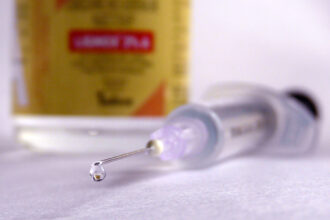
UK pharmaceutical regulatory documentation showing parallel import licence statistics
UK regulators granted 847 parallel import licences in 2026 to address medicine shortages. This regulatory mechanism enables importation of medicines from EU countries while maintaining safety standards. — Photo: Ollie Craig / Pexels
SHARE
1 min read|134 words

The MHRA’s approval of 847 parallel import licences in 2026 carries three critical implications for UK healthcare stakeholders. First, this volume demonstrates the MHRA’s commitment to maintaining medicine availability when traditional supply channels are disrupted. Second, parallel importation provides a legitimate, regulated pathway for sourcing medicines from EU countries, ensuring patients access treatments without delays caused by domestic shortages. Third, and crucially, imported medicines meet identical safety and quality standards as UK-supplied products, eliminating concerns about therapeutic efficacy or regulatory oversight.

For patients and healthcare providers, this mechanism represents an important assurance that supply constraints will not necessarily translate into treatment unavailability. The licensing system maintains rigorous oversight while enabling practical solutions to real-world supply challenges. Understanding this regulatory tool helps stakeholders appreciate how modern healthcare systems adapt to maintain continuous patient access to essential medicines.

Was this article helpful?
GMJ Brief · Takeaway

📰 Read the full article: UK Grants 847 Parallel Import Licences in 2026 to Address Medicine Shortages →

Share This Article
Facebook LinkedIn Bluesky Copy Link Print
GMJ
ByProf. Giorgi Pkhakadze
Follow:
Prof. Giorgi Pkhakadze, MD, MPH, PhD, is Editor-in-Chief of the Georgian Medical Journal and Chair of the Public Health Institute of Georgia (PHIG). He is Professor and Head of the Department of Social and Behavioural Sciences at David Tvildiani Medical University, and Secretary/Treasurer of the UEMS Section of Public Health. ORCID: 0000-0001-7609-4515.

Submit Your Paper →

Georgia's peer-reviewed open-access medical journal. No APC until January 2027.
Submit Manuscript →
Trump Administration Removes Job Protections for Thousands of Federal Health Workers

Thousands of federal health workers at HHS agencies including CDC, FDA, and…

Rare Lymphatic-Urinary Fistula Causes Milky Urine in NEJM Case Report

A rare case of chyluria caused by a lymphatic-urinary fistula demonstrates how…

Gene Therapy Shows Promise for Inherited Cholesterol Disorder in First-in-Human Trial

First-in-human gene therapy trial shows preliminary safety and efficacy for treating homozygous…

Submit Your Paper to GMJ

No APC until January 2027.
Submit Manuscript →

You Might Also Like

Healthcare worker experiencing occupational stress in a hospital setting, illustrating the importance of occupational safety and health, burnout prevention, infection control, workplace violence prevention, and health worker wellbeing in Georgia.

Three Essential Steps Georgia Must Take to Protect Its Healthcare Workforce

By
Prof. Giorgi Pkhakadze
04/07/2026
Medical professional examining retinal images on computer screen for HIV eye disease screening

Meta-Analysis Confirms High Diagnostic Accuracy for Teleretinal CMVR Detection

By
Prof. Giorgi Pkhakadze
07/06/2026
Global HealthPolicy & Systems

WHO Declares International Emergency as Ebola Outbreak Crosses DRC-Uganda Border

By
Prof. Giorgi Pkhakadze
31/05/2026
Healthcare system transformation and pharmaceutical innovation

Breaking Down Silos: How China’s Coordinated Biotech Strategy Is Reshaping Drug Development

By
Prof. Giorgi Pkhakadze
14/06/2026
Facebook Twitter Youtube Instagram
Company
  • Privacy Policy
  • Contact US
  • GMJ Journal
  • Submit Manuscript
  • Editorial Team
  • Register at GMJ
  • Terms of Use

Subscribe to GMJ News — Click here

Join Community
© 2026 Georgian Medical Journal (GMJ). Published by the Public Health Institute of Georgia (PHIG). All rights reserved.
Welcome Back!

Sign in to your account

Username or Email Address
Password

Lost your password?

Not a member? Sign Up