By using this site, you agree to the Privacy Policy and Terms of Use.
Accept
GMJ NewsGMJ NewsGMJ News
  • Latest News
    • GMJ Briefs
  • Podcast & Media
    • Podcast Episodes
    • GMJ Audio
    • GMJ Videos
  • Research Digest
    • New Studies
    • Georgian Research
    • Data & Numbers
  • Policy & Systems
    • Health Policy
    • Quality & Safety
    • Migration & Health
    • Global Health
  • Practice
    • Clinical Updates
    • Case Discussions
    • Pharmacy & Prescribing
    • Ingredients A-Z
  • Perspectives
    • Editorial
    • Explainers
    • Voices
    • Letters
  • GMJ Articles
    • Vol. 1 Issue 2 (2026)
    • Vol. 1 Issue 1 (2026)
    • Pre-Launch Articles (2025)
  • Read the Journal →
  • About GMJ News
Notification Show More
Font ResizerAa
GMJ NewsGMJ News
Font ResizerAa
  • Latest News
    • GMJ Briefs
  • Podcast & Media
    • Podcast Episodes
    • GMJ Audio
    • GMJ Videos
  • Research Digest
    • New Studies
    • Georgian Research
    • Data & Numbers
  • Policy & Systems
    • Health Policy
    • Quality & Safety
    • Migration & Health
    • Global Health
  • Practice
    • Clinical Updates
    • Case Discussions
    • Pharmacy & Prescribing
    • Ingredients A-Z
  • Perspectives
    • Editorial
    • Explainers
    • Voices
    • Letters
  • GMJ Articles
    • Vol. 1 Issue 2 (2026)
    • Vol. 1 Issue 1 (2026)
    • Pre-Launch Articles (2025)
  • Read the Journal →
  • About GMJ News
Follow US
GMJ News > GMJ Briefs > Yemen’s Perfect Storm: Conflict, Economic Collapse, and Aid Withdrawal Converge in Humanitarian Emergency

Yemen’s Perfect Storm: Conflict, Economic Collapse, and Aid Withdrawal Converge in Humanitarian Emergency

GMJ
Last updated: 18/06/2026 12:07
By
Prof. Giorgi Pkhakadze
Share
1 Min Read
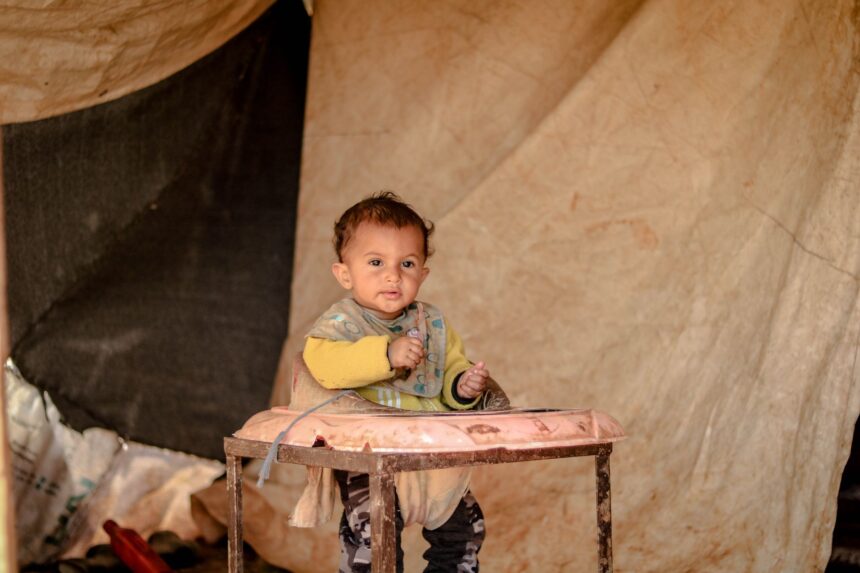
Children receiving nutrition assistance at a Yemen healthcare facility
Nearly 11.2 million Yemenis face severe acute food insecurity as international humanitarian funding drops 60% below 2025 levels. Child malnutrition rates exceed WHO emergency thresholds in 12 governorates, threatening generational health impacts. — Photo: Ahmed akacha / Pexels
SHARE
1 min read|140 words

Yemen faces an unprecedented convergence of crises as 11.2 million people in government-controlled areas struggle with severe acute food insecurity. The situation has reached critical levels, with child malnutrition rates surpassing WHO emergency thresholds across 12 governorates. According to the latest Integrated Food Security Phase Classification analysis, approximately 5 million Yemenis are in Emergency phase (IPC Phase 4), requiring immediate humanitarian intervention. The crisis has been compounded by a dramatic 60% reduction in international funding compared to 2025 peak levels. Dr. Altaf Musani, WHO Representative for Yemen, warns that the combination of prolonged conflict, economic collapse, and reduced international support has created conditions for a global health catastrophe. As funding constraints force closure of 127 health facilities and suspend nutrition programs serving 2.8 million children, humanitarian organizations warn that without immediate intervention, Yemen risks experiencing the worst famine in modern history. Read the full article on GMJ Newsroom.

Was this article helpful?

GMJ Brief · Announcement

📰 Read the full article: Yemen Food Crisis: 11.2 Million Face Acute Hunger as International Aid Funding Cuts Continue →

Share This Article
Facebook LinkedIn Bluesky Copy Link Print
GMJ
ByProf. Giorgi Pkhakadze
Follow:
Prof. Giorgi Pkhakadze, MD, MPH, PhD, is Editor-in-Chief of the Georgian Medical Journal and Chair of the Public Health Institute of Georgia (PHIG). He is Professor and Head of the Department of Social and Behavioural Sciences at David Tvildiani Medical University, and Secretary/Treasurer of the UEMS Section of Public Health. ORCID: 0000-0001-7609-4515.

Submit Your Paper →

Georgia's peer-reviewed open-access medical journal. No APC until January 2027.
Submit Manuscript →
Preoperative Exercise Improves Recovery in Elderly Spinal Fusion Patients, New Trial Shows

A randomized controlled trial shows that preoperative exercise programs—prehabilitation—significantly reduce postoperative complications…

Eight Years On: Refugee and Migrant Health Progress Remains Slow Despite COVID-19 Proof of Concept

The UCL–Lancet Commission's latest review in The Lancet finds that progress toward…

The Sandwich Generation: Balancing Child and Elder Care in Modern Healthcare

The sandwich generation—adults balancing childcare and elder care—faces mounting stress and fragmented…

Submit Your Paper to GMJ

No APC until January 2027.
Submit Manuscript →

You Might Also Like

SITUATION BRIEF: Cross-Border Ebola Transmission Confirmed – DRC to Uganda

By
Prof. Giorgi Pkhakadze
31/05/2026
UK pharmaceutical manufacturing facility with MHRA regulatory approval documentation

UK Pharmaceutical Manufacturing Surge: MHRA Approves 47 New Operating Licences

By
Prof. Giorgi Pkhakadze
14/06/2026

PHEIC Declaration: Ebola Outbreak – DRC/Uganda Cross-Border Transmission Confirmed

By
Prof. Giorgi Pkhakadze
31/05/2026
Medical professionals in operating room demonstrating surgical safety protocols with tranexamic acid

Low-Cost Antifibrinolytic Drug Shows Promise in Reducing Surgical Bleeding Worldwide

By
Prof. Giorgi Pkhakadze
04/07/2026
Facebook Twitter Youtube Instagram
Company
  • Privacy Policy
  • Contact US
  • GMJ Journal
  • Submit Manuscript
  • Editorial Team
  • Register at GMJ
  • Terms of Use

Subscribe to GMJ News — Click here

Join Community
© 2026 Georgian Medical Journal (GMJ). Published by the Public Health Institute of Georgia (PHIG). All rights reserved.
Welcome Back!

Sign in to your account

Username or Email Address
Password

Lost your password?

Not a member? Sign Up