By using this site, you agree to the Privacy Policy and Terms of Use.
Accept
GMJ NewsGMJ NewsGMJ News
  • Latest News
    • GMJ Briefs
  • Podcast & Media
    • Podcast Episodes
    • GMJ Audio
    • GMJ Videos
  • Research Digest
    • New Studies
    • Georgian Research
    • Data & Numbers
  • Policy & Systems
    • Health Policy
    • Quality & Safety
    • Migration & Health
    • Global Health
  • Practice
    • Clinical Updates
    • Case Discussions
    • Pharmacy & Prescribing
    • Ingredients A-Z
  • Perspectives
    • Editorial
    • Explainers
    • Voices
    • Letters
  • GMJ Articles
    • Vol. 1 Issue 2 (2026)
    • Vol. 1 Issue 1 (2026)
    • Pre-Launch Articles (2025)
  • Read the Journal →
  • About GMJ News
Notification Show More
Font ResizerAa
GMJ NewsGMJ News
Font ResizerAa
  • Latest News
    • GMJ Briefs
  • Podcast & Media
    • Podcast Episodes
    • GMJ Audio
    • GMJ Videos
  • Research Digest
    • New Studies
    • Georgian Research
    • Data & Numbers
  • Policy & Systems
    • Health Policy
    • Quality & Safety
    • Migration & Health
    • Global Health
  • Practice
    • Clinical Updates
    • Case Discussions
    • Pharmacy & Prescribing
    • Ingredients A-Z
  • Perspectives
    • Editorial
    • Explainers
    • Voices
    • Letters
  • GMJ Articles
    • Vol. 1 Issue 2 (2026)
    • Vol. 1 Issue 1 (2026)
    • Pre-Launch Articles (2025)
  • Read the Journal →
  • About GMJ News
Follow US
GMJ News > GMJ Briefs > Your Immune System Never Forgets: Understanding the Two-Track Defense Strategy

Your Immune System Never Forgets: Understanding the Two-Track Defense Strategy

GMJ
Last updated: 02/08/2026 13:29
By
Prof. Giorgi Pkhakadze
Share
1 Min Read
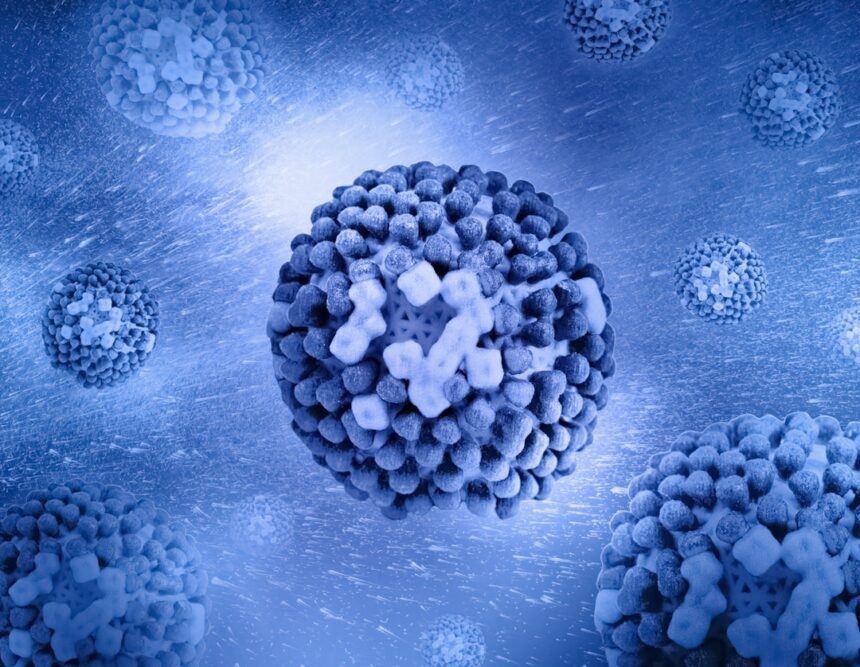
Diagram showing innate and adaptive immune system mechanisms and antibody specialization
Your immune system operates through two coordinated mechanisms: innate immunity provides immediate broad-spectrum defence within minutes, while adaptive immunity develops targeted, pathogen-specific responses over days that improve with repeated exposure. This dual strategy explains how vaccination confers lasting protection. — Photo by National Institute of Allergy and Infectious Diseases on Unsplash (Unsplash License)
SHARE
1 min read|138 words

Your body’s defense against infection operates far more intelligently than a simple alarm system. The immune system employs two coordinated mechanisms that work in tandem: an immediate innate response and a slower, more precise adaptive response. Within minutes of encountering a pathogen, innate immunity deploys physical barriers like skin and chemical defenses, supported by specialized cells such as macrophages and neutrophils. Over the following days, the adaptive immune system generates a targeted counter-attack, producing antibodies and memory cells that remember the specific threat. This explains why vaccination provides lasting protection and why your body mounts a faster, stronger response upon re-exposure to familiar pathogens. The five classes of antibodies each serve specialized roles, enabling this sophisticated layered defense. Understanding this dual mechanism reveals why immunity strengthens with exposure and why vaccination remains one of medicine’s most effective interventions.

Was this article helpful?

GMJ Brief · Announcement

📰 Read the full article: How Your Immune System Learns and Remembers: The Dual Defence Strategy →

Share This Article
Facebook LinkedIn Bluesky Copy Link Print
GMJ
ByProf. Giorgi Pkhakadze
Follow:
Prof. Giorgi Pkhakadze, MD, MPH, PhD, is Editor-in-Chief of the Georgian Medical Journal and Chair of the Public Health Institute of Georgia (PHIG). He is Professor and Head of the Department of Social and Behavioural Sciences at David Tvildiani Medical University, and Secretary/Treasurer of the UEMS Section of Public Health. ORCID: 0000-0001-7609-4515.

Submit Your Paper →

Georgia's peer-reviewed open-access medical journal. No APC until January 2027.
Submit Manuscript →
How amino acids shape brain function: from neurotransmitters to cognitive endurance

Amino acids are the biochemical foundation of neurotransmitter synthesis, energy metabolism, and…

L-Theanine Shifts Brain Waves Toward Calm Focus Without Sedation, Research Shows

L-theanine, an amino acid in green tea, shifts brain waves from stress-associated…

Magnesium Deficiency Linked to Multiple Chronic Diseases: What the Evidence Shows

Magnesium deficiency is implicated in multiple chronic diseases including type 2 diabetes,…

Submit Your Paper to GMJ

No APC until January 2027.
Submit Manuscript →

You Might Also Like

Rural healthcare worker using mobile phone for pregnancy data collection in Bangladesh

Phone-Based Pregnancy Surveys Reshape Maternal Health Data Collection in Low-Resource Settings

By
Prof. Giorgi Pkhakadze
18/07/2026
Older adult consulting with healthcare provider about bone health supplementation and fracture prevention strategies

Reassessing Bone Health: Systematic Review Questions Efficacy of Routine Calcium and Vitamin D Supplementation

By
Prof. Giorgi Pkhakadze
18/07/2026
Medical professional discussing GLP-1 medication safety and dosing concerns

Zero Clinical Trials on GLP-1 Microdosing Safety, Experts Report

By
Prof. Giorgi Pkhakadze
12/06/2026

🚨 Ebola: Outbreak cases are “tip of iceberg,” says Africa CDC official at centre of epidemic

By
Prof. Giorgi Pkhakadze
17/06/2026
Facebook Twitter Youtube Instagram
Company
  • Privacy Policy
  • Contact US
  • GMJ Journal
  • Submit Manuscript
  • Editorial Team
  • Register at GMJ
  • Terms of Use

Subscribe to GMJ News — Click here

Join Community
© 2026 Georgian Medical Journal (GMJ). Published by the Public Health Institute of Georgia (PHIG). All rights reserved.
Welcome Back!

Sign in to your account

Username or Email Address
Password

Lost your password?

Not a member? Sign Up