By using this site, you agree to the Privacy Policy and Terms of Use.
Accept
GMJ NewsGMJ NewsGMJ News
  • Latest News
  • Research Digest
    • New Studies
    • Georgian Research
    • Data & Numbers
  • Policy & Systems
    • Health Policy
    • Quality & Safety
    • Migration & Health
    • Global Health
  • Practice
    • Clinical Updates
    • Case Discussions
    • Pharmacy & Prescribing
  • Perspectives
    • Editorial
    • Explainers
    • Voices
    • Letters
  • Podcast & Media
    • Podcast Episodes
    • Video
    • Infographics
  • GMJ Articles
    • Vol. 1 Issue 2 (2026)
    • Vol. 1 Issue 1 (2026)
    • Pre-Launch Articles (2025)
  • Read the Journal →
Notification Show More
Font ResizerAa
GMJ NewsGMJ News
Font ResizerAa
  • Latest News
  • Research Digest
    • New Studies
    • Georgian Research
    • Data & Numbers
  • Policy & Systems
    • Health Policy
    • Quality & Safety
    • Migration & Health
    • Global Health
  • Practice
    • Clinical Updates
    • Case Discussions
    • Pharmacy & Prescribing
  • Perspectives
    • Editorial
    • Explainers
    • Voices
    • Letters
  • Podcast & Media
    • Podcast Episodes
    • Video
    • Infographics
  • GMJ Articles
    • Vol. 1 Issue 2 (2026)
    • Vol. 1 Issue 1 (2026)
    • Pre-Launch Articles (2025)
  • Read the Journal →
Follow US
GMJ News > Policy & Systems > Health Policy > UK’s Healthy Life Expectancy Falls: A Population Health Crisis Emerges
Health PolicyPolicy & Systems

UK’s Healthy Life Expectancy Falls: A Population Health Crisis Emerges

GMJ
Last updated: 05/22/2026 20:07
By
GMJ News Desk
Share
9 Min Read
Chart showing declining healthy life expectancy trends in the UK since 2014
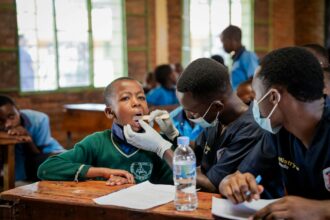
UK healthy life expectancy has declined since peaking in 2012-14, marking the first sustained reversal in population health gains since 1946. The Health Foundation calls this trend a "watershed moment" requiring urgent policy intervention. — Photo: SHVETS production / Pexels
SHARE

The UK faces an unprecedented reversal in population health gains, with healthy life expectancy declining for the first time since comprehensive records began. Data from the Office for National Statistics show that after decades of steady improvement, healthy life expectancy has stagnated and begun falling since 2014. The Health Foundation has called this trend a “watershed moment” for public health policy.

Contents
      • UK Healthy Life Expectancy Trends by Gender
  • The Magnitude of Health Decline
  • Understanding the Underlying Factors
  • Healthcare System Strain and Resource Implications
  • International Comparisons and Policy Responses
    • Key takeaways
  • Frequently asked questions
    • What is healthy life expectancy and how does it differ from regular life expectancy?
    • Why has UK healthy life expectancy started declining after decades of improvement?
    • How does the UK compare internationally on healthy life expectancy trends?
62.9 years
Peak healthy life expectancy for UK men (2012-14), before the decline began

UK Healthy Life Expectancy Trends by Gender

Years expected to live in good health, 2000-2020

63.7
Women’s peak HLE
(2012-14)
62.9
Men’s peak HLE
(2012-14)
-0.5
Years lost since
peak period

5861642000200820142020

Source: Office for National Statistics, 2024 | Georgian Medical Journal News

The Magnitude of Health Decline

Healthy life expectancy measures the average years a person can expect to live in good health, free from significant disability or chronic illness. According to the Health Foundation’s analysis, self-reported healthy life expectancy in the UK peaked during 2012-14 at 62.9 years for men and 63.7 years for women. Since then, both figures have declined, marking the first sustained reversal in population health gains since comprehensive data collection began in 1946.

Submit Your Paper
GMJ_Submit_Banner

The decline represents more than statistical fluctuation. Data from the Office for National Statistics using rolling three-year averages show consistent deterioration across multiple measurement periods. This trend coincides with broader challenges in health policy implementation and resource allocation.

Understanding the Underlying Factors

Multiple interconnected factors contribute to this population health crisis. Economic pressures following the 2008 financial crisis led to reduced public health spending and cuts to preventive services. Social determinants of health, including housing quality, income inequality, and access to healthy food, have worsened for significant portions of the population.

The rise in non-communicable diseases, particularly diabetes, cardiovascular disease, and mental health conditions, has accelerated among younger age groups. Research published in The Lancet Public Health demonstrates that lifestyle-related health conditions now manifest earlier in life, reducing the total years lived in good health. Additionally, environmental factors including air pollution and reduced physical activity contribute to premature onset of chronic conditions.

Healthcare System Strain and Resource Implications

The declining healthy life expectancy creates a double burden on healthcare systems. While overall life expectancy continues to increase slowly, people are living more years with chronic illness and disability, requiring intensive medical management. This phenomenon, known as the “expansion of morbidity,” significantly increases healthcare costs per capita.

Analysis by health economists suggests that each year of reduced healthy life expectancy translates to approximately £2,500 in additional healthcare spending per person over their lifetime. For the UK population, this represents billions in additional costs for the National Health Service. The findings have prompted calls for increased investment in preventive health measures and early intervention programs.

International Comparisons and Policy Responses

The UK’s experience contrasts sharply with other developed nations. Countries including Japan, Switzerland, and Sweden continue to show improvements in healthy life expectancy through sustained investment in preventive care and social determinants of health. The World Health Organization’s data place the UK in the bottom quartile of developed nations for recent healthy life expectancy trends.

Policy experts advocate for comprehensive approaches addressing both healthcare delivery and broader social factors. Successful interventions in other countries include sugar taxes, improved urban planning for physical activity, enhanced mental health services, and targeted support for disadvantaged communities. The challenge lies in implementing coordinated policies across multiple government departments and maintaining political commitment over decades.

The UK’s healthy life expectancy peaked at 63.7 years for women and 62.9 years for men during 2012-14, but has since declined, marking the first sustained reversal in population health gains since comprehensive data collection began in 1946.

— Health Foundation Analysis, Office for National Statistics Data (BMJ, 2024)

Key takeaways

  • UK healthy life expectancy peaked in 2012-14 and has declined since, reversing decades of improvement
  • The decline affects both men and women, with broader implications for healthcare spending and resource allocation
  • Multiple factors including economic pressures, social determinants, and rising chronic disease rates contribute to the trend
  • International comparisons show other developed nations continuing to improve while the UK falls behind

Frequently asked questions

What is healthy life expectancy and how does it differ from regular life expectancy?

Healthy life expectancy measures the average years a person can expect to live in good health, free from significant disability or chronic illness. Unlike regular life expectancy, which only measures total years lived, healthy life expectancy focuses on quality of life and functional health status.

Why has UK healthy life expectancy started declining after decades of improvement?

Multiple factors contribute including reduced public health spending after 2008, worsening social determinants of health, earlier onset of chronic diseases, and lifestyle-related health challenges. The combination of these factors has created a “perfect storm” affecting population health outcomes.

How does the UK compare internationally on healthy life expectancy trends?

The UK now ranks in the bottom quartile of developed nations for recent healthy life expectancy trends, while countries like Japan, Switzerland, and Sweden continue showing improvements through sustained investment in preventive care and social health determinants.

Reversing the decline in healthy life expectancy will require coordinated action across healthcare, social policy, and economic domains. Early intervention in childhood health, investment in preventive services, and addressing social determinants of health represent the most promising pathways forward. Without decisive policy action, the UK risks falling further behind international peers while facing escalating healthcare costs and reduced population wellbeing for future generations.

Source: The UK is getting sicker, sooner-how do we reverse falling healthy life expectancy?


TAGGED:chronic-diseasehealth policyhealthcare costshealthy life expectancyUK population health
Share This Article
Facebook Copy Link Print
Leave a Comment Leave a Comment

Leave a Reply Cancel reply

Your email address will not be published. Required fields are marked *

Submit Your Paper →

Georgia's peer-reviewed open-access medical journal. No APC until January 2027.
Submit Manuscript →
Study shows liver recovers from exercise in 6 hours, muscles need 24 hours

New research reveals liver glycogen recovers within 6 hours after intense exercise,…

Severe Iodine Deficiency in Early Pregnancy Linked to Lower Verbal Intelligence at Age 15

15-year UK study of 1,200+ mother-child pairs shows severe first-trimester iodine deficiency…

Wood Burning Stoves: Hidden Climate and Health Threats Beyond Air Pollution

Wood burning stoves contribute significantly to climate change through supply chain emissions…

Submit Your Paper to GMJ

No APC until January 2027.
Submit Manuscript →

You Might Also Like

Map showing Ebola transmission zones in DRC and Uganda with outbreak alert indicators
Health Policy

Ebola outbreak in DRC and Uganda: what we know in May 2026

By
GMJ News Desk
Mental health awareness and suicide prevention concept with focus on adolescent and young adult wellbeing
Global Health

Adolescent suicide rates rising across Americas, PAHO warns of prevention urgency

By
GMJ News Desk
Healthcare provider conducting antenatal care consultation with pregnant woman
Global Health

Data reveal critical gaps in antenatal care quality across low-income countries

By
GMJ News Desk
Healthcare workers discussing HIV stigma reduction strategies in clinical setting
Global Health

HIV Stigma Study Reveals Persistent Discrimination in Cabo Verde Healthcare System

By
GMJ News Desk
Facebook Twitter Youtube Instagram
Company
  • Privacy Policy
  • Contact US
  • GMJ Journal
  • Submit Manuscript
  • Editorial Team
  • Register at GMJ
  • Terms of Use

Sign Up For Free

Subscribe to our newsletter and don't miss out on our programs, webinars and trainings.

[mc4wp_form]

Join Community
Made by ThemeRuby using the Foxiz theme. Powered by WordPress
© 2026 Georgian Medical Journal (GMJ). Published by the Public Health Institute of Georgia (PHIG). All rights reserved.
Welcome Back!

Sign in to your account

Username or Email Address
Password

Lost your password?

Not a member? Sign Up