By using this site, you agree to the Privacy Policy and Terms of Use.
Accept
GMJ NewsGMJ NewsGMJ News
  • Latest News
    • GMJ Briefs
  • Podcast & Media
    • Podcast Episodes
    • GMJ Audio
    • GMJ Videos
  • Research Digest
    • New Studies
    • Georgian Research
    • Data & Numbers
  • Policy & Systems
    • Health Policy
    • Quality & Safety
    • Migration & Health
    • Global Health
  • Practice
    • Clinical Updates
    • Case Discussions
    • Pharmacy & Prescribing
    • Ingredients A-Z
  • Perspectives
    • Editorial
    • Explainers
    • Voices
    • Letters
  • GMJ Articles
    • Vol. 1 Issue 2 (2026)
    • Vol. 1 Issue 1 (2026)
    • Pre-Launch Articles (2025)
  • Read the Journal →
  • About GMJ News
Notification Show More
Font ResizerAa
GMJ NewsGMJ News
Font ResizerAa
  • Latest News
    • GMJ Briefs
  • Podcast & Media
    • Podcast Episodes
    • GMJ Audio
    • GMJ Videos
  • Research Digest
    • New Studies
    • Georgian Research
    • Data & Numbers
  • Policy & Systems
    • Health Policy
    • Quality & Safety
    • Migration & Health
    • Global Health
  • Practice
    • Clinical Updates
    • Case Discussions
    • Pharmacy & Prescribing
    • Ingredients A-Z
  • Perspectives
    • Editorial
    • Explainers
    • Voices
    • Letters
  • GMJ Articles
    • Vol. 1 Issue 2 (2026)
    • Vol. 1 Issue 1 (2026)
    • Pre-Launch Articles (2025)
  • Read the Journal →
  • About GMJ News
Follow US
GMJ News > Policy & Systems > Quality & Safety > UK Hospital Superbug Infections Show Mixed Trends in Latest Government Data
Policy & SystemsQuality & Safety

UK Hospital Superbug Infections Show Mixed Trends in Latest Government Data

GMJ
Last updated: 04/06/2026 10:50
By
GMJ News Desk
Share
5 Min Read
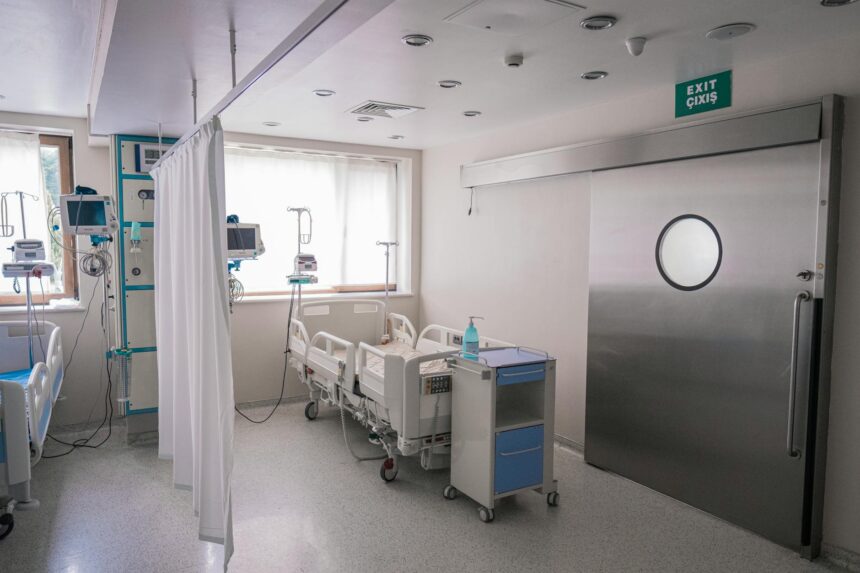
Healthcare worker reviewing infection control data on computer screen in hospital setting
UK Health Security Agency releases comprehensive surveillance data tracking MRSA, MSSA, Gram-negative bacteraemia, and C. difficile infections across English hospitals. The mandatory reporting system provides organisation-specific infection rates and onset location analysis. — Photo: Zakir Rushanly / Pexels
SHARE
3 min read|620 words
✓ Editorially Reviewed by Prof. Giorgi Pkhakadze, MD, MPH, PhD — GMJ News Desk

🟠 Moderate Evidence

Contents
    • Key takeaways
      • Healthcare-Associated Infections Under UK Surveillance
  • Mandatory Surveillance System Tracks Key Pathogens
  • Gram-negative Bacteria Surveillance Expands
  • Clostridioides Difficile Monitoring Includes Exposure History
    • What this means
  • Frequently asked questions
    • Why are these specific pathogens monitored?
    • How does location of onset classification work?
    • What happens to surveillance data after collection?

New surveillance data from the UK Health Security Agency reveals evolving patterns in healthcare-associated infections across English hospitals, with antimicrobial-resistant organisms continuing to pose significant challenges to patient safety. The monthly surveillance report, published as part of the UK’s mandatory reporting system, tracks MRSA, MSSA, Gram-negative bacteraemia, and Clostridioides difficile infections by healthcare organisation and infection onset location.

Key takeaways

  • Government surveillance tracks four major healthcare-associated infection types across English hospitals
  • Data includes organisation-specific infection rates and location of onset analysis
  • Clostridioides difficile monitoring includes prior healthcare exposure tracking
4 pathogens
tracked in UK’s mandatory hospital infection surveillance system

Healthcare-Associated Infections Under UK Surveillance

Mandatory reporting pathogens, by infection type

MRSA
Methicillin-resistant Staph aureus
MSSA
Methicillin-sensitive Staph aureus
Gram-neg
E. coli, Klebsiella, Pseudomonas
C. diff
Clostridioides difficile

Source: UK Health Security Agency, 2025-2026 | Georgian Medical Journal News

Submit Your Paper
GMJ_Submit_Banner

Mandatory Surveillance System Tracks Key Pathogens

The UK’s healthcare-associated infection surveillance programme represents one of the most comprehensive national monitoring systems globally, according to the UK Health Security Agency. The system requires all NHS acute trusts to report specific infection types, enabling real-time tracking of antimicrobial resistance trends and healthcare-associated transmission patterns.

🎙️ Related Podcast Episodes
🎧 #24 | WHO Releases Updated Health Inequality Data Repository and Equity Toolkit · 21m
🎧 #17 | WHO: Global Population Requiring Trachoma Interventions Falls Below 100 Million · 16m

MRSA and MSSA bacteraemia cases are classified by onset location, distinguishing between community-acquired infections and those developing during hospitalisation. This classification system, endorsed by the World Health Organization’s infection prevention guidelines, enables targeted intervention strategies and resource allocation decisions.

Gram-negative Bacteria Surveillance Expands

The surveillance programme includes comprehensive monitoring of Gram-negative bacteraemia, encompassing Escherichia coli, Klebsiella species, and Pseudomonas aeruginosa infections. These pathogens represent particular concern due to their increasing resistance to carbapenem antibiotics, as documented in recent antimicrobial resistance studies.

Healthcare organisations must report both the total number of infections and their distribution across different clinical areas, enabling identification of high-risk departments and patient populations. The data supports targeted infection control measures and informs national quality and safety initiatives.

Clostridioides Difficile Monitoring Includes Exposure History

The C. difficile surveillance component uniquely tracks prior healthcare exposure, recognising that many infections develop following antibiotic treatment in healthcare settings. This approach aligns with CDC recommendations for comprehensive C. difficile prevention programmes.

Prior trust exposure data enables healthcare organisations to identify potential transmission sources and implement targeted prevention strategies. The system supports both individual organisation quality improvement efforts and national policy development, contributing to broader health policy initiatives addressing antimicrobial resistance.

The mandatory surveillance system enables organisation-specific infection rate analysis and supports targeted intervention strategies across English healthcare trusts.

— UK Health Security Agency, Healthcare-Associated Infection Surveillance Programme (2025)

What this means

For patients: Transparent reporting enables informed healthcare choices and demonstrates organisational commitment to infection prevention
For clinicians: Organisation-specific data supports evidence-based infection control decisions and antimicrobial stewardship programmes
For policymakers: National surveillance data informs antimicrobial resistance strategy development and healthcare quality improvement initiatives

Frequently asked questions

Why are these specific pathogens monitored?

MRSA, MSSA, Gram-negative bacteria, and C. difficile represent the most significant healthcare-associated infection threats. They cause substantial morbidity, mortality, and healthcare costs while demonstrating concerning antimicrobial resistance patterns.

How does location of onset classification work?

Infections are classified as community-acquired if symptoms begin within 48 hours of admission, or healthcare-associated if developing later during hospitalisation. This distinction enables targeted prevention strategies and accurate risk assessment.

What happens to surveillance data after collection?

Data undergoes quality assurance processes before publication and feeds into national antimicrobial resistance monitoring programmes. Individual organisation reports support local quality improvement while aggregate data informs national policy development.

The continued evolution of healthcare-associated infection surveillance reflects the dynamic nature of antimicrobial resistance and the need for adaptive monitoring systems. As new resistance mechanisms emerge and infection patterns change, surveillance programmes must balance comprehensive coverage with practical implementation requirements, ensuring that data collection serves both local quality improvement and national strategy development objectives.

Source: MRSA, MSSA, Gram-negative bacteraemia and CDI: monthly data, 2025 to 2026

Was this article helpful?

Related Coverage

PAHO Urges Enhanced Measles Surveillance Ahead of 2026 FIFA World CupJun 5, 2026
Global Youth Deaths Rise to 2.1 Million Despite Medical AdvancesJun 5, 2026
UNICEF Ambassador Millie Bobby Brown Highlights Global Child Health Challenges in New Parenting CampaignJun 5, 2026
Medical Debt Lawsuits Create 'Baffling' Patient Experiences in US Healthcare SystemJun 5, 2026
TAGGED:antimicrobial resistancehospital infectionsMRSAPatient Safetysurveillance
Share This Article
Facebook LinkedIn Bluesky Copy Link Print
Leave a Comment Leave a Comment

Leave a Reply Cancel reply

Your email address will not be published. Required fields are marked *

Submit Your Paper →

Georgia's peer-reviewed open-access medical journal. No APC until January 2027.
Submit Manuscript →
PAHO Urges Enhanced Measles Surveillance Ahead of 2026 FIFA World Cup

PAHO issues urgent recommendations for enhanced measles surveillance and vaccination as countries…

Global Youth Deaths Rise to 2.1 Million Despite Medical Advances

New BMJ study reveals 2.1 million youth deaths globally in 2024, with…

UNICEF Ambassador Millie Bobby Brown Highlights Global Child Health Challenges in New Parenting Campaign

UNICEF Ambassador Millie Bobby Brown launches child health campaign highlighting that 1…

Submit Your Paper to GMJ

No APC until January 2027.
Submit Manuscript →

You Might Also Like

Healthcare workers attending SAHPRA digital medicine safety reporting training session
Quality & Safety

SAHPRA Enhances Medicine Safety Reporting Through Digital Training Initiative in Mpumalanga

By
GMJ News Desk
21/05/2026
Air France aircraft on tarmac with health screening protocols in background
Global Health

Air France Flight Diverted Over Ebola Travel Restrictions Amid DRC Outbreak

By
GMJ News Desk
22/05/2026
WHO officials discussing Ebola outbreak response coordination between DRC and Uganda
Global Health

WHO Declares International Health Emergency as Ebola Spreads to Uganda from DRC

By
GMJ News Desk
22/05/2026
Medical illustration of thoracic stent graft deployment mechanism showing unclasp failure
Clinical Updates

Bolton Medical Recalls Relay Pro Thoracic Stent Grafts Over Deployment Failure Risk

By
GMJ News Desk
21/05/2026
Facebook Twitter Youtube Instagram
Company
  • Privacy Policy
  • Contact US
  • GMJ Journal
  • Submit Manuscript
  • Editorial Team
  • Register at GMJ
  • Terms of Use

Subscribe to GMJ News — Click here

Join Community
© 2026 Georgian Medical Journal (GMJ). Published by the Public Health Institute of Georgia (PHIG). All rights reserved.
Welcome Back!

Sign in to your account

Username or Email Address
Password

Lost your password?

Not a member? Sign Up