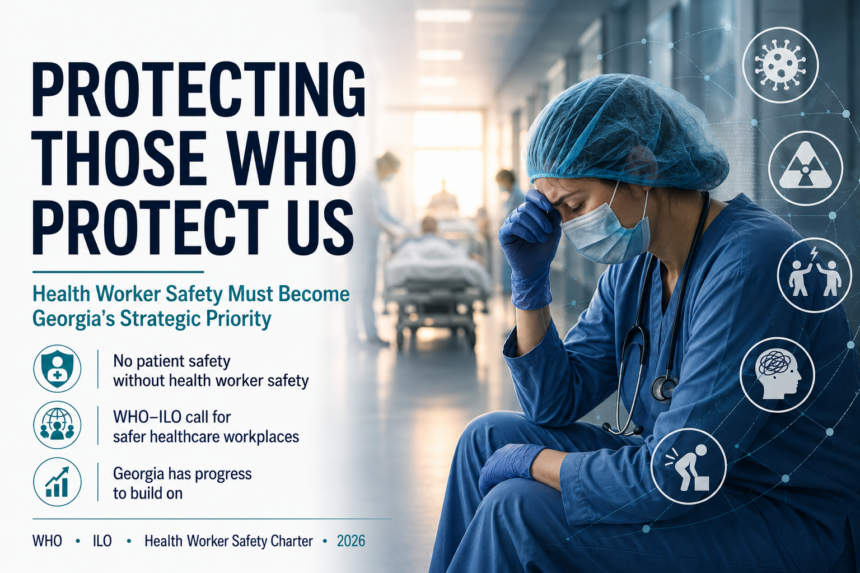
Georgia has established foundational occupational safety frameworks, but healthcare workers face unique hazards that general workplace protections cannot adequately address. Infection exposure, workplace violence, chemical hazards, and burnout represent persistent threats that demand targeted interventions.
The World Health Organization’s Health Worker Safety Charter underscores a critical principle: patient safety cannot be achieved without protecting those delivering care. A clinician who is infected, injured, or emotionally depleted delivers less care, and with greater error rates. Georgia must move beyond generic occupational safety laws to implement sector-specific protections including dedicated surveillance systems, violence prevention protocols, and integrated occupational health services.
This shift recognizes that health worker safety is not peripheral to clinical quality—it is central to it. Embedding worker protection into healthcare accreditation standards signals that safety excellence encompasses both patients and the workforce.
Was this article helpful?