By using this site, you agree to the Privacy Policy and Terms of Use.
Accept
GMJ NewsGMJ NewsGMJ News
  • Latest News
    • GMJ Briefs
  • Podcast & Media
    • Podcast Episodes
    • GMJ Audio
    • GMJ Videos
  • Research Digest
    • New Studies
    • Georgian Research
    • Data & Numbers
  • Policy & Systems
    • Health Policy
    • Quality & Safety
    • Migration & Health
    • Global Health
  • Practice
    • Clinical Updates
    • Case Discussions
    • Pharmacy & Prescribing
    • Ingredients A-Z
  • Perspectives
    • Editorial
    • Explainers
    • Voices
    • Letters
  • GMJ Articles
    • Vol. 1 Issue 2 (2026)
    • Vol. 1 Issue 1 (2026)
    • Pre-Launch Articles (2025)
  • Read the Journal →
  • About GMJ News
Notification Show More
Font ResizerAa
GMJ NewsGMJ News
Font ResizerAa
  • Latest News
    • GMJ Briefs
  • Podcast & Media
    • Podcast Episodes
    • GMJ Audio
    • GMJ Videos
  • Research Digest
    • New Studies
    • Georgian Research
    • Data & Numbers
  • Policy & Systems
    • Health Policy
    • Quality & Safety
    • Migration & Health
    • Global Health
  • Practice
    • Clinical Updates
    • Case Discussions
    • Pharmacy & Prescribing
    • Ingredients A-Z
  • Perspectives
    • Editorial
    • Explainers
    • Voices
    • Letters
  • GMJ Articles
    • Vol. 1 Issue 2 (2026)
    • Vol. 1 Issue 1 (2026)
    • Pre-Launch Articles (2025)
  • Read the Journal →
  • About GMJ News
Follow US
GMJ News > GMJ Briefs > How Intermittent Fasting Simultaneously Reshapes Brain Function and Gut Bacteria

How Intermittent Fasting Simultaneously Reshapes Brain Function and Gut Bacteria

GMJ
Last updated: 15/06/2026 18:17
By
Prof. Giorgi Pkhakadze
Share
1 Min Read
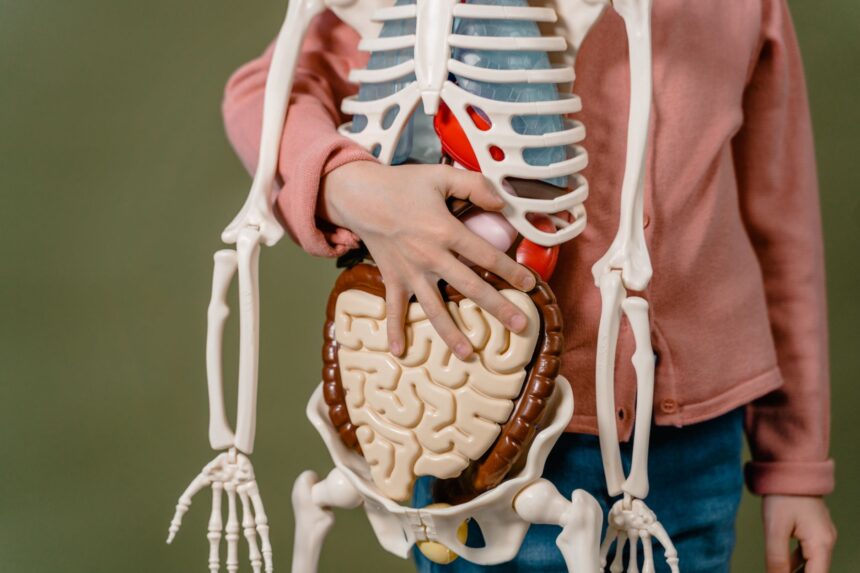
Brain scan and gut microbiome illustration showing intermittent fasting effects
New research reveals intermittent fasting triggers coordinated changes in brain appetite control regions and gut microbiome composition. The findings suggest these biological systems work together to support weight loss success. — Photo: MART PRODUCTION / Pexels
SHARE
1 min read|129 words

A groundbreaking study has demonstrated that intermittent fasting triggers coordinated changes across two critical biological systems simultaneously: the brain and the gut microbiome. Researchers used advanced neuroimaging to track how time-restricted eating alters activity in brain regions responsible for appetite regulation and food cravings, while simultaneously monitoring shifts in gut bacterial composition toward healthier profiles.

These synchronized changes appear to work together to support sustained weight loss. Study participants experienced reduced activity in brain areas associated with food cravings alongside improved self-control, while their gut microbiota shifted toward beneficial bacterial communities. The research underscores the complex interplay between neurological and microbial systems in metabolic health. This brain-gut connection may explain why intermittent fasting proves effective for many individuals seeking weight management solutions.

Read the full article on GMJ Newsroom.

Was this article helpful?

GMJ Brief · Announcement

📰 Read the full article: Intermittent Fasting Rewires Brain and Gut Microbiome, New Study Reveals →

Share This Article
Facebook LinkedIn Bluesky Copy Link Print
GMJ
ByProf. Giorgi Pkhakadze
Follow:
Prof. Giorgi Pkhakadze, MD, MPH, PhD, is Editor-in-Chief of the Georgian Medical Journal and Chair of the Public Health Institute of Georgia (PHIG). He is Professor and Head of the Department of Social and Behavioural Sciences at David Tvildiani Medical University, and Secretary/Treasurer of the UEMS Section of Public Health. ORCID: 0000-0001-7609-4515.

Submit Your Paper →

Georgia's peer-reviewed open-access medical journal. No APC until January 2027.
Submit Manuscript →
Language Barriers in Healthcare: How Communication Gaps Affect Patient Safety and Quality of Care

Language barriers in healthcare contribute to 25% of medical errors in multicultural…

New Clinical Guidelines Address Heart-Brain Multimorbidity Management

New clinical practice guidelines published in CMAJ provide evidence-based recommendations for managing…

Eli Lilly’s Gene Editor Cuts Cholesterol 62% in First Human Trial

Eli Lilly's experimental gene-editing therapy VERV-102 achieved a 62% reduction in cholesterol…

Submit Your Paper to GMJ

No APC until January 2027.
Submit Manuscript →

You Might Also Like

Medical tourism safety warning with CDC logo and surgical complications infographic

CDC Warns of Rising Infection Risks from Overseas Cosmetic Surgery

By
Prof. Giorgi Pkhakadze
10/06/2026
Various magnesium supplement bottles and capsules arranged on laboratory bench

Eight Magnesium Forms Deliver Comparable Benefits, Data Shows

By
Prof. Giorgi Pkhakadze
09/06/2026

EBOLA OUTBREAK – DRC/UGANDA BORDER CROSSING WITH WHO PHEIC DECLARATION

By
Prof. Giorgi Pkhakadze
31/05/2026

CLUSTER ALERT: Ebola Cross-Border Transmission DRC-Uganda – WHO Emergency Declaration

By
Prof. Giorgi Pkhakadze
31/05/2026
Facebook Twitter Youtube Instagram
Company
  • Privacy Policy
  • Contact US
  • GMJ Journal
  • Submit Manuscript
  • Editorial Team
  • Register at GMJ
  • Terms of Use

Subscribe to GMJ News — Click here

Join Community
© 2026 Georgian Medical Journal (GMJ). Published by the Public Health Institute of Georgia (PHIG). All rights reserved.
Welcome Back!

Sign in to your account

Username or Email Address
Password

Lost your password?

Not a member? Sign Up