By using this site, you agree to the Privacy Policy and Terms of Use.
Accept
GMJ NewsGMJ NewsGMJ News
  • Latest News
    • GMJ Briefs
  • Podcast & Media
    • Podcast Episodes
    • GMJ Audio
    • GMJ Videos
  • Research Digest
    • New Studies
    • Georgian Research
    • Data & Numbers
  • Policy & Systems
    • Health Policy
    • Quality & Safety
    • Migration & Health
    • Global Health
  • Practice
    • Clinical Updates
    • Case Discussions
    • Pharmacy & Prescribing
    • Ingredients A-Z
  • Perspectives
    • Editorial
    • Explainers
    • Voices
    • Letters
  • GMJ Articles
    • Vol. 1 Issue 2 (2026)
    • Vol. 1 Issue 1 (2026)
    • Pre-Launch Articles (2025)
  • Read the Journal →
  • About GMJ News
Notification Show More
Font ResizerAa
GMJ NewsGMJ News
Font ResizerAa
  • Latest News
    • GMJ Briefs
  • Podcast & Media
    • Podcast Episodes
    • GMJ Audio
    • GMJ Videos
  • Research Digest
    • New Studies
    • Georgian Research
    • Data & Numbers
  • Policy & Systems
    • Health Policy
    • Quality & Safety
    • Migration & Health
    • Global Health
  • Practice
    • Clinical Updates
    • Case Discussions
    • Pharmacy & Prescribing
    • Ingredients A-Z
  • Perspectives
    • Editorial
    • Explainers
    • Voices
    • Letters
  • GMJ Articles
    • Vol. 1 Issue 2 (2026)
    • Vol. 1 Issue 1 (2026)
    • Pre-Launch Articles (2025)
  • Read the Journal →
  • About GMJ News
Follow US
GMJ News > GMJ Briefs > Malawi’s Malaria Victory: How Community-Based Interventions Transformed Outcomes in Five Years

Malawi’s Malaria Victory: How Community-Based Interventions Transformed Outcomes in Five Years

GMJ
Last updated: 17/06/2026 20:08
By
Prof. Giorgi Pkhakadze
Share
1 Min Read
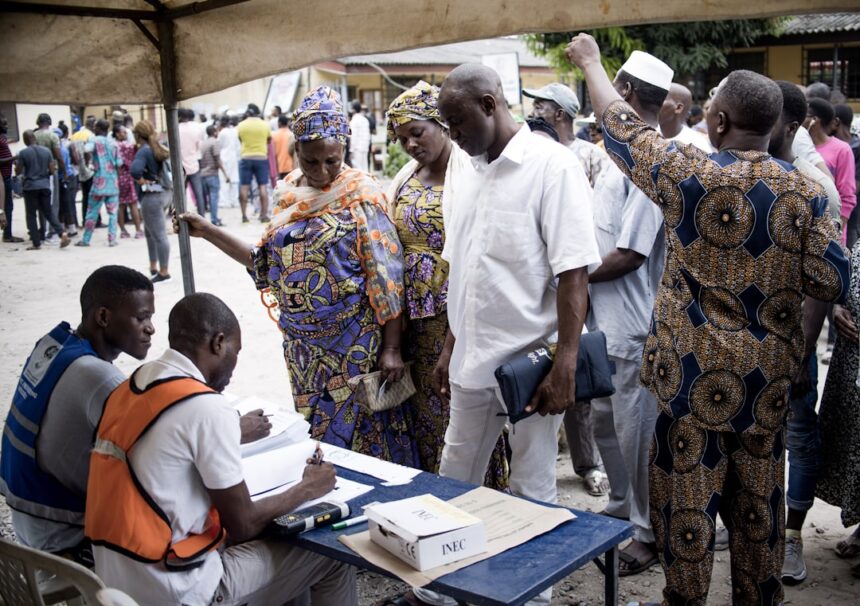
Healthcare workers in Malawi distributing mosquito nets as part of malaria prevention program
Malawi achieved a 78% reduction in malaria deaths from 2020-2025 through comprehensive vector control and community health interventions, according to WHO's annual country report. Despite this success, healthcare worker density remains at only 23% of recommended levels, highlighting ongoing health system challenges. — Photo: Nigeria Info FM / Pexels
SHARE
1 min read|121 words

Malawi has achieved a transformative 78% reduction in malaria-related deaths between 2020 and 2025, establishing itself as a model for disease elimination across sub-Saharan Africa. The World Health Organization’s 2025 annual country report attributes this success to comprehensive vector control strategies, including 85% household coverage with long-lasting insecticidal nets and targeted indoor residual spraying in high-transmission areas.

The achievement reflects the critical role of community health workers, with over 12,000 volunteers trained in rapid diagnostic testing and artemisinin-based combination therapy administration. This decentralized approach dramatically reduced treatment delays from 4.2 days to 1.8 days on average. However, significant infrastructure gaps remain: healthcare worker density stands at only 23% of WHO-recommended levels, highlighting the ongoing challenges in sustaining progress across Malawi’s broader health system.

Read the full article on GMJ Newsroom.

Was this article helpful?

GMJ Brief · Announcement

📰 Read the full article: WHO Malawi Report Shows 78% Reduction in Malaria Deaths Despite Health System Challenges →

Related reference
  • Malaria · Condition
Share This Article
Facebook LinkedIn Bluesky Copy Link Print
GMJ
ByProf. Giorgi Pkhakadze
Follow:
Prof. Giorgi Pkhakadze, MD, MPH, PhD, is Editor-in-Chief of the Georgian Medical Journal and Chair of the Public Health Institute of Georgia (PHIG). He is Professor and Head of the Department of Social and Behavioural Sciences at David Tvildiani Medical University, and Secretary/Treasurer of the UEMS Section of Public Health. ORCID: 0000-0001-7609-4515.

Submit Your Paper →

Georgia's peer-reviewed open-access medical journal. No APC until January 2027.
Submit Manuscript →
Black Esophagus: Rare Acute Esophageal Necrosis Case Highlights Critical Recognition Need

A rare case of acute esophageal necrosis documented in NEJM highlights the…

US Dietary Guidelines 2025-2030: Mixed Progress on Nutrition as Implementation Challenges Persist

New US Dietary Guidelines for 2025-2030 show incremental progress in nutrition science…

Medical Professionals Face Involuntary Practice Closure: NEJM Analysis Reveals Growing Healthcare Access Crisis

New NEJM analysis reveals growing crisis of involuntary medical practice closures affecting…

Submit Your Paper to GMJ

No APC until January 2027.
Submit Manuscript →

You Might Also Like

PHEIC Declaration: Ebola Cross-Border Transmission DRC-Uganda

By
Prof. Giorgi Pkhakadze
31/05/2026
Medical ultrasound equipment used for intestinal imaging in Crohn's disease monitoring

Post-Surgical Crohn’s Recurrence Rates High, Yet Ultrasound Monitoring Remains Underutilized

By
Prof. Giorgi Pkhakadze
13/06/2026
Medical illustration showing regional nerve block procedure for cardiac surgery pain management

Study of 308 Cardiac Surgery Patients Shows 25% Opioid Reduction with Nerve Block Intervention

By
Prof. Giorgi Pkhakadze
12/06/2026

EBOLA OUTBREAK – DRC/UGANDA CROSS-BORDER TRANSMISSION – PHEIC DECLARED

By
Prof. Giorgi Pkhakadze
31/05/2026
Facebook Twitter Youtube Instagram
Company
  • Privacy Policy
  • Contact US
  • GMJ Journal
  • Submit Manuscript
  • Editorial Team
  • Register at GMJ
  • Terms of Use

Subscribe to GMJ News — Click here

Join Community
© 2026 Georgian Medical Journal (GMJ). Published by the Public Health Institute of Georgia (PHIG). All rights reserved.
Welcome Back!

Sign in to your account

Username or Email Address
Password

Lost your password?

Not a member? Sign Up