By using this site, you agree to the Privacy Policy and Terms of Use.
Accept
GMJ NewsGMJ NewsGMJ News
  • Latest News
    • GMJ Briefs
  • Podcast & Media
    • Podcast Episodes
    • GMJ Audio
    • GMJ Videos
  • Research Digest
    • New Studies
    • Georgian Research
    • Data & Numbers
  • Policy & Systems
    • Health Policy
    • Quality & Safety
    • Migration & Health
    • Global Health
  • Practice
    • Clinical Updates
    • Case Discussions
    • Pharmacy & Prescribing
    • Ingredients A-Z
  • Perspectives
    • Editorial
    • Explainers
    • Voices
    • Letters
  • GMJ Articles
    • Vol. 1 Issue 2 (2026)
    • Vol. 1 Issue 1 (2026)
    • Pre-Launch Articles (2025)
  • Read the Journal →
  • About GMJ News
Notification Show More
Font ResizerAa
GMJ NewsGMJ News
Font ResizerAa
  • Latest News
    • GMJ Briefs
  • Podcast & Media
    • Podcast Episodes
    • GMJ Audio
    • GMJ Videos
  • Research Digest
    • New Studies
    • Georgian Research
    • Data & Numbers
  • Policy & Systems
    • Health Policy
    • Quality & Safety
    • Migration & Health
    • Global Health
  • Practice
    • Clinical Updates
    • Case Discussions
    • Pharmacy & Prescribing
    • Ingredients A-Z
  • Perspectives
    • Editorial
    • Explainers
    • Voices
    • Letters
  • GMJ Articles
    • Vol. 1 Issue 2 (2026)
    • Vol. 1 Issue 1 (2026)
    • Pre-Launch Articles (2025)
  • Read the Journal →
  • About GMJ News
Follow US
GMJ News > GMJ Briefs > Study of 308 Cardiac Surgery Patients Shows 25% Opioid Reduction with Nerve Block Intervention

Study of 308 Cardiac Surgery Patients Shows 25% Opioid Reduction with Nerve Block Intervention

GMJ
Last updated: 12/06/2026 23:19
By
Prof. Giorgi Pkhakadze
Share
1 Min Read
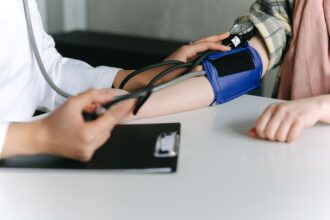
Medical illustration showing regional nerve block procedure for cardiac surgery pain management
A multicentre randomised trial shows bilateral nerve blocks with ropivacaine reduce opioid consumption by 25% after cardiac surgery. The EPOCH CardioLink-10 study demonstrates improved pain management with enhanced safety profiles. — Photo: Anna Shvets / Pexels
SHARE
1 min read|116 words

A double-blind, placebo-controlled trial has provided robust evidence for the efficacy of regional anaesthesia in cardiac surgery pain management. The multicentre study enrolled 308 adults and measured cumulative morphine equivalent doses in the first 48 hours post-operatively. Patients receiving bilateral SPIP blocks with ropivacaine demonstrated a 25% reduction in opioid consumption compared to the placebo group. Additionally, time to extubation improved significantly in the intervention cohort, with patients regaining respiratory independence faster than controls. Pain scores at 24 hours also favoured the nerve block group, with mean ratings of 3.2 versus 4.8 on a numerical pain rating scale. These quantifiable improvements suggest regional anaesthesia warrants consideration as a standard component of cardiac surgery pain protocols. Read the full article on GMJ Newsroom.

Was this article helpful?

GMJ Brief · Key Finding

📰 Read the full article: Regional Nerve Block Reduces Opioid Use After Heart Surgery by 25%, Multicentre Trial Shows →

Related reference
  • Morphine · Drug
Share This Article
Facebook LinkedIn Bluesky Copy Link Print
GMJ
ByProf. Giorgi Pkhakadze
Follow:
Prof. Giorgi Pkhakadze, MD, MPH, PhD, is Editor-in-Chief of the Georgian Medical Journal and Chair of the Public Health Institute of Georgia (PHIG). He is Professor and Head of the Department of Social and Behavioural Sciences at David Tvildiani Medical University, and Secretary/Treasurer of the UEMS Section of Public Health. ORCID: 0000-0001-7609-4515.

Submit Your Paper →

Georgia's peer-reviewed open-access medical journal. No APC until January 2027.
Submit Manuscript →
Australian Hospital Deploys World-First Robotic Surgery Technology for Complex Procedures

Footscray Hospital in Victoria, Australia, has deployed the world's first instance of…

Celebrity Disclosure Renews Focus on Prostate Cancer Screening and Early Detection

Television presenter Jeremy Clarkson's recent disclosure of aggressive prostate cancer and remission…

Magnesium Supplement Claims vs. Evidence: What the Science Actually Shows

Animal studies show tissue-specific magnesium uptake, but human trials have not replicated…

Submit Your Paper to GMJ

No APC until January 2027.
Submit Manuscript →

You Might Also Like

Microscopic image showing damaged brain tissue from anti-aging drug treatment in laboratory mice

Study Reveals Unexpected Severity of Brain Damage from Anti-Aging Drug Combination

By
Prof. Giorgi Pkhakadze
12/06/2026
Medical illustration showing Schwann cells surrounding nerve fibers with GDNF protein signaling pathways

What Clinicians Should Know: NF1 Pain Mechanisms Require New Treatment Strategies

By
Prof. Giorgi Pkhakadze
22/07/2026

🚨 Orange notification for tropical cyclone TEN-26. Population affected by Category 1 (120 km/h) wind speeds or higher is 0 (17.193 million in Tropical Storm).

By
Prof. Giorgi Pkhakadze
02/07/2026
European Medicines Agency building representing drug safety regulation

What Healthcare Providers Need to Know: Levamisole Withdrawal and Patient Implications

By
Prof. Giorgi Pkhakadze
01/08/2026
Facebook Twitter Youtube Instagram
Company
  • Privacy Policy
  • Contact US
  • GMJ Journal
  • Submit Manuscript
  • Editorial Team
  • Register at GMJ
  • Terms of Use

Subscribe to GMJ News — Click here

Join Community
© 2026 Georgian Medical Journal (GMJ). Published by the Public Health Institute of Georgia (PHIG). All rights reserved.
Welcome Back!

Sign in to your account

Username or Email Address
Password

Lost your password?

Not a member? Sign Up