By using this site, you agree to the Privacy Policy and Terms of Use.
Accept
GMJ NewsGMJ NewsGMJ News
  • Latest News
    • GMJ Briefs
  • Podcast & Media
    • Podcast Episodes
    • GMJ Audio
    • GMJ Videos
  • Research Digest
    • New Studies
    • Georgian Research
    • Data & Numbers
  • Policy & Systems
    • Health Policy
    • Quality & Safety
    • Migration & Health
    • Global Health
  • Practice
    • Clinical Updates
    • Case Discussions
    • Pharmacy & Prescribing
  • Perspectives
    • Editorial
    • Explainers
    • Voices
    • Letters
  • GMJ Articles
    • Vol. 1 Issue 2 (2026)
    • Vol. 1 Issue 1 (2026)
    • Pre-Launch Articles (2025)
  • Read the Journal →
  • About GMJ News
Notification Show More
Font ResizerAa
GMJ NewsGMJ News
Font ResizerAa
  • Latest News
    • GMJ Briefs
  • Podcast & Media
    • Podcast Episodes
    • GMJ Audio
    • GMJ Videos
  • Research Digest
    • New Studies
    • Georgian Research
    • Data & Numbers
  • Policy & Systems
    • Health Policy
    • Quality & Safety
    • Migration & Health
    • Global Health
  • Practice
    • Clinical Updates
    • Case Discussions
    • Pharmacy & Prescribing
  • Perspectives
    • Editorial
    • Explainers
    • Voices
    • Letters
  • GMJ Articles
    • Vol. 1 Issue 2 (2026)
    • Vol. 1 Issue 1 (2026)
    • Pre-Launch Articles (2025)
  • Read the Journal →
  • About GMJ News
Follow US
GMJ News > Research Digest > New Studies > Regional Nerve Block Reduces Opioid Use After Heart Surgery by 25%, Multicentre Trial Shows
New StudiesResearch Digest

Regional Nerve Block Reduces Opioid Use After Heart Surgery by 25%, Multicentre Trial Shows

GMJ
Last updated: 29/05/2026 23:22
By
GMJ News Desk
Share
6 Min Read
Medical illustration showing regional nerve block procedure for cardiac surgery pain management
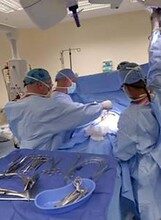
A multicentre randomised trial shows bilateral nerve blocks with ropivacaine reduce opioid consumption by 25% after cardiac surgery. The EPOCH CardioLink-10 study demonstrates improved pain management with enhanced safety profiles. — Photo: Anna Shvets / Pexels
SHARE
🎧 Listen to this article5:29 min · 537 words · GMJ Audio

Contents
      • Opioid Consumption Reduction by Treatment Group
  • Study Design and Methodology
  • Clinical Implementation Potential
    • Key takeaways
  • Frequently asked questions
    • What is a superficial parasternal intercostal plane block?
    • How does this compare to other pain management approaches after cardiac surgery?
    • Could this technique be adopted widely in cardiac surgery centres?

A multicentre randomised trial has demonstrated that a superficial nerve block technique can significantly reduce opioid consumption following cardiac surgery. The EPOCH CardioLink-10 trial, published in The Lancet Regional Anesthesia & Acute Pain Medicine, found that bilateral superficial parasternal intercostal plane (SPIP) blocks with ropivacaine reduced cumulative opioid exposure by 25% compared to placebo in the first 48 hours after sternotomy.

25%
reduction in opioid consumption with nerve block versus placebo after cardiac surgery

Opioid Consumption Reduction by Treatment Group

Cumulative morphine equivalent dose, first 48 hours post-surgery

156
patients
ropivacaine group
152
patients
placebo group
25%
opioid reduction
achieved

Source: The Lancet Regional Anesthesia & Acute Pain Medicine, 2026 | Georgian Medical Journal News

Submit Your Paper
GMJ_Submit_Banner

Study Design and Methodology

The EPOCH CardioLink-10 trial was a double-blind, placebo-controlled trial that enrolled 308 adults undergoing elective cardiac surgery via sternotomy across multiple centres, according to the published study. Participants were randomised to receive either bilateral SPIP blocks with 0.375% ropivacaine or matching placebo injections performed under ultrasound guidance.

🎙️ Related Podcast Episodes
🎧 #54 | GMJ Podcast | The Blueprint of a Medical Journal: Designing an Open-Access Scientific Platform · 19m
🎧 #46 | GMJ Podcast | Angioplasty of Saphenous Vein Grafts — Risks, Outcomes, and Clinical Strategies · 21m

The primary endpoint measured cumulative opioid consumption in morphine equivalent doses during the first 48 hours post-operatively. Secondary outcomes included pain scores, time to extubation, and length of hospital stay, as detailed in the study methodology.

Clinical Implementation Potential

According to the EPOCH CardioLink-10 investigators, the bilateral SPIP approach offers several advantages over alternative regional techniques. The blocks can be performed relatively quickly and do not interfere with surgical field access or post-operative monitoring protocols established for cardiac surgery patients.

The SPIP block technique specifically targets the parasternal intercostal nerves that innervate the sternotomy site, providing focused analgesia where patients typically experience the most significant post-operative pain, according to recent anaesthesia research.

Bilateral SPIP blockade with ropivacaine may be a pragmatic option to manage sternotomy pain with lower opioid consumption post-cardiac surgery.

— EPOCH CardioLink-10 Investigators (The Lancet Regional Anesthesia & Acute Pain Medicine, 2026)

Key takeaways

  • SPIP blocks reduced opioid consumption by 25% compared to placebo in cardiac surgery patients (EPOCH CardioLink-10 trial)
  • The technique demonstrated a favourable safety profile according to the published study
  • The multicentre, double-blind, randomised design provides robust evidence for clinical implementation

Frequently asked questions

What is a superficial parasternal intercostal plane block?

This is a regional anaesthesia technique that involves injecting local anaesthetic near nerves that supply sensation to the sternotomy incision site. The injection is performed using ultrasound guidance to ensure accurate placement and safety.

How does this compare to other pain management approaches after cardiac surgery?

The SPIP block offers targeted pain relief specifically for sternotomy pain while allowing for reduced opioid use. Unlike systemic medications, it provides localised analgesia without affecting other body systems or cognitive function.

Could this technique be adopted widely in cardiac surgery centres?

The procedure is relatively straightforward to perform and does not require specialised equipment beyond standard ultrasound guidance. The safety profile and effectiveness demonstrated in this multicentre trial suggest it could be implemented in most cardiac surgery programmes.

These findings from the EPOCH CardioLink-10 trial represent a significant advancement in post-operative pain management for cardiac surgery patients, offering a practical approach to reduce opioid dependence while maintaining effective analgesia. The multicentre design and robust methodology provide strong evidence for clinical implementation of this regional anaesthesia technique.

Source: Superficial parasternal intercostal plane block with ropivacaine versus placebo for opioid exposure after cardiac surgery (EPOCH CardioLink-10): a multicentre, double-blind, randomised trial

TAGGED:cardiac surgeryclinical trialopioid reductionpain managementregional anaesthesia
Share This Article
Facebook LinkedIn Bluesky Copy Link Print
Leave a Comment Leave a Comment

Leave a Reply Cancel reply

Your email address will not be published. Required fields are marked *

Submit Your Paper →

Georgia's peer-reviewed open-access medical journal. No APC until January 2027.
Submit Manuscript →
CBD Shows Promise in Reducing Alzheimer’s-Related Brain Inflammation

New preclinical research suggests CBD may help fight Alzheimer's disease by reducing…

Bronchial Anthracosis: Coal Dust Exposure Leaves Distinctive Lung Patterns

A New England Journal of Medicine case demonstrates bronchial anthracosis, where coal…

Osteomyelitis: New Global Evidence on Diagnosis and Treatment of Bone Infections

A comprehensive new review in Nature Reviews Disease Primers reveals that adults…

Submit Your Paper to GMJ

No APC until January 2027.
Submit Manuscript →

You Might Also Like

Various magnesium supplement bottles and capsules arranged on laboratory bench
New StudiesResearch Digest

Magnesium Supplements: Evidence Challenges Marketing Claims About Tissue-Specific Benefits

By
GMJ News Desk
26/05/2026
Scientific illustration showing air pollution particles affecting brain and lung health
New StudiesResearch Digest

Air Pollutants Alter Brain Activity and Lung Function Within Four Hours

By
GMJ News Desk
27/05/2026
Medical researchers studying influenza transmission patterns in controlled laboratory setting
New StudiesResearch Digest

Close Contact Alone May Not Drive Flu Transmission, Study Reveals

By
GMJ News Desk
22/05/2026
Diagram showing vitamin functions across different body systems and physiological processes
New Studies

Vitamin Deficiencies Disrupt Critical Biological Functions Across Multiple Body Systems

By
GMJ News Desk
21/05/2026
Facebook Twitter Youtube Instagram
Company
  • Privacy Policy
  • Contact US
  • GMJ Journal
  • Submit Manuscript
  • Editorial Team
  • Register at GMJ
  • Terms of Use

Subscribe to GMJ News — Click here

Join Community
© 2026 Georgian Medical Journal (GMJ). Published by the Public Health Institute of Georgia (PHIG). All rights reserved.
Welcome Back!

Sign in to your account

Username or Email Address
Password

Lost your password?

Not a member? Sign Up