By using this site, you agree to the Privacy Policy and Terms of Use.
Accept
GMJ NewsGMJ NewsGMJ News
  • Latest News
    • GMJ Briefs
  • Podcast & Media
    • Podcast Episodes
    • GMJ Audio
    • GMJ Videos
  • Research Digest
    • New Studies
    • Georgian Research
    • Data & Numbers
  • Policy & Systems
    • Health Policy
    • Quality & Safety
    • Migration & Health
    • Global Health
  • Practice
    • Clinical Updates
    • Case Discussions
    • Pharmacy & Prescribing
    • Ingredients A-Z
  • Perspectives
    • Editorial
    • Explainers
    • Voices
    • Letters
  • GMJ Articles
    • Vol. 1 Issue 2 (2026)
    • Vol. 1 Issue 1 (2026)
    • Pre-Launch Articles (2025)
  • Read the Journal →
  • About GMJ News
Notification Show More
Font ResizerAa
GMJ NewsGMJ News
Font ResizerAa
  • Latest News
    • GMJ Briefs
  • Podcast & Media
    • Podcast Episodes
    • GMJ Audio
    • GMJ Videos
  • Research Digest
    • New Studies
    • Georgian Research
    • Data & Numbers
  • Policy & Systems
    • Health Policy
    • Quality & Safety
    • Migration & Health
    • Global Health
  • Practice
    • Clinical Updates
    • Case Discussions
    • Pharmacy & Prescribing
    • Ingredients A-Z
  • Perspectives
    • Editorial
    • Explainers
    • Voices
    • Letters
  • GMJ Articles
    • Vol. 1 Issue 2 (2026)
    • Vol. 1 Issue 1 (2026)
    • Pre-Launch Articles (2025)
  • Read the Journal →
  • About GMJ News
Follow US
GMJ News > GMJ Briefs > Community Health Workers and Nets: Malawi’s Data-Driven Approach to Malaria Control

Community Health Workers and Nets: Malawi’s Data-Driven Approach to Malaria Control

GMJ
Last updated: 24/06/2026 20:08
By
Prof. Giorgi Pkhakadze
Share
1 Min Read
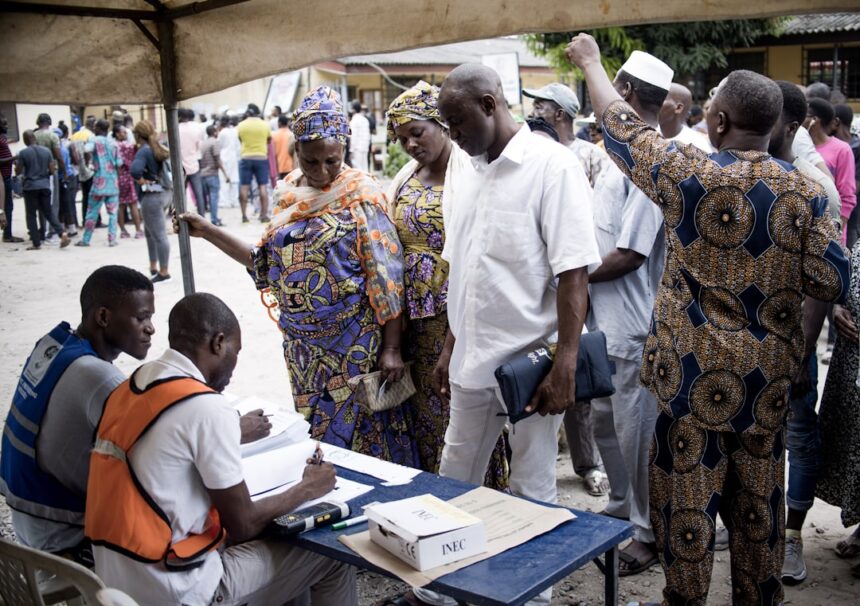
Healthcare workers in Malawi distributing mosquito nets as part of malaria prevention program
Malawi achieved a 78% reduction in malaria deaths from 2020-2025 through comprehensive vector control and community health interventions, according to WHO's annual country report. Despite this success, healthcare worker density remains at only 23% of recommended levels, highlighting ongoing health system challenges. — Photo: Nigeria Info FM / Pexels
SHARE
1 min read|129 words

A striking statistic from the WHO’s 2025 annual report reveals the power of coordinated intervention: Malawi reduced malaria deaths by 78% in just five years through strategic investments in vector control and human resources. The data demonstrates that 12,000 trained community health workers, combined with 85% household coverage of long-lasting insecticidal nets, can deliver measurable mortality reductions even in resource-constrained settings.

This quantifiable success challenges conventional assumptions about the feasibility of disease elimination in low-resource contexts. By achieving rapid diagnostic testing and treatment initiation at the community level, Malawi reduced the critical window from symptom onset to therapeutic intervention from 4.2 days to 1.8 days. These metrics position Malawi as a compelling case study for policymakers and health systems across sub-Saharan Africa seeking evidence-based strategies for malaria elimination.

Read the full article on GMJ Newsroom.

Was this article helpful?
GMJ Brief · Key Finding

📰 Read the full article: WHO Malawi Report Shows 78% Reduction in Malaria Deaths Despite Health System Challenges →

Related reference
  • Malaria · Condition
Share This Article
Facebook LinkedIn Bluesky Copy Link Print
GMJ
ByProf. Giorgi Pkhakadze
Follow:
Prof. Giorgi Pkhakadze, MD, MPH, PhD, is Editor-in-Chief of the Georgian Medical Journal and Chair of the Public Health Institute of Georgia (PHIG). He is Professor and Head of the Department of Social and Behavioural Sciences at David Tvildiani Medical University, and Secretary/Treasurer of the UEMS Section of Public Health. ORCID: 0000-0001-7609-4515.

Submit Your Paper →

Georgia's peer-reviewed open-access medical journal. No APC until January 2027.
Submit Manuscript →
The Hidden Cost of Secrecy: How Missing Research Data Undermines Clinical Guidance

Systematic reviews and meta-analyses that guide clinical practice are increasingly compromised by…

Corrected Global Data on Substance Use Burden Across 204 Countries Reveals Shifting Patterns

Nature Medicine has published a corrected Global Burden of Disease assessment of…

Engineered Heart Muscle From Stem Cells Shows Promise in First-in-Human Trial

A first-in-human clinical trial of engineered heart muscle derived from induced pluripotent…

Submit Your Paper to GMJ

No APC until January 2027.
Submit Manuscript →

You Might Also Like

Map showing malaria elimination progress in Africa with Eswatini highlighted

Eswatini Charts Course for Malaria-Free Status by End of Decade

By
Prof. Giorgi Pkhakadze
22/06/2026
Medical illustration showing T-cell lymphoma development in immunosuppressed transplant patient

New Case Report Highlights Overlooked Cancer Risk in Transplant Patients

By
Prof. Giorgi Pkhakadze
09/07/2026
Medical illustration showing KRAS protein structure and drug mechanism

Pancreatic Cancer Survival Nearly Doubles with Novel KRAS Inhibitor

By
Prof. Giorgi Pkhakadze
29/06/2026
Illustration of nanotechnology sensors being used for diabetes glucose monitoring

What You Need to Know About the Next Generation of Glucose Monitoring Technology

By
Prof. Giorgi Pkhakadze
27/06/2026
Facebook Twitter Youtube Instagram
Company
  • Privacy Policy
  • Contact US
  • GMJ Journal
  • Submit Manuscript
  • Editorial Team
  • Register at GMJ
  • Terms of Use

Subscribe to GMJ News — Click here

Join Community
© 2026 Georgian Medical Journal (GMJ). Published by the Public Health Institute of Georgia (PHIG). All rights reserved.
Welcome Back!

Sign in to your account

Username or Email Address
Password

Lost your password?

Not a member? Sign Up